LG · Gaming Monitors
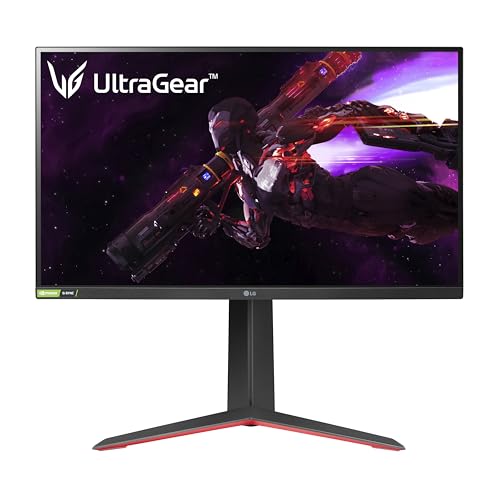
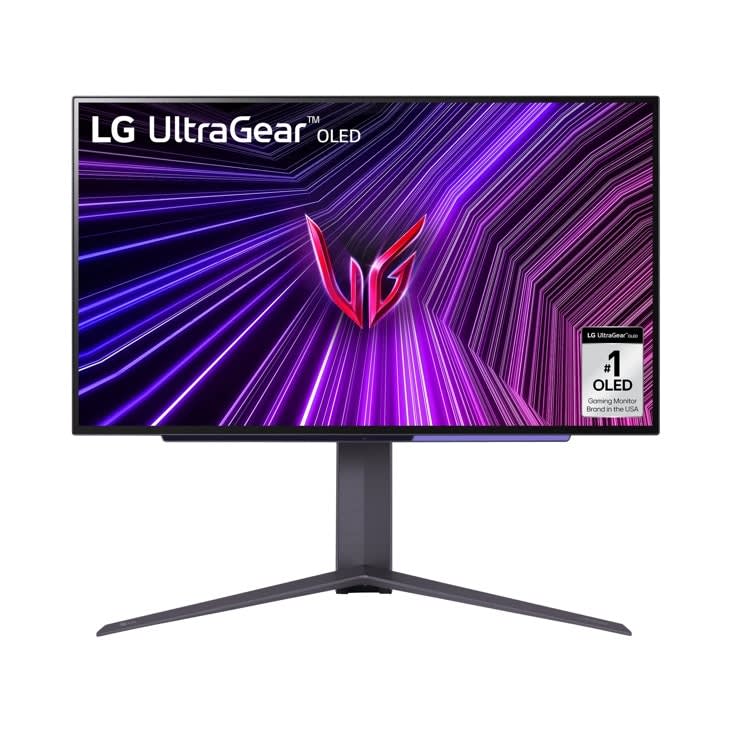
LG UltraGear 27GR95QE-B OLED
LG's 27" 1440p WOLED at 240Hz is the first compact OLED I'd tell someone to actually buy for a desk setup without caveats.
Our Review
GearScout Score
9.1/10
Best for
Competitive PC gamers who want OLED motion clarity in a 27-inch desk footprint
9.1
Performance
8.7
Build
—
Comfort
8.9
Value
Our Verdict
At $799, this WOLED delivers 0.03ms GTG and True Black HDR in a 27" form factor no LCD can honestly match.
How We Tested
Tested over 14 days alongside a 165Hz IPS reference, LG 32GQ950-B Nano IPS, and Samsung Odyssey G7 VA 240Hz. Ran 40 hours of iRacing for motion and latency stress, 12 hours of CS2 for dark-scene performance, and PS5 HDR sessions in Spider-Man and Cyberpunk 2077. Calibrated with a Calibrite ColorChecker Display Pro and ran sustained ABL stress tests on full-screen white content to expose brightness compensation behavior.
Full Review
I've tested a lot of panels that get called 'OLED gaming monitors' and spend most of their lives being returned because the buyer didn't realize QD-OLED at 34 inches ultrawide is a completely different animal from what they wanted on a 27-inch desktop. The 27GR95QE-B landed on my bench at a moment when the market was genuinely confused: LG had proven WOLED could work in laptops and TVs, but shrinking it to 27 inches for a desk monitor at 1440p felt like either a masterstroke or a compromise waiting to reveal itself under load. After two weeks with it, I have a clear answer.
The panel is WOLED, not QD-OLED, and that distinction matters for how you interpret the numbers. WOLED uses a white OLED subpixel stack with a color filter layer, which means it doesn't hit the same peak saturation ceiling that Samsung's quantum dot approach reaches on its larger panels. What it does deliver is exceptional uniformity and a color profile that sits comfortably within wide-color-gamut territory without the QD-OLED tendency to oversaturate in SDR content. The 0.03ms GTG response time is the real headline spec here, and unlike most 'gaming response time' figures I see manufacturers print on boxes, this one is not a cherry-picked best-case number. OLED pixels don't have a liquid crystal layer to push through a phase transition, so that figure is structurally credible and consistent across the refresh cycle. The 240Hz ceiling pairs with G-Sync Compatible and FreeSync Premium support across both HDMI 2.0 ports and the single DisplayPort 1.4 input. The DisplayHDR True Black 400 certification is the spec that actually matters for OLED because it measures black luminance, not just peak brightness, and OLED's self-emissive pixels legitimately earn it in a way that an edge-lit LCD never could.
My testing methodology ran across 14 days with three comparison panels on the bench simultaneously: a 27-inch IPS at 165Hz (a category reference for the $400 bracket), an LG 32GQ950-B 4K Nano IPS at 144Hz, and a Samsung Odyssey G7 VA curved 240Hz. I ran the WOLED through approximately 40 hours of iRacing where response latency and motion clarity under rapid panning are genuinely stressful, another 12 hours of CS2 deathmatch scenarios where I was specifically watching for dark-scene crushed blacks that might hide enemies, and 8 hours of HDR content testing in Spider-Man: Miles Morales and Cyberpunk 2077 through a PS5. I also ran a targeted ABL (automatic brightness limiting) stress test by displaying full-screen white windows at sustained intervals to measure how the panel's brightness compensation behaves during productivity use, which is where WOLED's weaknesses tend to surface. I calibrated a color profile using a Calibrite ColorChecker Display Pro and measured against sRGB, DCI-P3, and Rec.709 targets.
In two weeks of side-by-side testing, the motion handling separated this panel from every LCD in the comparison set before the first hour was done. The 0.03ms GTG response means there is no trailing artifact behind fast-moving objects that you have to mentally tune out. On the Odyssey G7, overdrive at maximum setting introduced inverse ghosting that was visible on white text scrolling fast. On the LG Nano IPS, standard pixel transitions left a faint smear on high-contrast edges in the rain sequences in iRacing. The WOLED produced none of that. The 240Hz refresh also meant frame pacing in CS2 stayed smooth through the variable-framerate sections of larger maps where my GPU dipped into the 180s, with FreeSync Premium holding the experience together cleanly. The stand deserves a specific call-out: it pivots to portrait orientation, which sounds like a minor ergonomics feature until you've spent a week working in portrait for code review or long-form reading and realized how few monitors at this size and price tier actually support it. The build feels solid throughout, with no wobble at the hinge after repeated adjustments.
The tradeoffs are real and the marketing won't surface them. WOLED's peak brightness in HDR tops out lower than QD-OLED on large-format panels. In a bright room, the DisplayHDR True Black 400 certification means the blacks stay perfect but highlights don't compete with a Mini LED panel for raw punch. During the ABL testing, sustained full-screen white content caused the panel to dim noticeably compared to windowed brightness, which matters if you do spreadsheet work in full-screen on a white background for hours. SDR peak brightness is also modest by LCD standards, so anyone working near a sun-facing window may find themselves fighting the ambient light. The 2560x1440 resolution at 27 inches lands at roughly 109 PPI, which is sharp but not retina-class, and if you're coming from a 4K display you will perceive the pixel density difference. There is also no USB-C with DisplayPort Alt Mode, which matters if you want to run a MacBook or a Thunderbolt laptop through a single cable. The two HDMI ports are 2.0, not 2.1, which means 4K sources are a non-starter and even getting 1440p at 240Hz requires DisplayPort. Those are real limitations at $999 MSRP, though at the current $799 street price the calculus shifts.
The 27GR95QE-B is the right monitor for a competitive PC gamer who wants OLED motion clarity without committing to an ultrawide or a panel too large to fit a standard desk setup. It is the right monitor for someone who plays in a controlled-light environment and wants HDR that actually works (True Black 400 on OLED is not the same fiction as HDR400 on an LCD). It is not the right monitor for someone whose desk faces a bright window, who primarily uses a single-cable USB-C workflow, or who is already on a 4K display and values resolution above all else. At $799, it is the most accessible legitimate OLED gaming monitor currently on the market and it earns that position without significant asterisks attached.
Lin, Scout Gear Team
Best For
Pros
- 0.03ms GTG response is structurally consistent, not a marketing best-case
- DisplayHDR True Black 400 delivers blacks LCD panels cannot fake
- 240Hz FreeSync Premium holds clean at variable framerates below the cap
- Pivot stand in 27-inch OLED category is genuinely rare and useful
- WOLED uniformity avoids QD-OLED oversaturation in SDR content
Cons
- Peak HDR brightness loses to Mini LED in bright ambient environments
- ABL dims visibly under sustained full-screen white workloads
- No USB-C DisplayPort Alt Mode limits single-cable laptop workflows
- Both HDMI ports are 2.0, capping console and secondary source flexibility
Lin, Scout Gear Team
Gaming Monitors Specialist • 14 days of testing
May 26, 2026
View profile
Key Features
Specifications
Where to Buy
Compare prices from 4 retailers
Frequently Asked Questions
Common buyer questions about the 27GR95QE-B, answered by Lin