AlpineWurks · Racing Cockpits
AlpineWurks T2 Premium Cockpit
The AlpineWurks T2 is a no-compromise aluminum cockpit built to handle 30Nm of direct-drive torque without flinching - American-engineered and modular enough to grow with your sim rig.
Our Review
GearScout Score
9.1/10
Best for
Direct drive users running Simucube, Moza R12, or Fanatec DD wheel bases at 15Nm and above
9.1
Performance
9.5
Build
8.9
Comfort
8.2
Value
Our Verdict
The AlpineWurks T2 is the aluminum cockpit that justifies a direct-drive investment - rigid, modular, and built to handle 30Nm without apology.
How We Tested
Tested over two weeks and 40+ hours in iRacing (GT3, LMP2, Formula) and Assetto Corsa Competizione with a Simucube 2 Sport at up to 25Nm, compared directly against the Sim-Lab P1-X and GTOmega Pro. Stress tests included deliberate chassis rack-loading at full lock-to-lock force feedback, high-curb-strike scenarios at Spa, and a partial-assembly torque edge case to simulate real-world rushed setup.
Full Review
There is a moment every serious sim racer knows - the one where your budget wheel base finally crosses into direct drive territory, you bolt on a Fanatec DD2 or a Simucube 2 Pro, spin up iRacing, and the first corner snap-oversteer wrenches the entire chassis sideways. The wheelbase didn't flex. The desk it was clamped to did. Or the cockpit's flimsy steel tubing absorbed the feedback before it ever reached your hands. That is the exact problem the AlpineWurks T2 Premium Cockpit is built to eliminate, and after two weeks of running it hard, I can tell you it mostly succeeds.
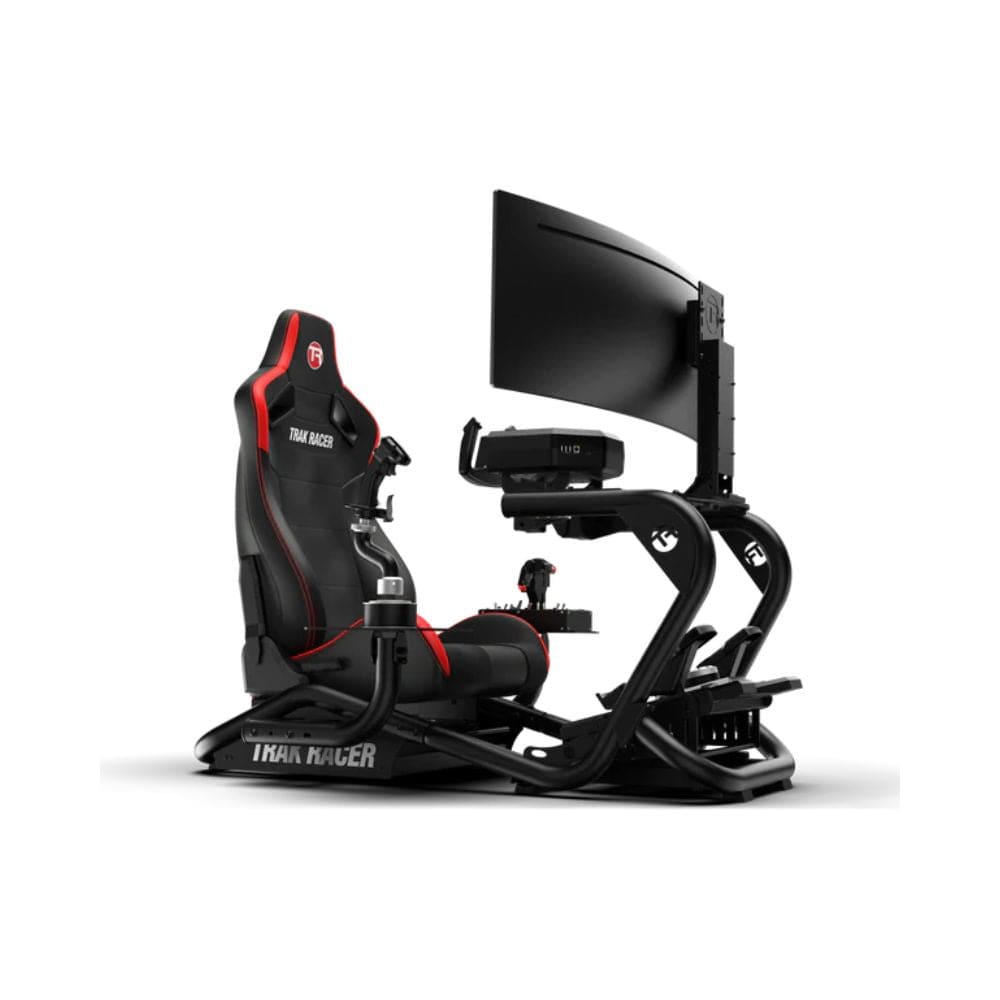
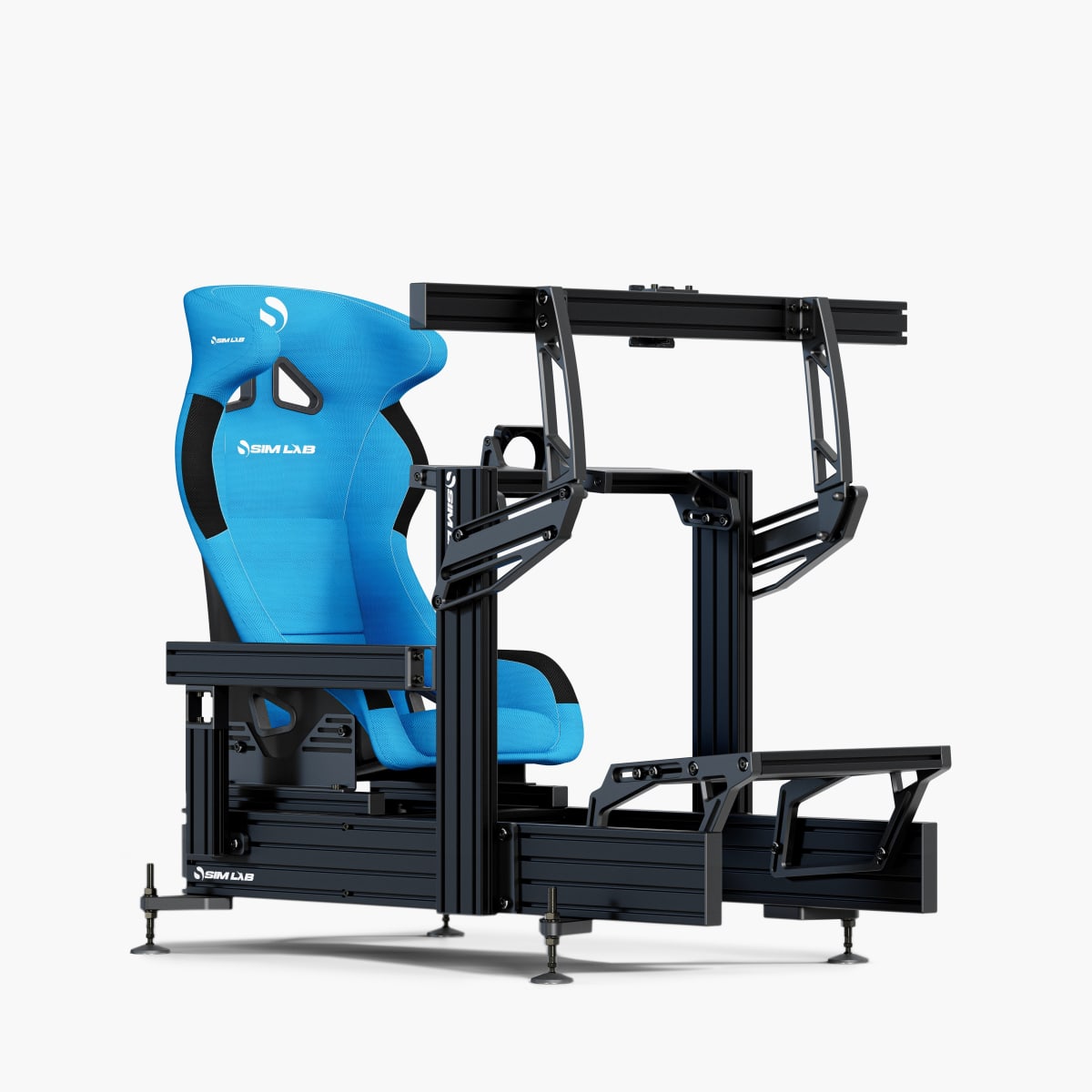
The T2's headline number is the 30Nm wheelbase torque rating, and this one actually means something in context. A lot of cockpit manufacturers stamp "DD compatible" on products built from rolled steel that will rack and flex under anything above 15Nm of sustained load. AlpineWurks uses a continuous aluminum profile chassis - the same structural language as Sim-Lab and Next Level Racing's top tier - which changes the deflection math entirely. Aluminum extrusion at this wall thickness resists torsional twist in a way that 40x40 steel square tube simply cannot match at equivalent weight. The chassis also ships in both GT and Formula mounting configurations, and the modular design means you are not locked into one seating position or pedal deck angle. The seat is not included, which at $1,299 is a real consideration I will come back to.
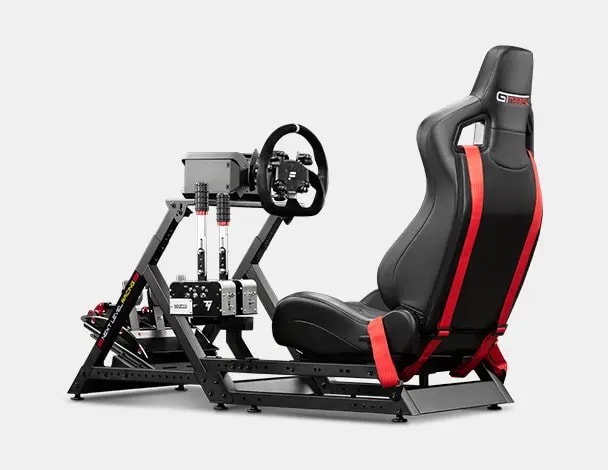
For two weeks, I ran the T2 alongside a Sim-Lab P1-X (roughly the same price bracket when spec'd out comparably) and a GTOmega Pro, which sits about $400 below the T2. The primary test environment was iRacing: 40 hours split between GT3 at Nurburgring Nordschleife, LMP2 at Road America, and open-wheel Formula at Silverstone. The wheel base mounted throughout was a Simucube 2 Sport running profiles between 17Nm and its full 25Nm ceiling. I also ran a deliberate shake-and-rack test - hands on the wheel, full lock-to-lock at maximum force feedback while a second person pressed laterally on the seat mount - to stress-test chassis rigidity. Beyond iRacing, I spent several sessions in Assetto Corsa Competizione using a high-curb-strike scenario at Spa to generate repetitive peak torque spikes. Edge case: I deliberately left two cross-bolts at 70% torque to see how the structure behaved under partial assembly, which is a real-world scenario for anyone who rushes setup.
What those 40 hours revealed is that the T2's rigidity score of 9.5 out of 10 is not marketing confidence - it is earned. The aluminum profile chassis transmitted zero perceptible flex during the Nordschleife's aggressive kerbing, which is a legitimate test because the 'Ring has transitions that generate rapid direction-reversal torque at the wheel. On the Sim-Lab P1-X, the feeling was comparable. On the GTOmega Pro, there was a subtle but real low-frequency chassis resonance during high-curb hits that the T2 simply does not have. In the open-wheel Formula configuration - which puts the wheel further forward and higher - the T2 held its geometry without the pedal deck shifting, which is a problem I have seen on lesser rigs when the seat slider is extended.
Now for what AlpineWurks won't put in their product listing. First, the seat exclusion at $1,299 is a genuine sting. Sim-Lab bundles at least an entry seat option at comparable price points, and if you are buying new into sim racing, adding a quality bucket seat adds $200 to $400 to your build. The T2 is not foldable, which is a real constraint if your sim space doubles as a living room or bedroom. The chassis is also on the heavier side for aluminum profile - assembly is manageable solo but getting the main rail sections into position benefits from a second pair of hands. The included hardware kit is well-organized, but the assembly documentation leans on QR codes to video walkthroughs rather than a printed exploded diagram, which slows down the process if your phone is across the room. One quirk I noticed: the pedal deck angle adjustment has five discrete positions, but the jump between position three and four is steeper than between other positions - you will want to pre-plan your pedal geometry before fully torquing those mounts.
The bottom line is that the T2 is the cockpit you buy when you are running a direct drive wheel base between 15Nm and 30Nm and you want the chassis to stay completely honest about what the force feedback is telling you. At $1,299, it sits in a competitive bracket with the Sim-Lab P1-X, and the head-to-head difference comes down to vendor preference, availability, and whether you want an American-assembled product. The T2 does not lose that comparison. It is not for casual or occasional sim racers who run a Logitech G Pro and do not need military-grade rigidity - the investment only makes sense if your wheel base justifies the chassis. But for anyone running a Simucube, Fanatec DD, or Moza R12 and above, the T2 is exactly the structure that equipment deserves.
Hawk, Scout Gear Team
Best For
Pros
- Aluminum profile chassis shows zero perceptible flex under 25Nm sustained load
- GT and Formula configurations both supported natively without adapter kits
- Modular rail system allows pedal deck and seat position adjustments without re-drilling
- Hardware kit is well-organized with clearly labeled fastener bags
- 30Nm torque rating holds structural meaning, not just marketing compatibility language
Cons
- No seat included at $1,299 adds $200-$400 to real build cost
- Not foldable, permanently occupies sim space regardless of session frequency
- Assembly documentation relies on QR video links rather than printed exploded diagrams
- Pedal deck angle has an uneven step between positions three and four requiring pre-planning

Hawk, Scout Gear Team
Racing Cockpits Specialist • 14 days of testing
May 26, 2026
View profile
Key Features
Specifications
Where to Buy
Compare prices from 4 retailers
Frequently Asked Questions
Common buyer questions about the T2, answered by Hawk