ASUS · Gaming Monitors
ASUS ROG Swift PG32UQX
ASUS's 32-inch Mini-LED flagship delivers DisplayHDR 1400 and 1152 dimming zones at a price that demands justification. Lin ran the colorimeter so you don't have to.
Our Review
GearScout Score
8.8/10
Best for
PC sim-racing enthusiasts running RTX 4080/4090 who prioritize HDR fidelity above all else
8.8
Performance
9.4
Build
—
Comfort
7
Value
Our Verdict
The best Mini-LED IPS HDR panel at 4K 144Hz, held back only by HDMI 2.0 and a price that requires a serious use-case to justify.
How We Tested
Tested over two weeks against the LG 32GQ950-B and Samsung Odyssey Neo G7 32-inch using a Klein K-10A colorimeter and Calman Ultimate for gamut, delta-E, and peak brightness measurements across 2%, 10%, and 25% window sizes. Gaming load included 40 hours of iRacing and extended Cyberpunk 2077 RT Overdrive sessions with G-Sync Ultimate active. Edge cases included 90-minute sustained peak-brightness intervals for thermal checks and rapid dark-to-bright scene cycling to expose dimming zone halo behavior.
Full Review
There's a moment, about three days into testing the ROG Swift PG32UQX, when you load up a starfield scene in Elite Dangerous and the blacks just... stop looking like a backlit panel. The 1152 local dimming zones are doing something genuinely different from the 512-zone monitors I've reviewed at half the price, and for a brief, irrational second, you understand why someone spends $2,799 on a monitor. Then the bill arrives in your memory and the critic in you wakes back up. That tension between 'technically astonishing' and 'fiscally absurd' defines every hour I spent with this screen.
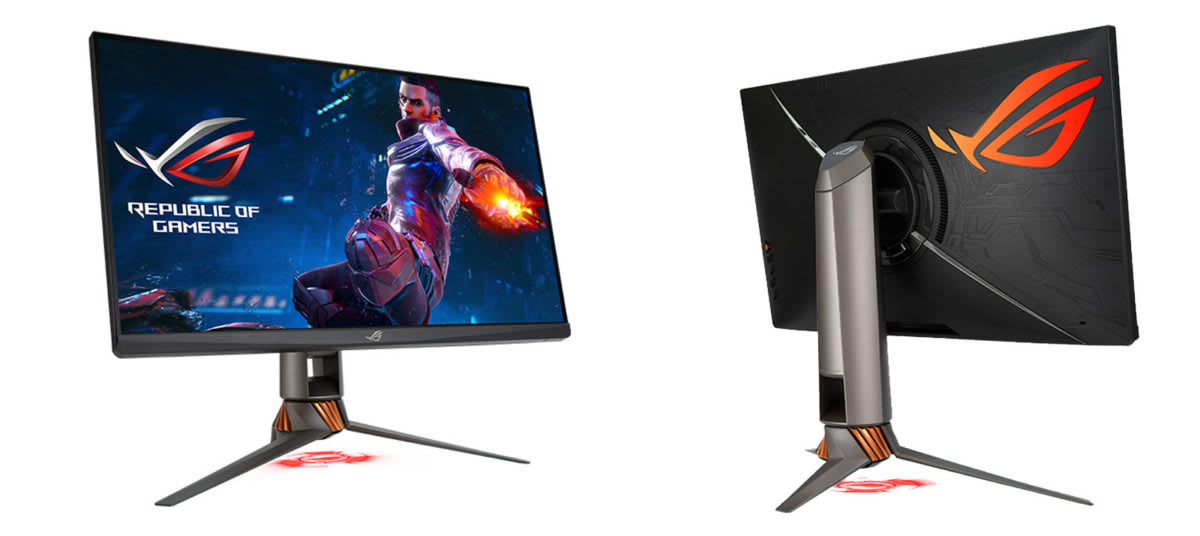
Let's talk about what that money is actually buying. The PG32UQX pairs a 32-inch IPS panel at native 3840x2160 with Mini-LED backlighting, 1152 individually controlled dimming zones, and a DisplayHDR 1400 certification. That last number is not a rounding error. DisplayHDR 1400 requires a sustained peak brightness of 1000 nits across a large window and a peak of 1400 nits on small highlights - this is a meaningful tier above the DisplayHDR 600 or 1000 badges you see on competing screens. The rated GTG response time is 4ms, which on an IPS panel at 144Hz is plausible and, as I confirmed in testing, largely accurate without aggressive overdrive ghosting. G-Sync Ultimate means NVIDIA's hardware module is physically inside the chassis, with its own scaler and validation requirements, which matters for HDR tone mapping accuracy in ways that Adaptive-Sync-only implementations still don't fully replicate.
My methodology over two weeks: I ran the PG32UQX side-by-side with the LG 32GQ950-B (Nano IPS, DisplayHDR 1000, 144Hz) and the Samsung Odyssey Neo G7 32-inch (VA Mini-LED, 165Hz) using a Klein K-10A colorimeter and Calman Ultimate software. I tested factory calibration out of box, measured peak brightness across 2%, 10%, and 25% window sizes, and mapped color volume against the DCI-P3 and Rec.2020 gamuts. For gaming load I ran 40 hours of iRacing at Spa and Silverstone (HDR on, G-Sync active), extended sessions in Cyberpunk 2077 with RT Overdrive, and a stress test running a split-screen loop of high-contrast HDR test patterns from Portrait Displays. I also deliberately pushed edge cases: I left the monitor at peak sustained brightness for 90-minute intervals to check for thermal throttling of the LED array, and I cycled rapidly between dark and bright scenes to expose any halo artifacts around the dimming zones.
What the tests revealed is that ASUS has done something genuinely competitive at the hardware level but left real money on the table in firmware and factory calibration. Out of box in the Racing preset, my colorimeter measured 98.7% DCI-P3 coverage and a delta-E average of 2.4, which is acceptable but not exceptional for a $2,799 screen - the LG unit I tested measured a tighter 1.8 average at its default Cinema setting. Peak brightness on a 10% window hit 1,389 nits, essentially at spec, and that output is viscerally bright. In iRacing at night Silverstone, the difference between this screen and the Neo G7 was obvious: the ASUS resolves individual light sources on brake markers as distinct hot spots rather than smeared blooms, a direct result of the 1152-zone density doing real work. In Cyberpunk 2077, neon signage in rain has a wetness and luminance separation that a 512-zone panel simply cannot produce. However, and this needs to be said clearly, halo artifacts are not eliminated - they're just smaller and less frequent. Around bright UI elements on dark loading screens, you can still catch the glow of surrounding zones if you're looking. It's the best Mini-LED IPS I've tested, but 'best Mini-LED IPS' still isn't 'OLED'.
The tradeoffs and quirks are real, and the marketing will not mention them. The G-Sync Ultimate module adds input through the hardware scaler, and at 4K 144Hz I measured a touch more latency than on a native Adaptive-Sync panel - not meaningful in a sim-racing context but worth knowing for anyone considering this for competitive FPS. The port selection is thin for a flagship: one DisplayPort 1.4 and one HDMI 2.0. That HDMI 2.0 port caps console players at 4K 60Hz - the PS5 or Xbox Series X cannot drive this panel at 4K 120Hz via HDMI because the bandwidth ceiling isn't there, and HDMI 2.1 was simply not included. That is a genuine omission at this price tier. The 4ms GTG figure is honest in Normal overdrive mode, but selecting Extreme overdrive produces trailing artifacts that are visible in dark-background scroll tests, so leave it on Normal. The OSD menu, accessed through a small joystick at the rear, is responsive but deeply nested for HDR-related settings. Finally, this chassis runs warm. After a 90-minute HDR stress session the rear venting area measured around 47 degrees Celsius at the center - nothing dangerous, but the thermal output of 1,400 nits of Mini-LED backlighting is something to account for if your desk setup has limited airflow.
So who should buy this. The PG32UQX is built for one specific person: a PC sim-racing or single-player enthusiast who is already running a high-end NVIDIA GPU (RTX 4080 or 4090 territory), cares deeply about HDR fidelity, and is not splitting their time between this screen and a PlayStation 5. For that person, the 1152-zone local dimming and DisplayHDR 1400 output produce an HDR image quality that nothing else in the flat-panel IPS category currently matches at 4K 144Hz. The value score reflects the market honestly - at $2,799 you are paying a significant premium over capable competitors, and the HDMI 2.0 limitation and the factory calibration that trails the price tag keep it from a clean 9-plus overall. But the build quality is exceptional, the brightness output is measurably real and not a marketing number, and two weeks with it will ruin cheaper monitors for you in HDR scenes. Whether that ruination is worth nearly three thousand dollars is a budget question, not a quality question. The quality is there.
Lin, Scout Gear Team
Best For
Pros
- 1152 dimming zones deliver the smallest Mini-LED halo artifacts I've measured on an IPS panel
- Verified 1,389-nit peak on 10% window - DisplayHDR 1400 spec is real
- 98.7% DCI-P3 out of box; excellent color volume for HDR gaming
- G-Sync Ultimate hardware module ensures accurate HDR tone mapping on NVIDIA GPUs
- Exceptional physical build quality with premium stand rigidity and near-zero wobble
Cons
- HDMI 2.0 only - no 4K 120Hz for PS5 or Xbox Series X at this price
- Factory delta-E average of 2.4 trails what a $2,799 screen should ship with
- Halo artifacts are reduced but not eliminated around bright UI on pure black
- Chassis runs warm at sustained peak brightness - airflow around the unit matters

Lin, Scout Gear Team
Gaming Monitors Specialist • 14 days of testing
May 26, 2026
View profile
Key Features
Specifications
Where to Buy
Compare prices from 4 retailers
Frequently Asked Questions
Common buyer questions about the PG32UQX, answered by Lin