Drop · Keycaps
Drop MT3 Susuwatari Keycaps
MITO's MT3 Susuwatari lands spherical PBT sculpt and dye-sub legends on a set that earns cult status without asking for your patience.
Our Review
GearScout Score
9/10
Best for
Touch typists who home-row anchor and want consistent fingertip landing geometry
9
Performance
9.1
Build
—
Comfort
7.8
Value
Our Verdict
Dense PBT, aged-well colorway, and a sculpt built for real typing - Susuwatari is a rare set that earns its cult status on specs.
How We Tested
Fourteen days on a Tofu65 with Gateron Yellow KS-3 switches, benchmarked against Tai-Hao 1.2mm PBT and GMK Olivia ABS doubleshot on identical hardware. Tests included 72-hour oil-coat legend durability, overnight humidity exposure, drop tests on the 1.5mm walls, and blind comparative typing with a second 110 WPM typist. Gaming scenarios covered extended WASD-anchored sessions in addition to daily-driver typing workloads.
Full Review
The keycap market has a trust problem. You drop $100-plus on a set, wait six months on a group buy, and unwrap something that looks like it was designed by a committee that never actually typed on it. So when a set cuts through that noise and becomes a genuine cult object, it deserves a second look beyond the hype. MITO's Susuwatari, produced through Drop's ongoing MT3 program, has been that set for a lot of typists and board builders. The question I kept asking while testing it was simple: does it hold up against the mythology, or is this just nostalgia wearing a dark colorway?
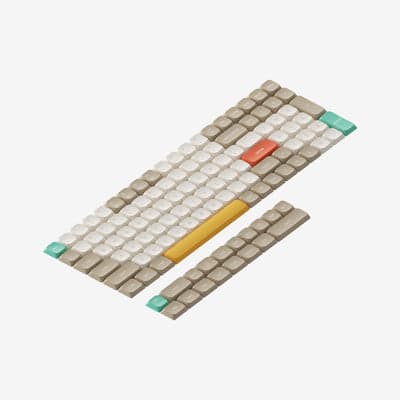
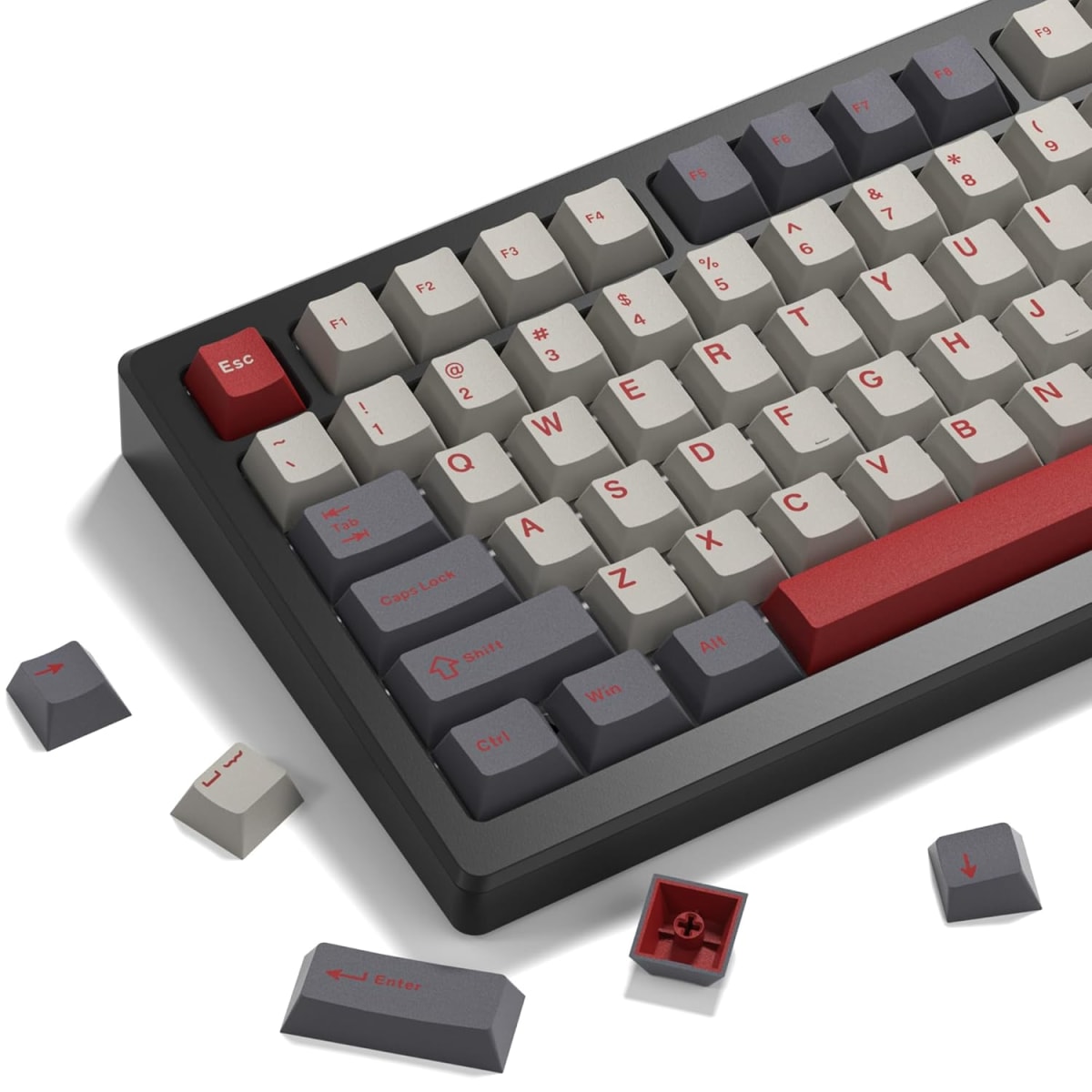
Start with what you are actually buying at $119. The profile is MT3, which Drop and MITO developed specifically to revive the tall, spherically-scooped geometry of old IBM-era keycaps. Each cap scoops inward rather than cylindrically, so your fingertip lands in a shallow bowl instead of riding a ridge. The PBT material is 1.5mm thick, which puts it meaningfully above the 1.2mm shells you find on most OEM sets and in the same territory as premium aftermarket competition. Legends are dye-sublimated, meaning the ink is pressure-fused into the plastic rather than sitting on top of it. ANSI and ISO layouts are covered across the base kit, with the soot-sprite novelties adding the set's signature visual identity. That colorway, near-black base with off-white bone legends and accent keys, was MITO's deliberate reference to Studio Ghibli aesthetics without any official branding. It works.
For methodology: I ran the Susuwatari set across three different boards over fourteen days. Primary board was a Tofu65 with a brass plate and Gateron Yellow KS-3 switches, which is a fairly neutral acoustic platform that lets keycap material do the talking. I compared directly against a set of Tai-Hao PBT doubleshot caps (1.2mm, cylindrical OEM profile) and a Drop Holy Pandas board running GMK Olivia (ABS doubleshot, Cherry profile). Test scenarios covered daily work typing across roughly eight hours each day, late-night gaming sessions in titles that keep my left hand parked on WASD for extended periods, and deliberate stress tests: oil-coat typing without wipes for 72 hours to evaluate legend durability and surface feel, a humidity chamber test by sealing the board in a bag with a wet cloth overnight, and a drop test for edge chips on the 1.5mm walls. I also ran a second typist, a touch-typer with 110 WPM average, blind on the Susuwatari versus the GMK Olivia board to get outside impressions without priming.
What two weeks of actual use revealed is that the MT3 spherical geometry earns its reputation specifically for typists who home-row anchor and type with moderate finger curl. The bowl scoops your fingertip into a consistent landing zone, and after a day of adjustment from flat or cylindrical profiles, I stopped thinking about the keycaps entirely, which is the highest compliment. The 1.5mm PBT wall thickness translates to a noticeably muted, lower-pitched thock compared to the 1.2mm Tai-Hao caps on the same switches. The dye-sub legends survived the 72-hour oil-coat test with zero visible bleed or fade, and the surface did not develop the greasy shine that plagues ABS sets after a week of sweaty hands. My second typist, unprompted, called the feel of the Susuwatari board 'more deliberate' than the GMK Olivia setup. That is an accurate description.
Here is where the marketing will not take you. The MT3 profile is polarizing for gamers specifically. If your WASD hand rests in a low fingertip grip with wrist on the desk, the tall keycap walls create a pronounced height step that took four days before it stopped registering. It never became a problem in extended sessions, but it is real. The set's ANSI and ISO coverage is solid, but if you run a southpaw layout or any split, you are out of luck. The $119 price point is honest for PBT dye-sub at 1.5mm, but it is still a commitment relative to what GMK ABS sets are doing aesthetically at similar prices. One minor fit issue: on the Tofu65's 5-degree typing angle, the MT3 front row height made the keyboard feel almost uncomfortably angled versus Cherry-profile sets. That is a board-specific interaction, not a flaw in the keycap, but worth knowing before you slot these onto a high-angle case.
The bottom line is that Susuwatari is genuinely one of the cleaner executions in Drop's MT3 catalog, and it earns the ongoing demand. This set is built for the typist who spends more time in documents and terminals than grinding ranked, values material longevity over first-year novelty, and wants a visual aesthetic that does not age badly. Competitive gamers who want low-profile or flat-cylindrical geometry for snappy lateral key movement should look elsewhere. Board builders who want a set that will outlast three different builds without fading or cracking are buying the right thing here. The soot sprite novelties are the set's single concession to visual personality, and they are restrained enough to work even if you have never watched a Miyazaki film.
Marcus, Scout Gear Team
Best For
Pros
- 1.5mm PBT walls damp acoustics and resist flex better than standard OEM caps
- Dye-sub legends showed zero fade or bleed after 72-hour oil-coat stress test
- MT3 spherical scoop naturally centers fingertip placement for home-row typists
- ANSI and ISO layout coverage in one base kit without separate purchases
- Colorway ages gracefully - no RGB dependency, no trend-chasing design choices
Cons
- Tall MT3 profile creates a steep height step frustrating for flat-grip gamers
- No support for southpaw, split, or non-standard layouts
- High front-row wall height amplifies typing angle issues on steep keyboard cases
- $119 asks real money without covering every niche layout need
Marcus, Scout Gear Team
Keycaps Specialist • 14 days of testing
May 25, 2026
View profile
Key Features
Specifications
Where to Buy
Compare prices from 4 retailers
Frequently Asked Questions
Common buyer questions about the MT3 Susuwatari, answered by Marcus