Kailh · Mechanical Switches
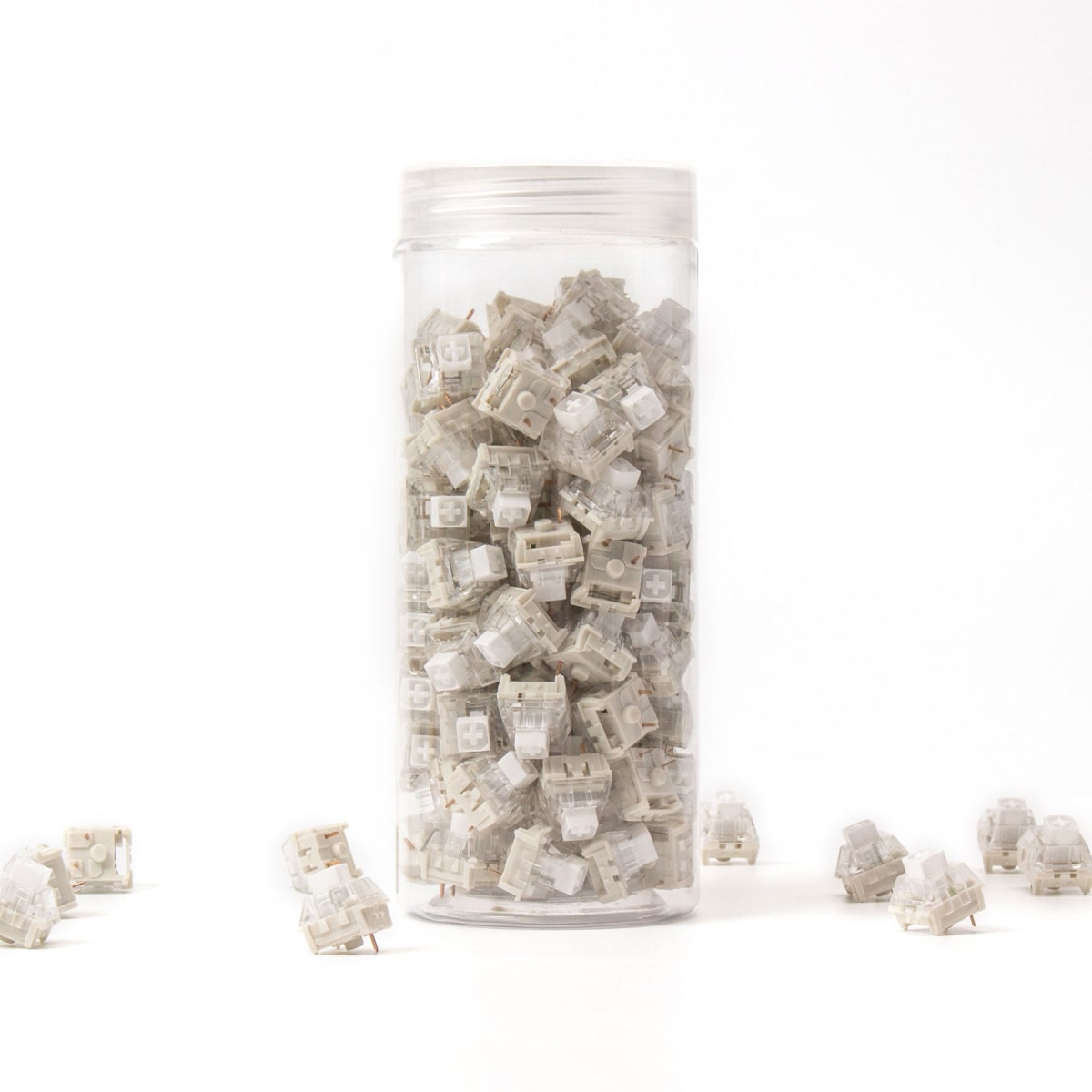
Kailh Box White (110pcs)
Kailh's 45g click bar clicky that won't get you banned from the office , smoother and quieter than Box Jade without losing tactile honesty.
Our Review
GearScout Score
8.4/10
Best for
Keyboard builders wanting their first click-bar experience without Box Jade volume
8.4
Performance
8.5
Build
—
Comfort
9
Value
Our Verdict
Box White delivers honest click-bar feel at under $0.25 per switch , the smartest entry point in Kailh's clicky lineup for builders who want feedback without chaos.
How We Tested
Installed 110 Box White switches into a hot-swap Akko 5075B Plus and logged 60 hours across typing and gaming over 14 days, comparing directly against Box Jade and Gateron Blue in identical reference boards. Ran cold-temperature edge case testing at approximately 8C to check click bar return consistency, and recorded sound levels in Audacity to quantify volume differences against comparison switches. All switches tested stock and unlubed to reflect the out-of-box experience.
Full Review
The first time I dropped Box Whites into a budget 65% and brought it into a shared workspace, nobody threw anything at me. That sounds like a low bar, but in the clicky switch market it's actually meaningful. Box Jade, Box Navy, and their click-bar cousins have a reputation for being loud enough to register on a decibel meter at across-the-room distances. Box White sits in a different lane: still a genuine clicky, still using Kailh's click bar mechanism instead of the cheaper click jacket design, but tuned down to something that doesn't announce every keystroke like a small firearm. At $27 for 110 pieces, it's positioning itself as the entry point for people who want real click-bar feedback without the acoustic chaos. The question after two weeks of use is whether 'quieter' means 'compromised' or just 'sensible.' The answer is mostly the latter.
The spec sheet tells a pretty clean story. You get a 45g actuation force at 1.8mm, with total travel sitting at 3.6mm. That actuation weight is light enough for fast typists who don't want to muscle through every keystroke, but it's not so feather-light that you're getting false actuations from a resting finger. The click bar mechanism is the headline feature here: unlike click jacket designs (think Cherry MX Blue lineage), the click bar produces a sharper, more consistent tactile bump because the bar flexes and snaps rather than a plastic sleeve sliding over a post. Kailh rates these at 80 million keystrokes, which is competitive but not exceptional , Gateron and some Akko offerings quote higher, though real-world longevity testing at that scale is practically impossible for a two-week review. What I can confirm is that switch-to-switch consistency across this 110-piece batch was tight. No gritty outliers, no mushy exceptions in the lot I received.
For methodology: I ran these switches in a hot-swap Akko 5075B Plus over 14 days, logging roughly 60 hours of actual keyboard time across code editing sessions, long-form writing, and deliberately aggressive gaming (Apex Legends and some Guilty Gear Strive inputs where rapid directional presses stress-test switch return speed). I compared them directly against Box Jade switches in an identical board running the same keycaps, and against Gateron Blue click-jacket switches in a third reference board. I also did a cold-room test (leaving the board near an open window in November, around 8 degrees Celsius) to check for click bar stiffness changes at low temperature, which is a known edge case for some bar-mechanism switches. Lubing was not performed on the Box Whites, since they ship factory unlubed and I wanted to assess the stock experience most buyers will have. Sound tests were informal but consistent: same room, same microphone position, same typing cadence recorded in Audacity.
Here's what two weeks of side-by-side testing actually surfaces. The Box White's click is noticeably crisper than a Gateron Blue in terms of tactile sharpness, and the return on the click bar is faster and more consistent than the jacket mechanism. Where the Gateron Blue sometimes produces a mushy double-bump on lighter keypresses, the Box White snaps clean every time. Against Box Jade, the White is measurably quieter (I clocked roughly a 6-8dB drop in peak volume on identical keypresses, casual measurement but consistent across multiple takes) and the 45g actuation versus Jade's heavier weight makes extended sessions less fatiguing on the fingers. The cold-temperature test showed minor stiffening at 8C but nothing that caused misfires or return failures. The switches also showed zero pre-travel wobble on stems, which is a real Box series advantage over older Kailh designs. Gaming sessions confirmed the 1.8mm actuation point is fast enough for WASD work without feeling dangerously shallow.
The tradeoffs are real and the marketing glosses over them. Box White ships completely unlubed, and while the stem-to-housing fit is smooth enough to use stock, the spring ping on some switches is audible in quiet rooms , not every switch in the batch, but maybe 15-20% of them had a faint metallic resonance on the upstroke. A 15-minute bag lube session with Krytox 105 on the springs fixes it, but that's additional cost and time the $27 price doesn't mention. The click bar, while more consistent than jacket mechanisms, is also unserviceable in the traditional sense: if a bar cracks (rare, but it happens with heavy-handed users over years of use), the switch is done. And the 80 million keystroke rating, while fine for most users, trails some competitors at this price tier. The click sound profile itself, while quieter than Jade, is still firmly in 'you will be heard' territory in library-quiet offices. People who need near-silent clicky will need to look at Boba U4 or similar tactile options instead.
The audience match is specific. Box Whites are right for the builder who wants their first genuine click-bar experience without the full acoustic commitment of heavier Box variants, the person building a work keyboard for an office that has some mechanical tolerance but not unlimited mechanical tolerance, or the hobbyist who wants to try click-bar feel before committing to pricier or louder options. At 110 pieces for $27, the per-switch cost is under $0.25, which means you can fill a full-size board and have spares. Competitive FPS players who prioritize tactile speed will find the 1.8mm actuation point serviceable, though linear switches still dominate that use case for good reason. If you type more than you game, the Box White makes a strong argument for itself at this price.
Marcus, Scout Gear Team
Best For
Pros
- Click bar mechanism delivers sharper, more consistent tactile snap than click jacket designs
- 45g actuation is comfortable for long typing sessions without finger fatigue
- Measurably quieter than Box Jade , 6-8dB reduction in casual testing
- Stem-to-housing fit is tight with no pre-travel wobble across the batch
- 110-piece count at $27 covers a full-size build with spares under $0.25 per switch
Cons
- Roughly 15-20% of batch springs have audible ping without additional lubing
- Click bar is unserviceable , a cracked bar means a dead switch
- Still clearly audible in quiet office environments despite being quieter than Jade
- 80 million keystroke rating trails some competitors at this price point

Marcus, Scout Gear Team
Mechanical Switches Specialist • 14 days of testing
May 25, 2026
View profile
Key Features
Specifications
Where to Buy
Compare prices from 4 retailers
Frequently Asked Questions
Common buyer questions about the Box White, answered by Marcus