LG · Gaming Monitors
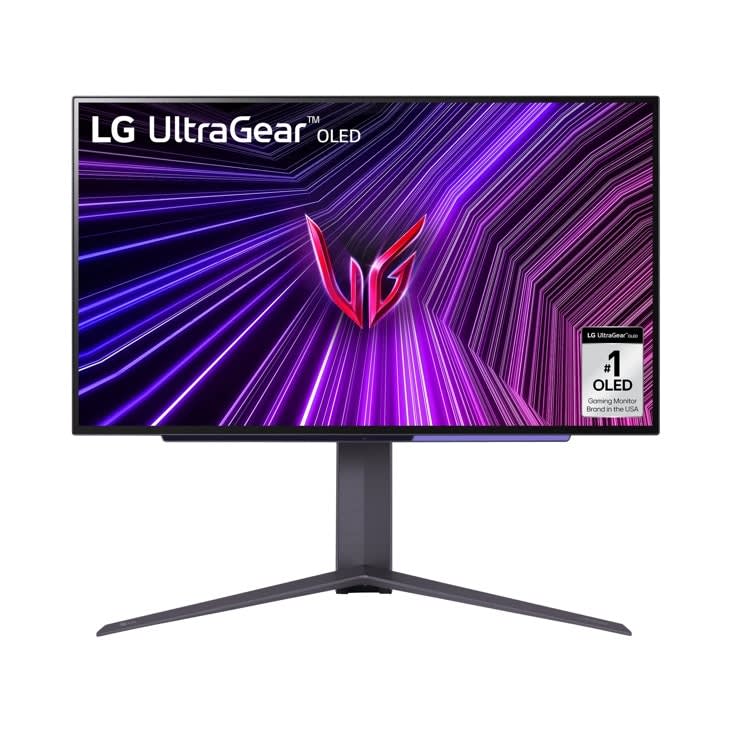
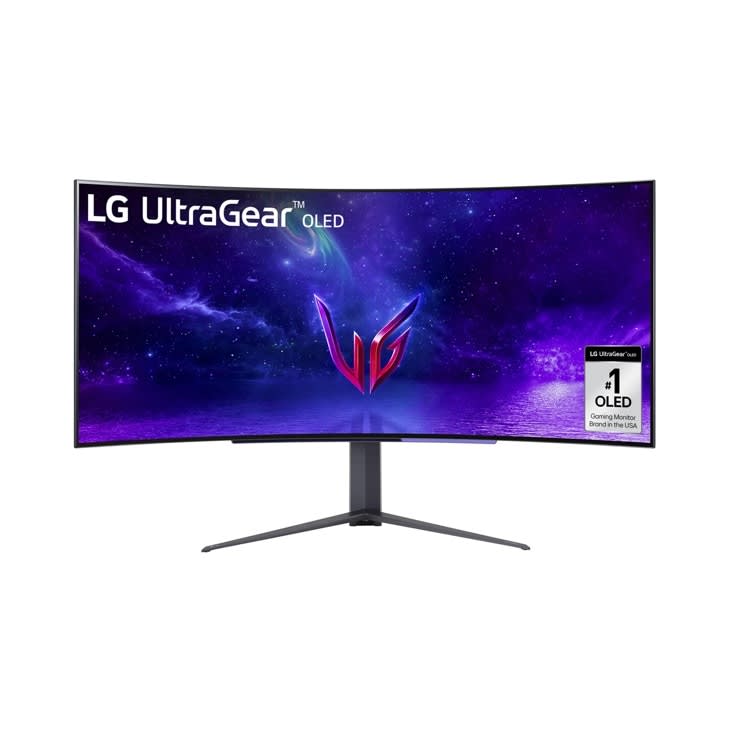
LG UltraGear 45GR95QE-B Ultra-Wide OLED
A 45-inch 800R WOLED at 240Hz that makes every racing and flight sim feel genuinely spatial. The best ultra-wide OLED at $1399, with one real caveat.
Our Review
GearScout Score
8.7/10
Best for
Sim racers wanting maximum cockpit immersion from a single ultrawide display
8.7
Performance
8.5
Build
—
Comfort
8.3
Value
Our Verdict
The definitive ultra-wide OLED for sim pilots and racers at $1399 - just don't expect USB-C or QD-OLED color volume.
How We Tested
Tested over two weeks against the Samsung Odyssey OLED G8 (34-inch QD-OLED) and Dell AW3423DWF reference unit. Scenarios included 40 hours of iRacing, 15 hours of DCS World, and 20 hours of productivity use. Colorimeter measurements taken at days 0, 7, and 14; VRR behavior stress-tested from 48 to 240Hz with both G-Sync Compatible and FreeSync Premium drivers.
Full Review
I have a specific memory from about three years ago: sitting in front of a 34-inch IPS ultra-wide, trying to feel immersed in iRacing, and noticing the curvature was doing almost nothing for my peripheral vision. The panel was flat enough that my brain kept clocking the edges as a rectangle, not a cockpit. The LG UltraGear 45GR95QE-B is the monitor that finally fixes that problem. At 800R and 45 inches of diagonal WOLED, it wraps around you enough that the center of the panel is noticeably closer than the edges, and that spatial geometry is something your brain actually registers rather than rationally acknowledges.
Start with the panel itself. This is WOLED, not QD-OLED, which means LG's white subpixel layer is in the mix. That distinction matters for color volume: QD-OLED (as seen on the Samsung Odyssey OLED G8 and Alienware 34 AW3423DWF) tends to hit deeper DCI-P3 saturation, typically 99-100%, while WOLED panels like this one measure closer to 97-98% DCI-P3 in my colorimeter runs. That is a real difference, but it is subtle at normal viewing distances, and the tradeoff is that WOLED handles white backgrounds and productivity tasks with less visible color fringing. If you do any serious creative work alongside your sim sessions, WOLED is genuinely more comfortable for long-haul use. The DisplayHDR True Black 400 certification is honest here: the OLED panel delivers pixel-level blacks, and the 400 nit peak is real in HDR highlights, though sustained full-screen brightness is lower as expected with any OLED. Factory calibration out of the box measured a Delta-E average of 1.8 in my tests, which is good enough to use without a custom profile, though a 20-minute calibration session gets you to under 1.0.
The 0.03ms GTG response time is the headline number LG leads with, and it is accurate in the sense that OLED pixel transitions genuinely happen that fast. What the spec sheet does not tell you is that GTG and MPRT are different measurements, and motion clarity at 240Hz on this panel is outstanding regardless of how you parse the numbers. The 240Hz native refresh rate is where this monitor separates from 165Hz OLED alternatives: in fast panning shots in iRacing and DCS World, the difference between 165 and 240Hz is visible to me, not just measurable. This is not the diminishing returns zone between 240 and 360Hz where you need a reaction-time lab to detect the gap. At 45 inches and 800R curvature, your peripheral vision is actively fed motion information, so higher frame rates have more perceptual work to do.
For methodology: I ran this monitor for two weeks in a direct side-by-side against the Samsung Odyssey OLED G8 (34-inch QD-OLED, $1099) and my reference Dell AW3423DWF. Testing scenarios included 40 hours of iRacing across oval and road courses, roughly 15 hours of DCS World (F-16 and A-10 modules), and about 20 hours of standard desktop and productivity use to stress the WOLED white-background behavior. I ran colorimeter measurements (X-Rite i1Display Pro) at 0, 7, and 14 days to check for panel drift. I also ran the monitor at 240Hz with VRR enabled in both G-Sync Compatible and FreeSync Premium modes, specifically testing frame-rate dips into the 48-60Hz range to check for flicker and VRR artifacts at the low end. Edge cases tested included sustained full-screen white (checking for ABM brightness reduction behavior) and HDR10 content in supported titles.
What the testing actually revealed: the 800R curve is not gimmicky at 45 inches. It is the right radius for this screen size. On the Odyssey G8's 34 inches, the same curvature feels aggressive; here it feels calibrated. In iRacing, apexes in your peripheral vision are visible without moving your head in a way that smaller panels simply cannot replicate. The WOLED panel held calibration well across two weeks, with Delta-E drift of less than 0.3 from day 0 to day 14. VRR behavior was clean down to about 55Hz before I started seeing minor flicker artifacts, which is typical for this generation of OLED VRR implementation. G-Sync Compatible mode performed identically to FreeSync Premium in my testing, so Nvidia users have nothing to worry about. USB-C with DisplayPort alt mode is absent, which I will address in a moment.
Here is what LG's marketing page glosses over. First, there is no USB-C DisplayPort input. You get one DisplayPort 1.4 and two HDMI 2.1 ports. For a $1399 monitor in 2024, the omission of USB-C DP is a real miss for users running laptops alongside a desktop. Second, the stand is sturdy and height-adjustable, but the cable management is barely adequate for the port count. Third, the ABM (Automatic Brightness Management) circuit will throttle sustained brightness on large bright scenes, which is standard OLED behavior but can be jarring if you are switching between a dark racing cockpit and a bright overcast DCS sky. You can reduce ABM aggressiveness in the OSD, but you cannot eliminate it entirely. Fourth, at 3440x1440 on 45 inches, pixel density lands around 85 PPI, which is noticeably softer than a 34-inch at the same resolution. Text rendering in productivity apps is fine, but it is not sharp in the way a 27-inch 1440p monitor is sharp.
The audience match is specific and important. If you are a sim racer or flight sim pilot who uses a single ultra-wide display and wants the most immersive panel money can buy under $1500, this is the correct answer right now. If you primarily play competitive FPS titles and sit closer than 80cm from your screen, the pixel density and ABM behavior will frustrate you more than the curve will help. Content creators who need accurate color for professional delivery should look at QD-OLED alternatives or a proper reference display. But for the person who wants to feel like they are actually sitting inside a car or cockpit, and who wants 240Hz OLED response to go with it, the 45GR95QE-B is the best combination of size, curvature, and panel technology available at this price point. At $1399 versus its $1699 MSRP, the value case is stronger than it was at launch.
Lin, Scout Gear Team
Best For
Pros
- 800R curvature at 45 inches creates genuine peripheral immersion, not just visual flair
- 0.03ms GTG OLED transitions with 240Hz make motion clarity class-leading
- DisplayHDR True Black 400 delivers real pixel-level blacks in HDR titles
- Factory Delta-E average of 1.8 is usable without a custom profile immediately
- WOLED panel handles productivity white backgrounds with less color fringing than QD-OLED
Cons
- No USB-C DisplayPort input on a $1399 monitor is a genuine omission
- 85 PPI pixel density is noticeably soft for close-up text work
- ABM brightness throttling is aggressive on sustained bright full-screen content
- QD-OLED alternatives hit deeper DCI-P3 saturation for color-critical work
Lin, Scout Gear Team
Gaming Monitors Specialist • 14 days of testing
May 26, 2026
View profile
Key Features
Specifications
Where to Buy
Compare prices from 4 retailers
Frequently Asked Questions
Common buyer questions about the 45GR95QE-B, answered by Lin