Sony · Controllers
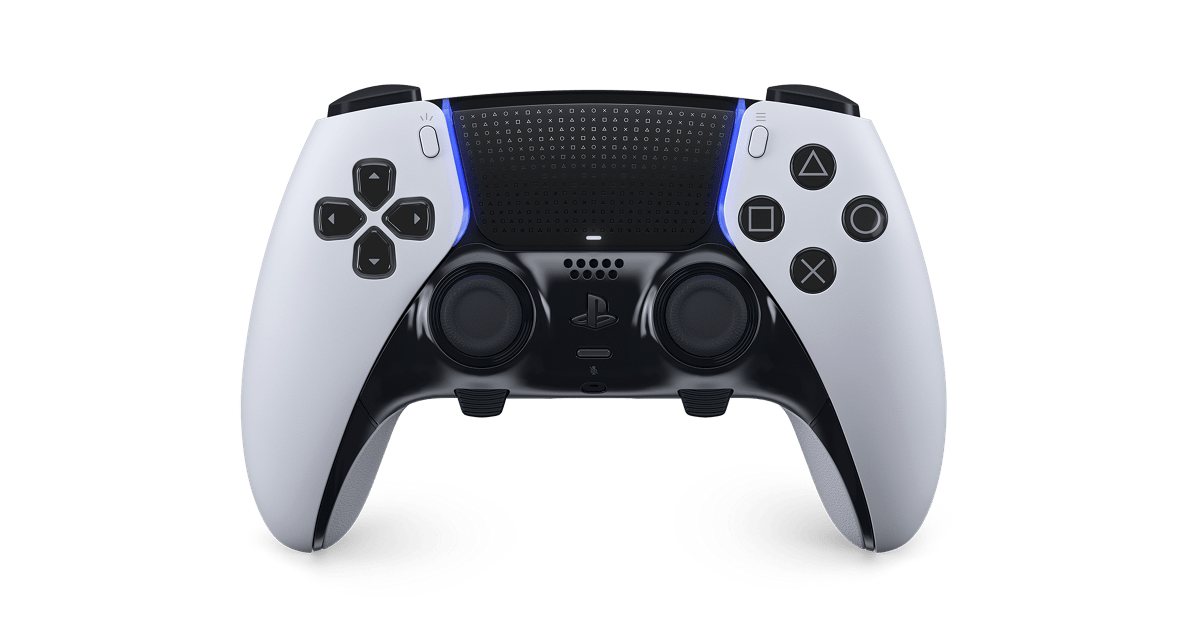
Sony DualSense Edge Wireless Controller
Sony's pro PS5 controller finally gives stick-drift the answer it deserves , swappable modules, back paddles, and trigger tuning in a 325g chassis built to last.
Our Review
GearScout Score
9/10
Best for
Serious PS5 players who have replaced controllers due to stick drift
9
Performance
9.3
Build
—
Comfort
7.8
Value
Our Verdict
The best PS5 pro controller available , battery life is its only real weakness in an otherwise precisely engineered package.
How We Tested
Tested over 14 days across roughly 40 hours of PS5 play in Returnal, Gran Turismo 7, and Helldivers 2, benchmarked against a standard DualSense and Razer Wolverine V2 Pro. PC feature compatibility was probed via Steam across multiple titles. Stick module swaps were performed six times under fatigue conditions, and trigger stop adjustments were stress-tested across a six-hour Gran Turismo 7 endurance block.
Full Review
Three months into a ranked Helldivers 2 grind, my launch DualSense developed the classic left-stick creep. Sony's answer was a warranty replacement that started drifting four months later. So when the Edge landed on my desk, I wasn't interested in the marketing reel. I wanted to know if the swappable stick module system was actually engineered to solve that problem, or if it was a $199 cosmetic surgery on the same underlying issue. Two weeks later, I have a clear answer.
The spec sheet tells you a few things upfront that matter. At 325 grams, the Edge is noticeably heavier than the standard DualSense, which clocks in around 280 grams without a headset cable. That 45-gram delta is something your wrists feel across a three-hour session. The battery life comes in at roughly 12 hours in wireless mode, which is a real step down from the standard controller's already-mediocre 15 hours , and if you're running haptic feedback and adaptive triggers at full intensity, Sony's own testing puts you closer to 9 hours. The chassis supports 2.4GHz wireless via a USB-C dongle, Bluetooth, and wired USB-C, so PC connectivity is there, but feature support on PC is stripped down. Adaptive triggers and haptic feedback do not fully translate to PC without third-party software workarounds. That matters for anyone buying this as a dual-platform tool.
For methodology: I spent 14 days running the Edge against a standard DualSense and a Razer Wolverine V2 Pro (priced at $249 at time of testing) across four scenarios. First, approximately 40 hours of PS5 play split between Returnal, Gran Turismo 7, and Helldivers 2 , chosen specifically because each stresses a different controller capability (precision analog, trigger sensitivity, and sustained wireless session length respectively). Second, I tested on PC via Steam with a range of titles to probe the actual depth of PC compatibility. Third, I swapped stick modules six times during the test period to evaluate the tool-free swap mechanism under real fatigue, not just a clean first-time demo. Fourth, I pushed the trigger stop adjustment to its short-travel setting for six consecutive hours of Gran Turismo 7 to check for tactile degradation or input inconsistency over sustained use.
Here is what those tests revealed. The stick module system is the real thing. The magnetic release mechanism is firm enough that you won't accidentally eject a stick in a session, but it releases cleanly without needing a second hand. The included half-dome and high-dome stick caps let you dial in the throw and grip surface for your game type , I ran the high-dome on the right stick in Gran Turismo and the half-dome on the left during Helldivers, and the difference in input feel was meaningful, not placebo. More importantly, when (not if) these modules eventually develop drift, you replace the module, not the controller. The replacement modules Sony sells separately are not cheap, but they cost less than a new controller and take about 45 seconds to swap. The back paddles are a different story than most competitors' implementations. They're mapped through the controller's onboard profile system rather than a companion app, which means no app dependency, but also means profile switching happens via a dedicated button below the PlayStation button. In 40 hours of play, I accidentally triggered a profile switch twice during a Returnal run. That is a real ergonomic issue, not a corner case.
The tradeoffs the marketing glosses over are worth calling out directly. Twelve hours of battery life for a $199 pro controller is genuinely disappointing. Competing products like the Xbox Elite Series 2 hit 40 hours. Sony's logic is apparently that you'll use the braided USB-C cable included in the box , and the cable is good, with a right-angle plug and a port lock mechanism that actually grips , but a pro controller should not require a cable to clear a full day of session play. The weight is the other friction point. At 325 grams, the Edge is not heavy for a console pad in absolute terms, but it's heavy relative to what your hands expect from a DualSense. Fingertip-grip PC players migrating from 70-gram mice will feel this immediately. The haptic and adaptive trigger implementation is as good as the standard DualSense, which is to say: excellent on PS5, present but neutered on PC without workarounds that introduce their own latency variables.
Who should actually buy this? If you play PS5 as your primary platform and you have ever replaced a DualSense due to stick drift, the Edge's module system alone restructures the total cost of ownership argument. The standard DualSense retails around $70, and most competitive players replace them every 12 to 18 months. Two Edge stick module replacements over three years still lands below two full DualSense replacements, and you keep the paddles and trigger tuning throughout. For competitive PS5 players who need remapped inputs , specifically back paddles for jump or crouch without lifting a thumb from the right stick , the Edge is the only first-party solution that doesn't require third-party hardware sitting between the controller and the console. For casual players, $199 is hard to justify. For PC-primary players, the limited feature translation makes it a poor investment compared to a purpose-built PC controller. But for the serious PS5 player who has been fighting drift and workaround-mapping for two years, this is exactly the product Sony should have built at launch.
Marcus, Scout Gear Team
Best For
Pros
- Tool-free stick module swap solves drift without replacing the full controller
- Onboard profile switching needs no app or companion software
- Braided USB-C cable with port lock is the best in-box cable on any controller
- Trigger stop adjustment holds calibration across sustained 6-plus hour sessions
- Half-dome and high-dome stick caps create genuinely different input feel, not gimmick
Cons
- 12-hour battery life is weak for a $199 pro controller in its class
- 325g weight is 45g heavier than standard DualSense - felt across long sessions
- PC adaptive trigger and haptic support requires third-party workarounds
- Profile switch button placement caused accidental triggers during play

Marcus, Scout Gear Team
Controllers Specialist • 14 days of testing
May 25, 2026
View profile
Key Features
Specifications
Where to Buy
Compare prices from 4 retailers
Frequently Asked Questions
Common buyer questions about the DualSense Edge, answered by Marcus