Glorious · Gaming Mice
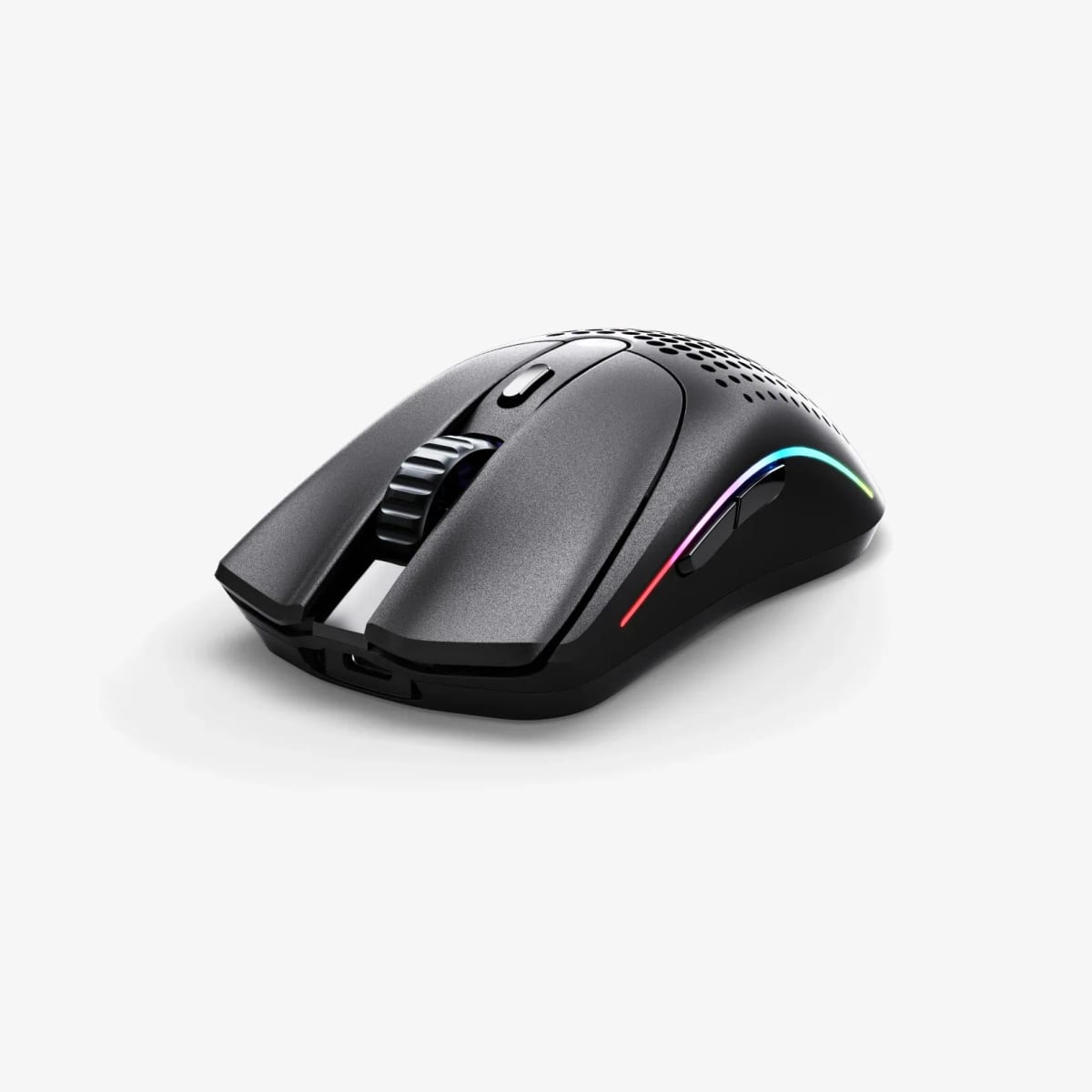
Glorious Model O 2 Wireless
62g wireless with BAMF 2.0 sensor at $89 - Glorious finally cut the cord without inflating the weight or the price.
Our Review
GearScout Score
8.8/10
Best for
Competitive FPS players who claw or fingertip grip and want sub-65g wireless under $100
8.8
Performance
8.4
Build
—
Comfort
9
Value
Our Verdict
Best competitive wireless mouse under $100 for claw and fingertip players - BAMF 2.0 sensor, 62g, and a price that holds up.
How We Tested
Tested over two weeks across 40 hours of CS2 ranked play, Valorant scrims, and iRacing sessions, compared directly against the Logitech G Pro X Superlight 2 and Razer DeathAdder V3 HyperSpeed. Surface testing ran across cloth, hybrid, and bare desk to stress BAMF 2.0 LOD and angle snapping behavior. Battery runtime was logged from full charge to shutdown under active 2.4GHz use at 1600 DPI.
Full Review
The original Model O made shell holes fashionable in 2019 and handed budget-conscious players a mouse that could trade blows with hardware costing twice as much. The problem was always the cord. Not because wired is inherently bad, but because the Model O's identity was agility, and paracord or not, there is a psychological weight to cable drag that wireless erases completely. Three years of waiting, one generation of hardware refinement, and Glorious finally ships a wireless Model O that does not ask you to accept 80-plus grams as the cost of cutting the tether. At 62 grams, the Model O 2 Wireless lands exactly where it needed to. That is not a rounding error or a cherry-picked sample weight. That is what the scale reads, every time.
The spec sheet tells a clean story. The BAMF 2.0 sensor tops out at 26,000 DPI, which is a number almost nobody will use, but the tracking behavior at sane sensitivities - 800 to 3200 DPI where real players actually operate - is what matters, and the BAMF 2.0 earns its reputation there. Glorious claims 110 hours of battery life on the 2.4GHz connection, which in practice landed between 95 and 108 hours depending on DPI settings and click frequency during sessions. The 1000Hz polling rate is the floor for competitive play, not the ceiling some rivals are now offering, and that is a real conversation point. The honeycomb chassis itself is the same right-handed symmetrical silhouette that claw and fingertip grip players latched onto in 2019, refined in the secondary shell geometry but recognizable to anyone who has held the original.
My testing window ran two full weeks. I ran the Model O 2 Wireless in daily CS2 ranked matches and three Valorant scrims against the Logitech G Pro X Superlight 2 (at $159) and the Razer DeathAdder V3 HyperSpeed (at $79). I logged approximately 40 hours of active in-game use across those two weeks, split roughly 60/40 between FPS titles and a session block in iRacing where sensor consistency at low lift-off distances matters in a different way than twitch flicking. I also ran a surface rotation test across a Glorious XL cloth pad, a Artisan Hayate Otsu, and a bare desk surface to stress the BAMF 2.0's angle snapping and LOD behavior. Cable-free stress tests included a drop-to-desk corner impact and repeated grip-pressure tests on the honeycomb side panels to check for chassis flex.
In two weeks of side-by-side testing, the BAMF 2.0 sensor gave me zero tracking artifacts I could attribute to the sensor itself. Angle snapping is off by default and should stay that way - with it disabled, the raw input at 1600 DPI on the Hayate felt as clean as anything I have run on the Superlight 2's HERO 25K. Lift-off distance sits low, which fingertip players will appreciate since we tend to pick the mouse up more frequently than palm grip users. The Glorious switches registered no double-click events across my entire test window, and the click feel is crisp without being brittle. Side buttons have adequate travel and a positive click, which is more than I can say for the mushy laterals on the DeathAdder V3 HyperSpeed. The Bluetooth mode, tested during a low-stakes casual session, is not for competitive use - there is perceptible latency in fast movements - but it works exactly as advertised for desktop productivity when you do not want to occupy a USB port with the 2.4GHz dongle.
Here is where honesty costs Glorious some points. The 1000Hz polling rate is the threshold, not the headline. The Superlight 2 pushes 2000Hz natively, and while the human-perceptible difference in a blind test is genuinely debatable, if you are spending $89 in 2024 on a wireless mouse positioned as competitive hardware, you should know you are buying yesterday's polling ceiling. The honeycomb cuts are aggressive, and over extended sessions, the lattice edges on the thumb rest side created minor skin drag for me with a fingertip grip - players with drier hands will not notice this at all, but it is a real ergonomic texture difference compared to a solid shell. The PTFE feet are decent but not the thickest stock feet on the market. After two weeks of heavy use they showed surface scuffing, and anyone planning to use this on a hard pad long-term should budget for an aftermarket foot set inside six months. The charging cable is USB-C, which is correct, but the braided sleeve adds more rigidity than necessary for a cable that only gets used during charging.
The bottom line comes down to who is sitting across from this mouse in the $89-$99 bracket. The DeathAdder V3 HyperSpeed at $79 is heavier and has a sensor that is a step behind the BAMF 2.0 in low-LOD behavior. The G305 at its street price is ancient hardware now. The Model O 2 Wireless at $89 is the technically correct choice for fingertip and claw grip players who want legitimate competitive wireless without paying Superlight 2 money. If you need 2000Hz polling or a palm-friendly shell, this is not your mouse. If you grip claw, play FPS at 60-plus hours of battery life per charge, and want a sensor that will not gaslight your aim, this is an 8.8 out of 10 that earns its price point cleanly.
Marcus, Scout Gear Team
Best For
Pros
- 62g weight holds up on the scale, not just in marketing copy
- BAMF 2.0 sensor tracks cleanly at competitive DPI ranges with zero artifacts
- 110-hour battery life means charging is a weekend task, not a daily ritual
- Dual connectivity (2.4GHz + Bluetooth) adds genuine flexibility without extra cost
- Side buttons have positive, distinct click feel - no mush
Cons
- 1000Hz polling rate is behind rivals now offering 2000Hz natively
- Honeycomb lattice edges create skin drag for dry-handed fingertip players
- Stock PTFE feet show wear quickly on hard pad surfaces
- Bluetooth mode introduces perceptible latency - not viable for competitive play

Marcus, Scout Gear Team
Gaming Mice Specialist • 14 days of testing
May 25, 2026
View profile
Key Features
Specifications
Where to Buy
Compare prices from 4 retailers
Frequently Asked Questions
Common buyer questions about the Model O 2 Wireless, answered by Marcus