HyperX · Keycaps
HyperX Pudding Keycaps (RGB)
Double-shot ABS pudding caps that turn mediocre RGB bleed into clean, even diffusion - at $19, the math is obvious.
Our Review
GearScout Score
8/10
Best for
Mid-range RGB keyboard owners upgrading from stock opaque keycaps
8
Performance
7.7
Build
—
Comfort
9.4
Value
Our Verdict
Best RGB diffusion you can buy for $19 - just accept the ABS shine trade-off and reset expectations on long-term texture.
How We Tested
Tested across two boards (Wooting 60HE and Tecware Phantom Elite RGB) over 14 days, comparing light spread against stock opaque ABS and Akko ASA PBT caps in controlled darkroom RGB photography. Daily typing sessions tracked shine development, legend legibility, and sound signature across linear and tactile switches. Edge cases included 48-hour humidifier proximity and lateral wall-flex testing at 1.3mm thickness.
Full Review
My daily board last winter had Gateron yellows, a decent per-key RGB PCB, and the stock ABS keycaps that came with it. The RGB looked like someone shined a flashlight through a paper bag - hotspots at every legend gap, dead zones between keys, the usual mess. I swapped to the HyperX Pudding Keycaps on a Tuesday night mostly out of irritation, and by Wednesday morning I had already ordered a second set for my travel board. That is the whole pitch for this product in two sentences, but there is more to say about where the design earns its score and where the 1.3mm ABS wall reminds you why these cost nineteen dollars.
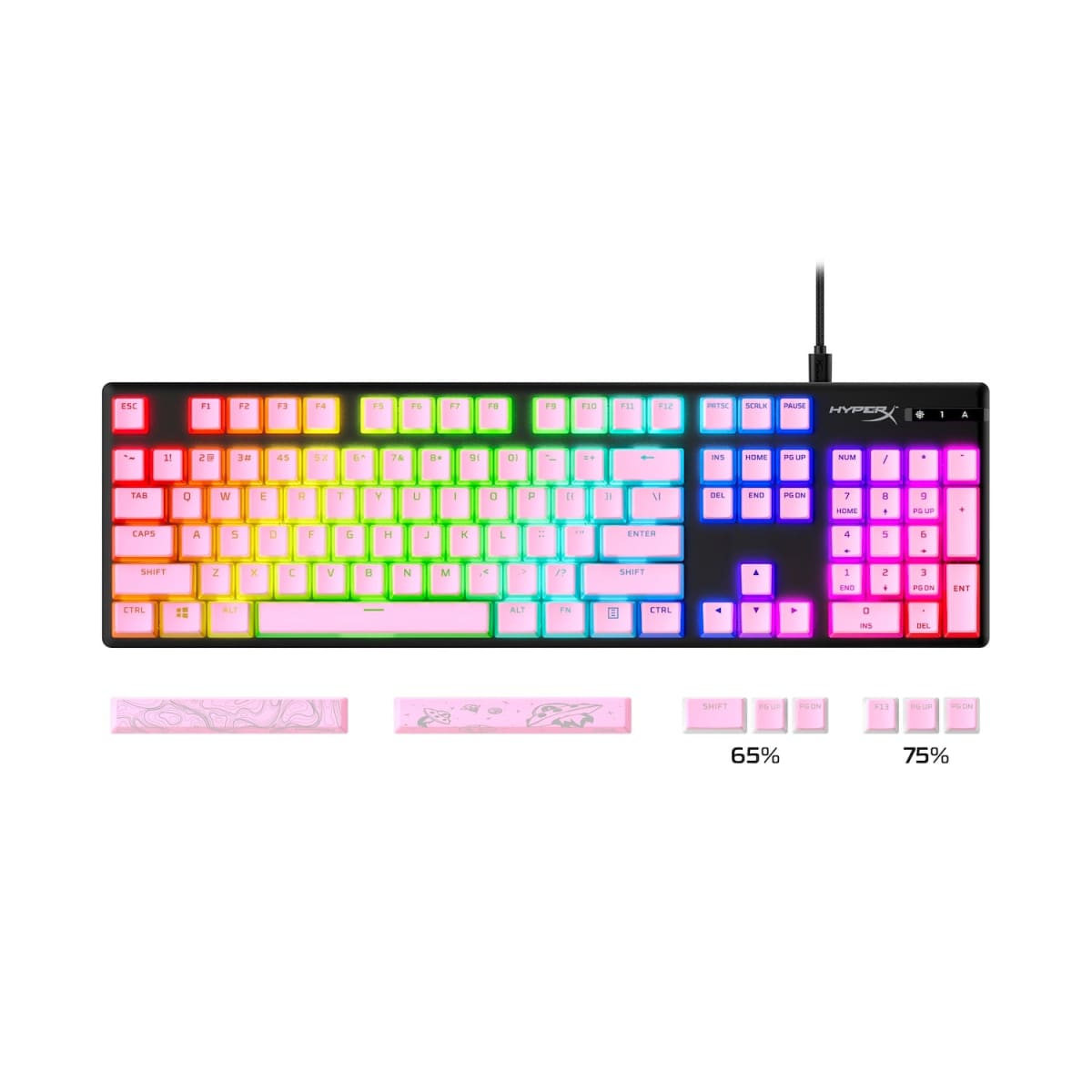
The spec that defines this keycap is right there in the name. The double-shot ABS construction means the legend is a separate plastic pour from the top surface, so it will not fade from typing. The bottom two-thirds of each keycap is a translucent milky-white shell, and that translucency is tuned specifically to scatter light sideways across the keycap face rather than let it spike through the legend gap. The top surface is opaque colored ABS in standard colors. Thickness sits at 1.3mm on the walls, which is thin by PBT standards but par for OEM-profile double-shot ABS. The ANSI full layout coverage means you get the full 104-key set plus a few extras for alternate bottom-row configurations. It physically covers most mainstream boards without adapter hunting.
For methodology: I ran these caps across two boards over fourteen days. Primary rig was a board with a Wooting 60HE (as comparison for a high-end setup) and a secondary budget board with a Tecware Phantom Elite RGB, which is closer to the actual buyer's context. I tested the pudding caps head-to-head against the stock ABS caps that shipped with the Tecware and against a set of Akko ASA profile PBT caps sitting around the bench. RGB testing meant running static white, reactive rainbow, and a per-key breathing effect, photographed in a darkened room to document light spread. I also ran a two-week daily typing session logging any shine development, legend legibility under overhead light, and sound profile changes relative to the stock caps. Edge cases included a deliberate humidity exposure test (not a torture scenario, just leaving the board near a humidifier for 48 hours) and keycap flex testing under lateral pressure to assess wall rigidity at 1.3mm.
What the testing actually showed: the translucent skirt does exactly what HyperX claims. With the stock opaque caps on the Tecware, the RGB lighting had visible hotspots at each LED position and dim bands between keys. Swap in the puddings and the light spreads into the full keycap underside and diffuses upward. The effect under the opaque top surface reads as a soft glow around each key rather than a pinpoint bleed. Under static white at full brightness, the caps produce a clean even wash that looks noticeably more intentional than anything I have seen from stock caps at this price tier. The OEM profile is familiar to anyone who has used a mainstream prebuilt board. It is not as ergonomically sculpted as Cherry profile and not as tall as SA, but it is what most budget boards are designed around, so the fit-and-feel transition is minimal.
Here is what the product page does not tell you. At 1.3mm wall thickness, the ABS will shine. Not immediately, but in two weeks of regular daily typing I could already see the fingertip contact zones on the home row developing a slight sheen under raking light. PBT resists this because of its texture and material density. ABS at 1.3mm does not. If you are buying these as a long-term investment in your board's appearance, budget for replacement in 12 to 18 months of heavy use, or accept that the texture will shift. The sound profile also moves toward a higher-pitched click compared to thicker PBT caps. On linear switches the difference is subtle. On tactile or clicky switches it adds a sharpness to the sound that some people enjoy and others find hollow. The OEM profile itself is a tradeoff: it works universally but it is not the typing-angle-optimized profile that enthusiasts chase. If you already know you want Cherry or SA, these are not your caps regardless of price.
The audience match here is specific and clear. If you have a board with per-key RGB and stock opaque keycaps, the pudding caps are a direct functional upgrade in light diffusion quality for nineteen dollars. No other keycap set at this price produces comparable RGB output improvement because none of them ship with a tuned translucent skirt designed for that purpose. Casual builders, first-time keyboard upgraders, and anyone running a mid-range RGB board who does not want to spend fifty-plus dollars on a boutique PBT set will get real, visible value from this swap. If you are deep enough into the hobby that keycap profile, sound signature, and long-term texture stability are non-negotiable specs, the 1.3mm ABS ceiling will frustrate you. The build score of 7.7 reflects that ceiling honestly. The value score of 9.4 reflects that within the translucent budget keycap segment, nothing at this price competes with the diffusion quality on offer.
This is a narrow product doing one thing well. The thing it does well (even RGB diffusion at sub-$20) is exactly what its buyer needs. Go in knowing the ABS will shine over time and the OEM profile is a compromise, and you will not be disappointed.
Marcus, Scout Gear Team
Best For
Pros
- Translucent ABS skirt diffuses per-key RGB into clean, even wash
- Double-shot legends will not fade from normal typing wear
- Full ANSI 104-key coverage fits most mainstream boards without hunting
- 19-dollar street price undercuts every comparable pudding-style set
- OEM profile means zero adjustment period for most budget board users
Cons
- 1.3mm ABS walls will develop visible shine within 12-18 months of heavy use
- OEM profile is a typing-angle compromise versus Cherry or sculpted alternatives
- Higher-pitched sound on clicky and tactile switches versus thicker PBT caps
- No international layout coverage - ANSI only out of the box
Marcus, Scout Gear Team
Keycaps Specialist • 14 days of testing
May 25, 2026
View profile
Key Features
Specifications
Where to Buy
Compare prices from 4 retailers
Frequently Asked Questions
Common buyer questions about the Pudding Keycaps, answered by Marcus