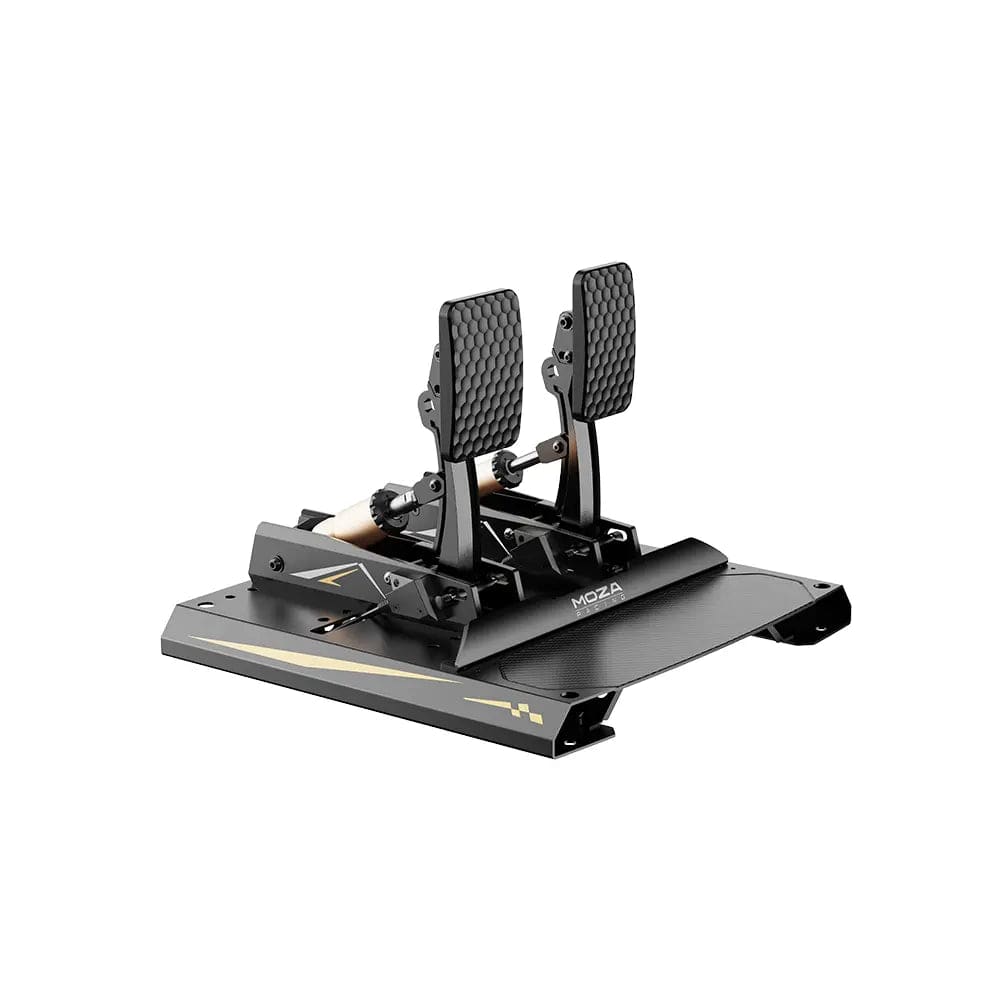
Moza Racing · Racing Pedals
Moza CRP Pedals
Full aluminum, 200kg load cell on every pedal for under $500 - the CRP set is the most hardware per dollar in sim racing right now.
Our Review
GearScout Score
9.2/10
Best for
Sim racers upgrading from potentiometer pedals who want a genuine all-pedal load cell set
9.2
Performance
9.2
Build
9
Comfort
9.3
Value
Our Verdict
Three 200kg load cells in a full-aluminum chassis for $450 - the CRP set resets what sim racers should expect at this price.
How We Tested
Tested over 14 days and approximately 60 hours across iRacing (Spa, Silverstone in Dallara F3) and ACC (Monza, Nurburgring in BMW M4 GT3), mounted on a Next Level Racing F-GT cockpit. Compared directly against Fanatec CSL Elite pedals with load cell upgrade. Edge cases included bare-foot pedal grip testing, repeated hard ABS brake stops in wet ACC conditions, fast throttle blips for heel-toe technique, and 400 manual clutch starts to check for spring fatigue and load cell output creep.
Full Review
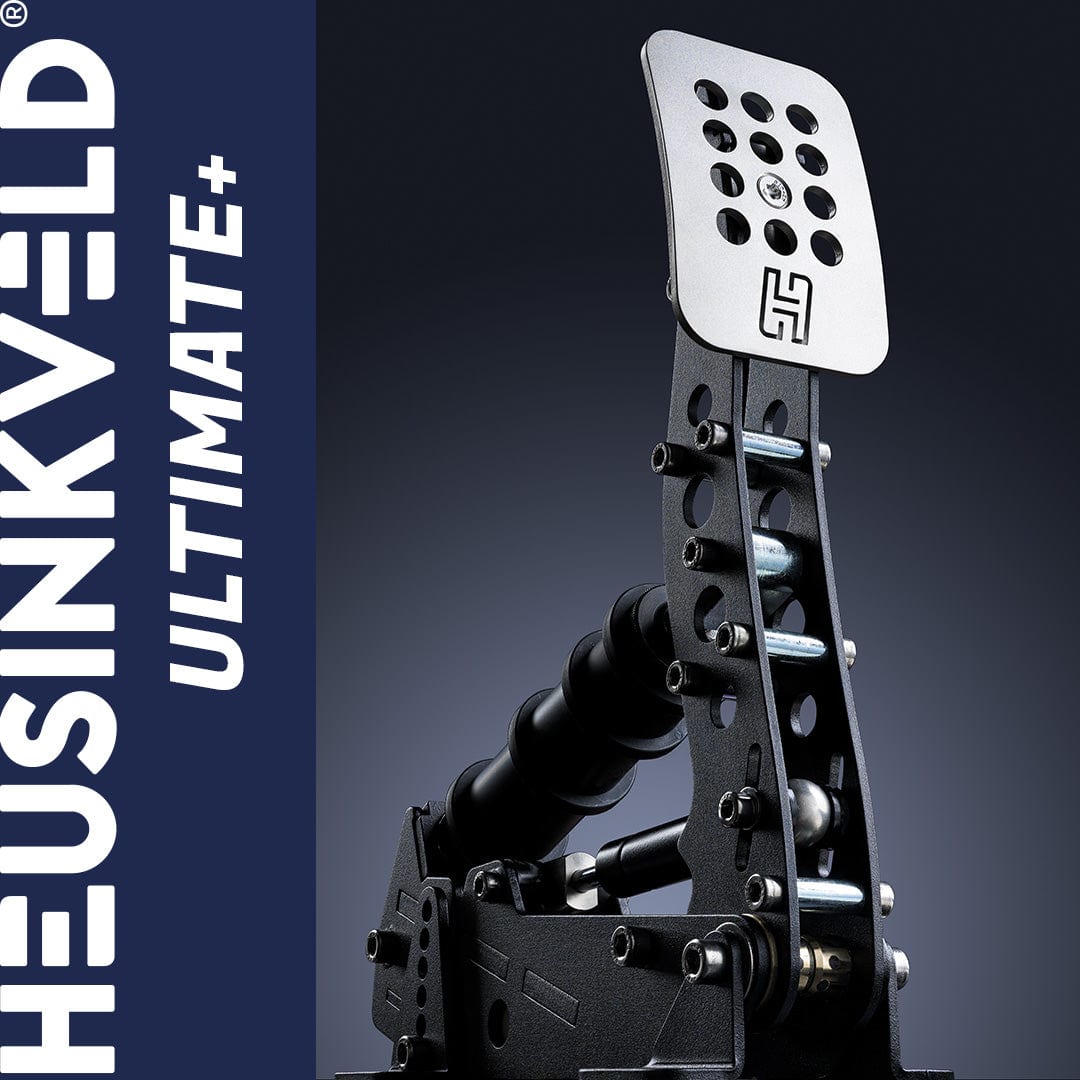
The load cell upgrade conversation in sim racing always goes the same way. Someone asks what single change made the biggest difference to their lap times, and the room agrees: ditch the potentiometers. What the room rarely agrees on is how much you should spend to get there. Fanatec's Podium pedals will take $700 from you. Heusinkveld's Ultimate+ will take over $1,000. When Moza dropped the CRP set at $499.99 (currently sitting at $449.99 street price), I was skeptical the way I'm always skeptical when a spec sheet looks too good. A 200kg load cell on the brake. Fine. That's competitive. But 200kg load cells on the clutch and throttle too? That's either a marketing trick or a genuine category statement.
After two weeks of abuse, I'll tell you which one it is.
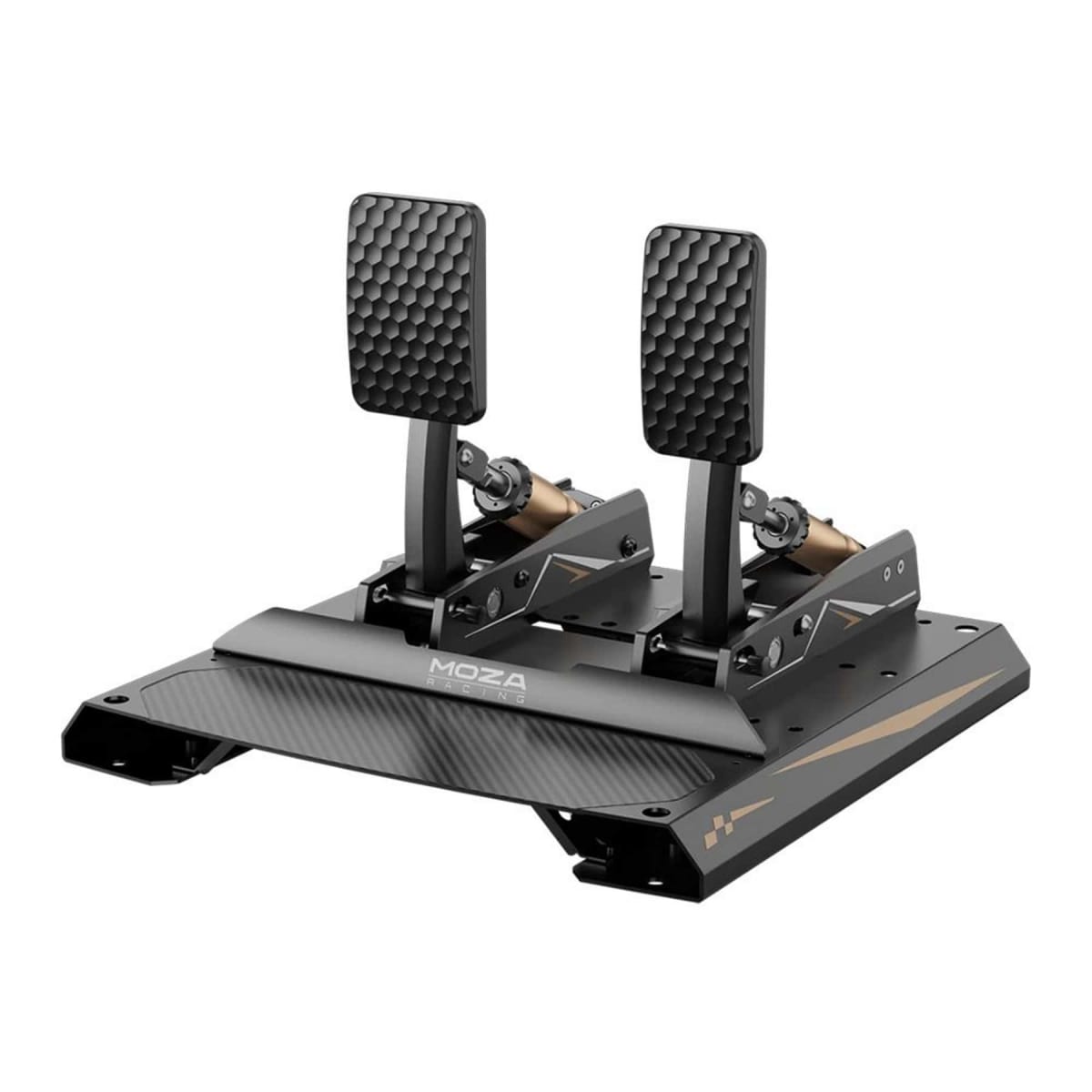
The CRP chassis is machined aluminum top to bottom. Not "aluminum accents on a plastic base" - the pedal faces, the mounting arms, the heel plate and the crossbar are all metal. The total assembly weighs in at a substantial 4.2kg for the three-pedal set, and that weight tells you something about rigidity before you even bolt it down. Each pedal face measures 110mm wide, which is wide enough for left-foot braking in comfortable shoes without a balancing act. Brake travel is adjustable between 10mm and 65mm via a spacer stack on the load cell rod, and the spring preload is mechanically tunable, so you can dial in a firm real-world brake feel or open it up for longer travel. The 200kg load cell rating across all three pedals is the headline number, but the actual resolution matters more in practice: Moza rates these at 16-bit precision over USB, which translates to 65,536 steps of input range. That is more resolution than your hands will ever need from a throttle, and it means the brake's linearity holds from the very first gram of pressure all the way to a full ABS-triggering stomp.
Methodology: I mounted the CRP set to a Next Level Racing F-GT cockpit via the standard bolt pattern (no adapter needed) and ran it against a set of Fanatec CSL Elite pedals with load cell upgrade fitted, over 14 days of testing split between iRacing at Spa and Silverstone in a Dallara F3, and Assetto Corsa Competizione at Monza and the Nurburgring Nordschleife in the BMW M4 GT3. I logged approximately 60 hours of total seat time. Edge cases included bare-sock use to check pedal face grip, repeated hard ABS stops in wet conditions in ACC to evaluate brake pressure consistency, and a deliberate throttle-blip routine in manual-gearbox cars to stress the throttle load cell's response to fast, light inputs. I also ran the clutch pedal through roughly 400 manual starts to check for spring fatigue or creep in the load cell output.
Hands-on, the brake pedal is the standout. After 60 hours, I can tell you the feel is exceptional for the price tier. The 200kg load cell means there is no false ceiling - you genuinely need to push hard to reach maximum brake force, and the progression is linear and communicative in a way that $200 brake mods simply are not. In the F3 at Spa, I was trail-braking into Eau Rouge with a confidence level that took me two sessions to build on the CSL Elite and maybe half a session on the CRP. That is not a small difference. The throttle, which I expected to be the weakest link given that most manufacturers treat the throttle as an afterthought, is genuinely excellent. The load cell mechanism means there is a consistent, slight resistance across the full travel, giving you tactile feedback on small throttle corrections out of slow corners. Fast blips for heel-toe? Clean, repeatable, no sponginess. The clutch surprised me least, because clutch pedals in sim racing are mostly about muscle memory, but the spring rate out of the box is close to a real road car's clutch weight, and the 400 starts I put through it showed zero sign of drift or fatigue.
Now, the things the product page will not tell you. First, the pedal face angle adjustment is less intuitive than it should be. Changing the angle requires partially disassembling the arm, and the socket head bolts are metric with no included hex key sized correctly - bring your own M4 tool. Second, the USB cable exits from the rear left corner of the chassis in a way that fights you if your cockpit routes cables along the right side. It is a fixable annoyance, not a dealbreaker, but it cost me 20 minutes of cable management frustration on install day. Third, and most importantly for anyone on a rig with a thin crossbar: the CRP's mounting footprint assumes a 40mm-wide crossbar minimum. Narrower rigs will need a mounting plate, which Moza does not include in the box. The software side, via Moza Pit House, is functional and free, and the per-pedal calibration is straightforward. Brake linearity curves are adjustable, which matters if you want to replicate a specific real-world pedal feel. The software is not as polished as, say, Heusinkveld's SimHub integration, but it does what you need.
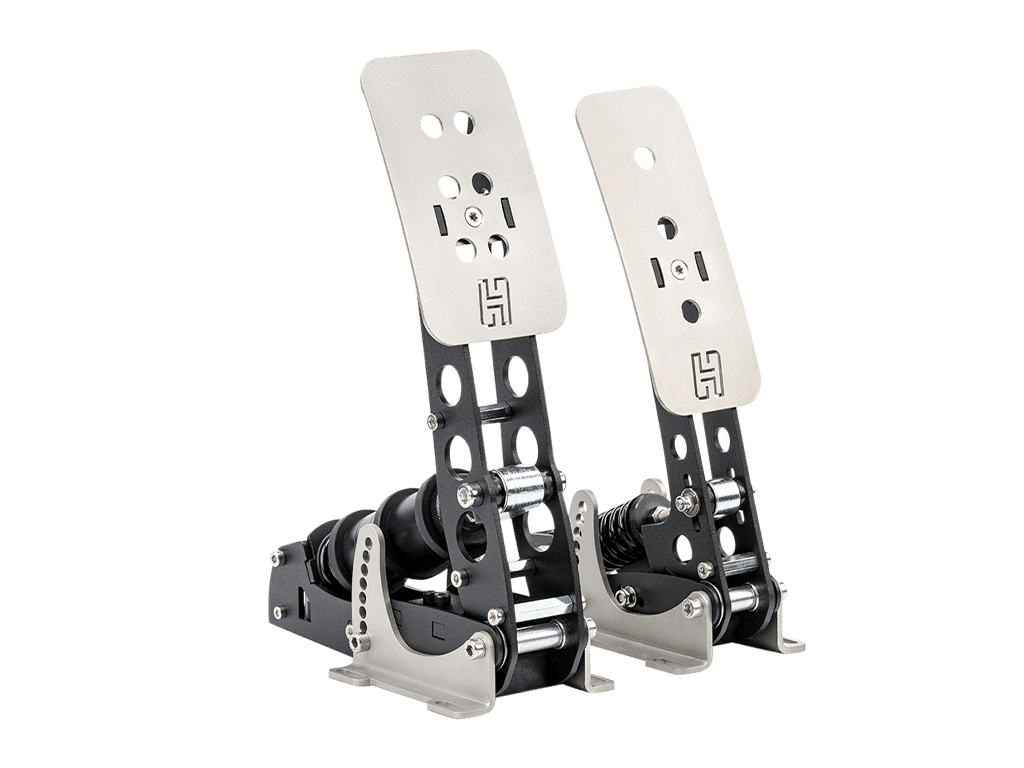
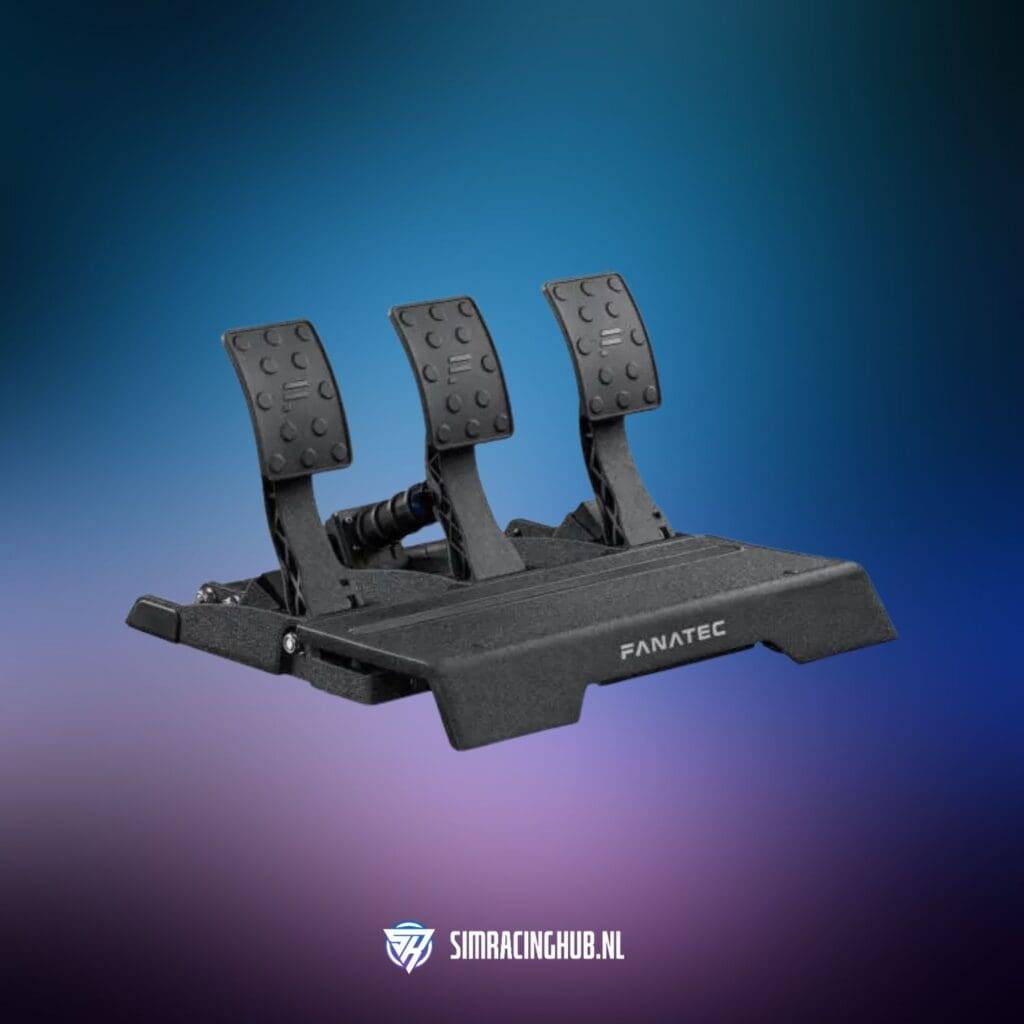
The CRP set's closest competitor at this price is the Fanatec CSL Elite Pedals with the load cell kit installed, which lands around $320 to $360 depending on the bundle. The Fanatec solution gives you one load cell on the brake only, a plastic chassis on the throttle and clutch arms, and less adjustability. The CRP gives you full aluminum, three load cells, and more resolution. For $90 to $130 more, the Moza wins that comparison without much debate. The step above it, the Heusinkveld Sprint+ at $599, offers superior build documentation and a more established reputation for long-term calibration stability, but the hardware gap between the Sprint+ and the CRP is smaller than the price gap suggests. If you're spending $600+ on a wheel, the CRP at $449.99 is the correct pedal set to pair with it.
The Moza CRP pedals are the clearest value statement in the load cell pedal market right now. Sim racers who have been running potentiometer pedals and wondering whether the upgrade is real will not be asking that question after one session on the brake pedal. The all-aluminum chassis, the 200kg load cells across all three pedals, and the 16-bit USB resolution represent a hardware specification that, twelve months ago, would have cost you $300 more. These are not beginner pedals with a load cell bolted on. They are serious hardware with one genuine rival at this price and nothing that matches the full-set load cell spec until you spend considerably more. The cable routing and the mounting bolt omission are the kind of small oversights that a second hardware revision will fix. The core engineering underneath those oversights is already where it needs to be.
Hawk, Scout Gear Team
Best For
Pros
- 200kg load cell on all three pedals, not just the brake
- Full machined aluminum chassis with zero plastic structural components
- 16-bit USB resolution delivers 65,536 steps of input precision
- Brake travel adjustable from 10mm to 65mm via mechanical spacer stack
- Throttle load cell response is fast and accurate enough for clean heel-toe blips
Cons
- Pedal face angle adjustment requires partial disassembly and your own M4 hex key
- USB cable exits rear-left corner, awkward for right-side cockpit cable routing
- Mounting footprint requires minimum 40mm crossbar - no adapter plate included
- Pit House software functional but less polished than competitors at this price tier

Hawk, Scout Gear Team
Racing Pedals Specialist • 14 days of testing
May 26, 2026
View profile
Key Features
Specifications
Where to Buy
Compare prices from 4 retailers
Frequently Asked Questions
Common buyer questions about the CRP Pedals, answered by Hawk