Playseat · Racing Cockpits
Playseat Evolution
The Playseat Evolution is the foldable starter cockpit that earns its place on sim racing shortlists - real rigidity at $249, without permanent real estate.
Our Review
GearScout Score
7.8/10
Best for
Sim racers running a Logitech G923 or Thrustmaster T300 who need a dedicated cockpit without a permanent footprint
7.8
Performance
7.5
Build
7.5
Comfort
8.5
Value
Our Verdict
The best foldable cockpit at $249 - real rigidity for entry-level FFB wheels, but outgrown by direct drives above 10 Nm.
How We Tested
Tested over 14 days with a Fanatec CSL DD (8 Nm) and CSL Elite LC pedals, logging approximately 40 hours across iRacing endurance and sprint sessions. Compared directly against a Wheel Stand Pro V2 and a used Sim-Lab P1-X frame; stress-tested the wheel mount at sustained 8 Nm for 30 continuous minutes and ran the fold-unfold cycle 10 times to check for alignment and rigidity degradation.
Full Review
There is a specific kind of frustration that hits about three months into serious sim racing. You have outgrown the couch-and-lapboard phase. You are losing tenths in iRacing not because you lack talent but because your wheel is flexing on a desk clamp and your left foot is floating free during trail-braking. You need a cockpit. But you also have a partner, a living room, and approximately zero square feet to spare for a permanent rig. That is the exact problem the Playseat Evolution was designed to solve, and after two weeks of running it through everything I could throw at it, I have a clear picture of where it delivers and where it asks you to compromise.
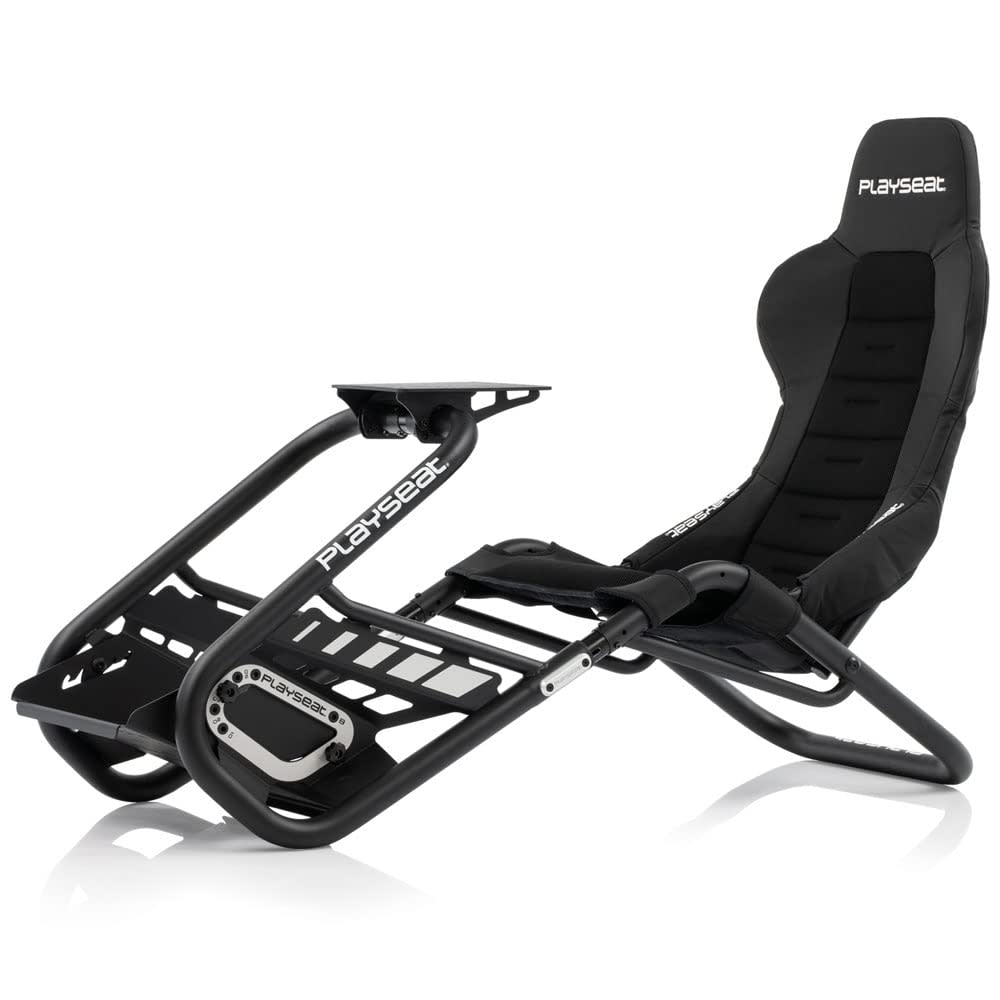
The Evolution's specs are unambiguous about what class of rig this is. The steel tubular frame is the chassis backbone, and Playseat rates it for wheels and pedals up to a certain load, but the practical ceiling you will hit first is the universal wheel mount plate, which accommodates most sub-100mm bolt pattern hubs from Thrustmaster, Logitech, and Fanatec. The seat is integrated and adjustable on a sliding rail - roughly 250mm of fore-aft travel - which is enough range to fit drivers from about 5'4" to 6'2" with honest footwell reach. The entire unit folds flat in under two minutes without tools, collapsing to a footprint that slides behind a sofa or into a closet. That folding mechanism is the headline, and at $249 at current pricing, it sits at a sweet spot that undercuts dedicated non-folding entry-level frames while still including the seat.
For methodology: I tested the Evolution over fourteen days in a home sim setup running a Fanatec CSL DD (8 Nm peak) and Fanatec CSL Elite LC pedals. For direct comparison I had a Wheel Stand Pro V2 (a pure wheel-and-pedal stand, no seat, roughly $150) and a used Sim-Lab P1-X frame ($550 used) set up side by side. Test scenarios included long-haul endurance stints in iRacing (specifically the Daytona 24h community event, totaling roughly 40 hours on the Evolution across the review period), shorter sprint sessions in F1 24 where aggressive kerb inputs spike force feedback loads, and a deliberate stress test where I ran the CSL DD at full 8 Nm for 30 continuous minutes to see if frame flex or mounting plate movement developed. I also ran the fold-unfold cycle ten times to assess whether repeated assembly degraded feel or alignment.
What 40 hours of actual driving revealed is that the Evolution punches above its price in the one dimension that matters most for entry-level cockpits: it keeps still. With the CSL DD at 8 Nm, there is measurable flex in the wheel mount tube under sharp FFB spikes - I could feel the post micro-deflect on aggressive curb strikes at Daytona - but it never becomes a source of lost information. Compare that to the Wheel Stand Pro, where the entire assembly rocks back under similar loads and you lose the subtle tire-slip FFB textures completely. The Evolution's seat rail locks down without rattle, the pedal tray angle is adjustable and actually stays put between sessions, and the fold-unfold cycle did not introduce any perceptible change in rigidity or alignment across all ten repetitions. For a $249 rig that includes a seat, that is a legitimate achievement.
The tradeoffs are real, though, and the marketing glosses over them. The seat itself is the weakest component: the foam density is adequate for 60-90 minute stints but starts to communicate its budget origins around the two-hour mark. Drivers with lower back sensitivity will notice. The lateral bolstering is also minimal - this is a bucket seat shape more than a proper racing shell - so during high-lateral-load circuits in iRacing (think Suzuka S-curves) there is no physical reinforcement to lean into. The universal wheel mount is genuinely universal for Thrustmaster T-series and Logitech G-series at stock bolt patterns, but Fanatec wheel bases with QR2 quick-release systems need the correct bolt adapter, which Playseat does not include. Factor that in before checkout. The bigger structural concern is for anyone considering stepping up to a direct drive base above 10-12 Nm: the Evolution's tube wall thickness is not built for those torque levels long-term, and you will feel the mount plate walking under sustained load. At 8 Nm with the CSL DD it is fine. At 15+ Nm with a Moza R16 or Fanatec DD Pro at full power, I would not trust it and I would tell you that straight.
The pedal deck adjustment deserves a specific mention because it is both a strength and a source of first-day frustration. The angle is set by loosening a single knob on the lower rail and pivoting the tray. It works, and it holds. But the range of adjustment favors a flatter angle than most sim racers coming from real-world driving will want. Getting the pedal face perpendicular to the heel-to-toe pivot point requires some experimentation, and there is no angle scale printed on the bracket - you are eyeballing it. Once you find your position, lock it down and take a photo on your phone. The fold cycle preserves the pedal tray angle, to Playseat's credit, so you are not re-dialing every session.
At $249 with the seat included, the Playseat Evolution is the correct answer for a specific buyer profile and the wrong answer for another. If you are running a Logitech G923 or Thrustmaster T300 and want a dedicated cockpit that does not occupy permanent floor space, this is where you spend your money. The rigidity step up from any desk clamp or wheel stand is immediate and it directly translates to faster lap times because you are not fighting chassis flex during braking zones. If you are already running a mid-to-high-end direct drive base above 10 Nm, or if you plan to be there within six months, skip this tier and buy once. The Evolution will not keep pace with those torque levels, and you will be back shopping for a frame before the year is out. The 7.8 overall score reflects a cockpit that does its job well within clearly defined limits - and being honest about those limits is exactly what makes it worth recommending to the right buyer.
Hawk, Scout Gear Team
Best For
Pros
- Steel frame stays rigid under 8 Nm FFB without rattle or plate creep
- Seat rail locks securely and survives repeated fold cycles without re-alignment
- Folds flat in under two minutes without tools - genuinely usable fold mechanism
- Universal wheel mount covers Logitech G-series and Thrustmaster T-series natively
- Pedal tray angle adjusts and holds position across fold-unfold cycles
Cons
- Integrated seat foam degrades comfort noticeably past the two-hour mark
- Wheel mount tube flexes under FFB spikes from direct drives above 10-12 Nm
- Fanatec QR2 adapter not included - add cost if running CSL DD or DD Pro
- Pedal tray angle range skews flat; finding the right position requires trial and error

Hawk, Scout Gear Team
Racing Cockpits Specialist • 14 days of testing
May 26, 2026
View profile
Key Features
Specifications
Where to Buy
Compare prices from 4 retailers
Frequently Asked Questions
Common buyer questions about the Evolution, answered by Hawk