Playseat · Racing Cockpits
Playseat Trophy
A steel-frame cockpit that holds its own against aluminum-profile rigs at $549 , rigid enough for 15Nm direct drive and genuinely comfortable for long stints.
Our Review
GearScout Score
8.7/10
Best for
Sim racers running a direct drive wheel up to 15Nm who want steel-frame rigidity under $600
8.7
Performance
8.9
Build
8.8
Comfort
8.7
Value
Our Verdict
At $549, the Trophy's steel chassis and ActiFit seat beat aluminum-profile rivals on rigidity and long-haul comfort , if you can live without formula seating.
How We Tested
Tested over two weeks with a Moza R9 (9Nm) and Heusinkveld Sprint pedals (65kg actuation), running approximately 45 hours in iRacing across Nurburgring, Spa, and Laguna Seca. Compared directly against a Next Level Racing GT Lite Pro ($499 aluminum-extrusion chassis) with identical hardware, including deliberate high-torque kerb-strike sessions, sustained load-cell brake pressure tests at up to 90kg actuation, and two dedicated 3-hour endurance stints for comfort evaluation.
Full Review
I have a soft spot for products that get quietly, unfashionably right what the flashy competitors get loudly wrong. When Playseat sent over the Trophy, my first reaction was skepticism: a brand historically associated with entry-level fabric folding chairs, now asking $549 for a fixed steel-frame cockpit pitched squarely at the direct drive crowd. That pitch could have gone sideways fast. It didn't. But let me tell you exactly how and where it earned that assessment, because the Trophy is not a perfect rig.
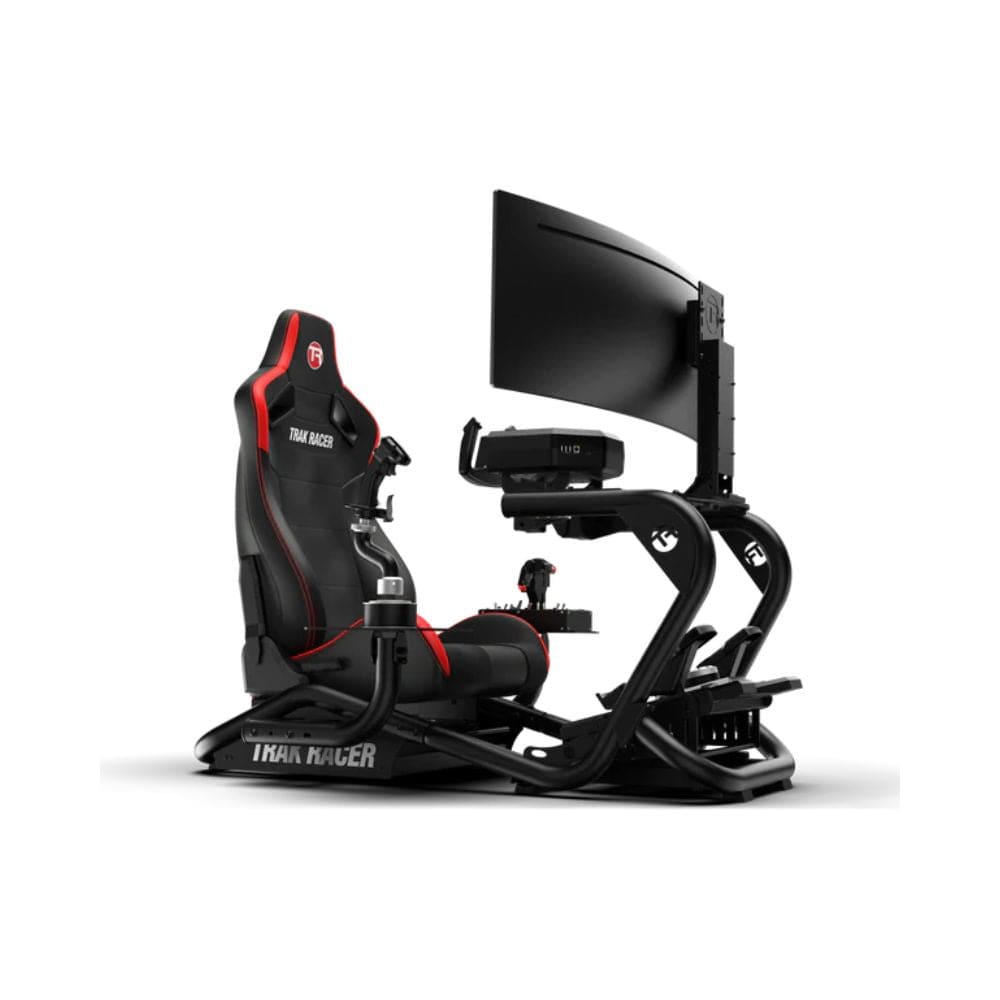
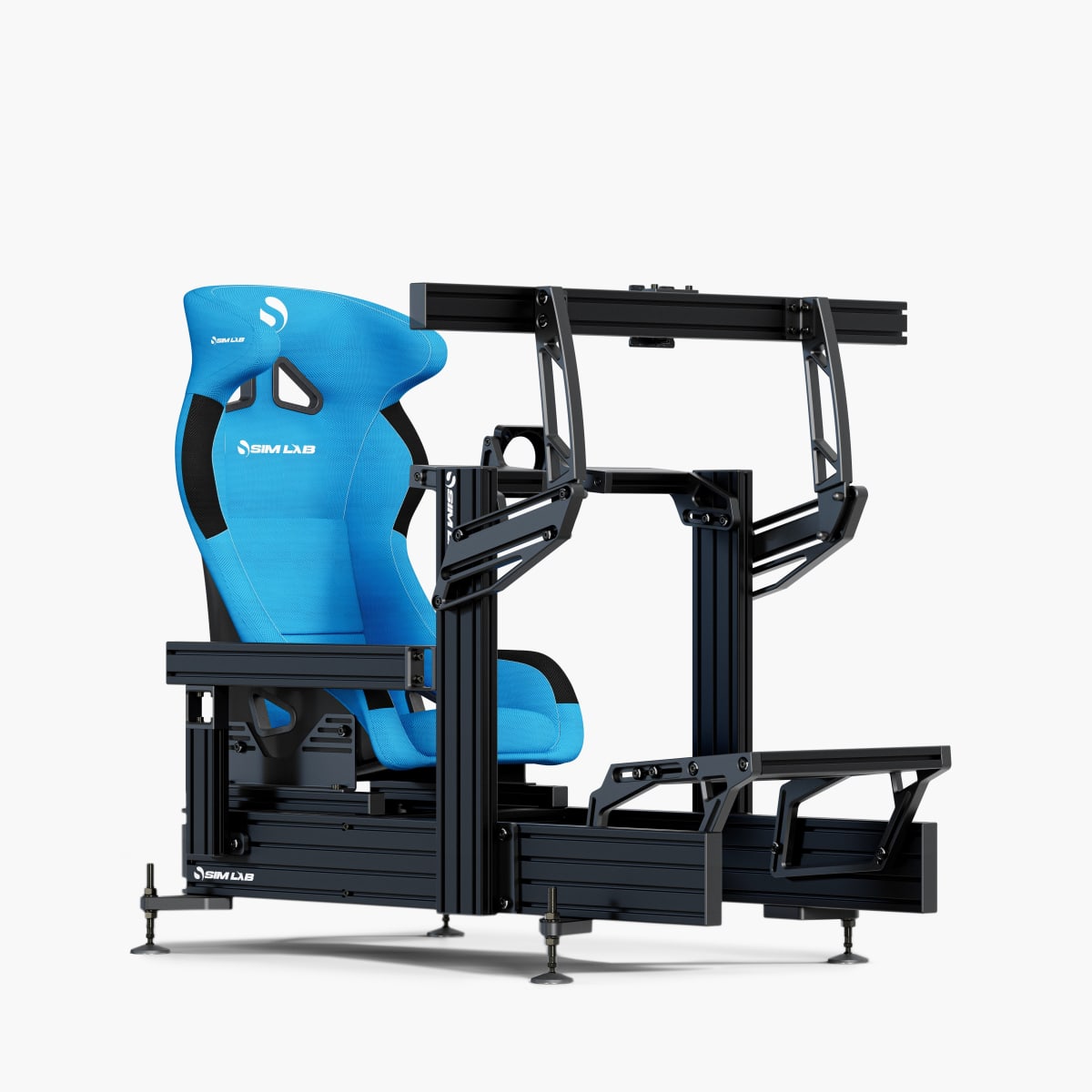
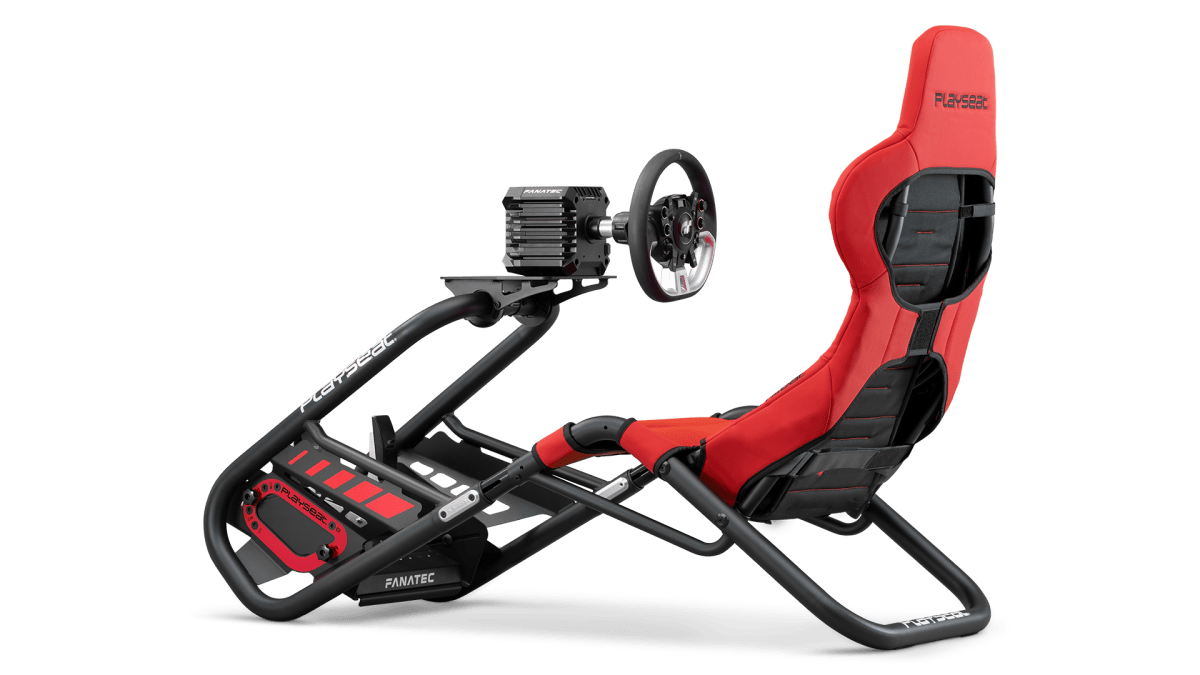
The headline spec that matters most here is the 15Nm wheelbase torque rating. To put that in context, the Fanatec DD Pro in its boosted mode sits at 8Nm, the Moza R9 at 9Nm, and the Simucube 2 Sport at 17Nm. At 15Nm, Playseat is telling you this chassis can live with a real direct drive wheel without flexing into uselessness. The steel frame is the reason that claim holds up. The Trophy does not use the aluminum extrusion profiles you see on rigs from Next Level Racing or Trak Racer at this price point. Instead it's a welded and powder-coated steel tube chassis, which gives it a specific character: heavier, slightly less adjustable for niche body geometries, but meaningfully more rigid at the steering column interface where it counts most. The wheel deck mounting plate is thick enough that I did not detect any noticeable deflection under a Moza R9 at full torque. That matters more than any spec sheet number.
The ActiFit seat is Playseat's proprietary foam-and-fabric unit, and it deserves its own paragraph because it is the single biggest differentiator from the brand's own cheaper lineup. The seat shell is firmer than the Trophy's price competitors might lead you to expect, with lateral bolstering that actually holds a human torso during hard lock-to-lock inputs. It is not a Recaro. It is not trying to be. But after extended sessions it does not produce the lower-back fatigue I associate with the softer bucket seats on comparably priced rigs. The seat mount allows recline adjustment and fore-aft positioning, which is not a premium feature but is executed cleanly here without the wobble some cheaper carriers show after a dozen adjustment cycles.
The suspended pedal plate is worth calling out specifically. Rather than a rigid floor-mounted pedal deck, the Trophy uses a hanging pedal assembly that attaches to the front leg of the chassis. This is a meaningful decision for load-cell pedal users. A rigid floor deck transfers pedal load into the floor and then into your lower body, which creates a feedback loop that fatigues the ankle and knee over long stints. The suspended arrangement puts the force path into the chassis structure instead, which feels more natural and reduces fatigue noticeably. The trade-off is that high-end load cell pedals above roughly 90kg of actuation force will reveal some play in the attachment point, which I will address in the tradeoffs section.
For methodology: I ran the Trophy as my primary rig for two consecutive weeks. I mounted a Moza R9 wheelbase (9Nm peak) with the Moza GT wheel and a set of Heusinkveld Sprint pedals as the primary configuration. For comparison, I had a Next Level Racing GT Lite Pro (aluminum extrusion, $499) set up in the same room with identical hardware. I ran iRacing across the Nurburgring Nordschleife, Laguna Seca, and Spa over approximately 45 hours of total seat time, with deliberate edge-case sessions that included sustained maximum-torque kerb strikes, full-weight brake applications on the Heusinkveld sprints at 65kg actuation, and a deliberate lateral weight-shift test where I pushed hard against the seat bolsters to check for chassis twist. I also ran two 3-hour endurance stints specifically to evaluate comfort fatigue rather than hardware performance.
The 45 hours of testing revealed several things the spec sheet does not tell you. Chassis rigidity at the wheel deck is genuinely competitive with the GT Lite Pro, and in my subjective assessment the Trophy felt fractionally stiffer when absorbing the R9's kerb-strike torque spikes. The seat-to-frame connection, however, showed a small but detectable amount of micro-movement under the lateral push test that the GT Lite Pro did not. This is not a structural failure point and I doubt most drivers would ever notice it in normal sim racing. It is a data point for the obsessives. The suspended pedal plate performed exactly as intended with the Sprints at 65kg actuation, with no perceptible flex. I pushed a borrowed set of HPP Ultra pedals at closer to 90kg and felt a small amount of movement in the mounting bracket. That bracket is the weak link at the top of the pedal force range. Comfort over the two 3-hour stints was better than the GT Lite Pro for me personally. The ActiFit foam held its shape more consistently in the lumbar region, which I attribute to the firmer shell construction rather than any magic in the material itself.
The tradeoffs and quirks: first, this is a GT-position-only chassis. There is no formula seating configuration available. If you want to sit nearly horizontal with your legs elevated, the Trophy is not built for that. Second, the cable management story is functional but not elegant. There are routing points along the frame but not enough of them, and with a full wheel, pedal, and shifter setup the wire run gets messy unless you add your own zip ties or aftermarket cable guides. Third, and the one that will matter to some buyers at this price: adjustability range. The Trophy accommodates drivers roughly in the 5'4" to 6'3" range comfortably, but the adjustment increments are coarse enough that finding a precise seating position takes patience. Taller drivers at the top of that range will find the pedal plate reach adjustment gets close to its limit. The aluminum extrusion rigs simply offer more granular adjustability at equivalent prices, and that is a genuine advantage of the profile-based design philosophy.
The bottom line is that the Playseat Trophy earns its $549 price against the aluminum-profile competition by making a different set of bets. It bets on steel rigidity and seat comfort over adjustability granularity and future expandability. For a driver who has found their ideal seating position, drives primarily in GT-style titles, and wants to run a direct drive wheel up to 15Nm without buying a $1,000-plus cockpit, those are the right bets. It is not the rig for someone still figuring out their geometry, building toward a full-motion platform, or wanting a formula seating option. But for the sim racer who has done that calculus and is ready for a fixed, purpose-built GT cockpit, the Trophy delivers where it has to.
Hawk, Scout Gear Team
Best For
Pros
- Steel chassis shows no detectable flex under 9Nm direct drive kerb strikes
- ActiFit seat maintains lumbar support shape across 3-hour endurance stints
- Suspended pedal plate handles load-cell pedals up to ~65kg actuation cleanly
- Powder-coated steel frame more rigid at wheel deck than comparable aluminum-profile rigs
- 15Nm torque rating gives genuine headroom for current and near-future DD wheelbases
Cons
- GT-only seating geometry, no formula position available at any adjustment setting
- Pedal plate mounting bracket shows movement with high-force load cells above ~90kg actuation
- Adjustment increments are coarse, making precise positioning for tall drivers frustrating
- Cable management routing points are too few for a clean full-peripheral setup

Hawk, Scout Gear Team
Racing Cockpits Specialist • 14 days of testing
May 26, 2026
View profile
Key Features
Specifications
Where to Buy
Compare prices from 4 retailers
Frequently Asked Questions
Common buyer questions about the Trophy, answered by Hawk