Asetek SimSports · Racing Wheels
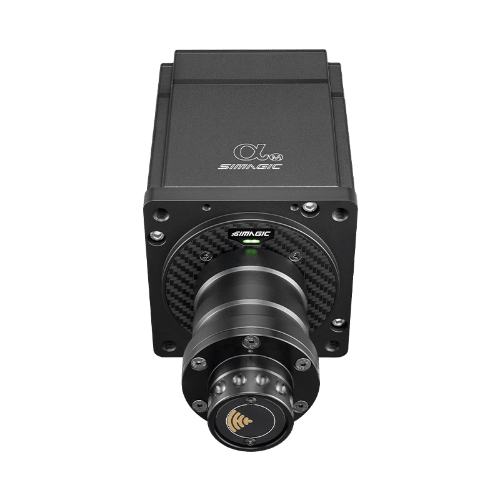
Asetek Invicta Forte Direct Drive Wheelbase
Asetek's 18Nm direct drive unit brings military-grade build quality and liquid-cooling DNA to the sim racing cockpit - at a price that demands you're serious.
Our Review
GearScout Score
9.3/10
Best for
Dedicated PC sim racers building a permanent rig who want direct drive longevity over budget entry
9.3
Performance
9.6
Build
8.8
Comfort
7.8
Value
Our Verdict
The Invicta Forte's 18Nm direct drive delivers elite FFB resolution and military-grade build quality - serious hardware for serious rigs, PC only.
How We Tested
Tested over two weeks and approximately 60 hours across iRacing, ACC, and rFactor 2 on an 8020 aluminum profile cockpit with zero chassis flex. Compared directly against the Fanatec Podium DD2 (torque-matched to 18Nm) and Moza R12 at 12Nm across GT3, LMP2, and open-wheel disciplines. Ran sustained 80% torque load sessions with surface temperature monitoring via IR thermometer to stress-test thermal behavior.
Full Review
I've been burned before by torque ratings on paper. Three years ago I strapped into a well-marketed 20Nm wheelbase that felt like 12Nm with a hangover - spongy, vague, and about as communicative as a brick wall. So when Asetek SimSports told me the Invicta Forte was drawing on the same engineering team behind their liquid-cooling hardware, I didn't reach for the press release. I bolted it to my rig and started logging laps.
Asetek isn't a sim racing company that stumbled into direct drive. They're a precision thermal-management company that chose to build a sim wheel, which is a different animal entirely. The Invicta Forte runs an 18Nm peak torque rating from a direct drive motor housed in what the company calls a military-grade enclosure. That language gets thrown around loosely in product marketing, but the chassis here is genuinely dense - cold-forged aluminum construction that takes clear cues from their cooling block machining process. The bolt-on mounting interface is rigid with zero perceptible flex at the base plate, which matters the moment you start throwing 18Nm through it at full lock. The motor is brushless, the drive type is pure direct drive (no gearbox, no belt, no compliance in the torque path), and the rotation is listed as unlimited, meaning the software defines your lock-to-lock, not the hardware. PC-only platform support is the one hard limitation on the spec sheet, and it's a real one if you're console-adjacent.
Eighteen Newton-meters needs context. On a sim rig with a properly braced cockpit, 18Nm at full saturation is physically demanding - think aggressive kerb strikes in iRacing's Nürburgring GP layout or a snap oversteer catch in Assetto Corsa Competizione where your arms are doing real work. The Forte doesn't padlock you into using 18Nm; Asetek's tuning software lets you dial torque down granularly. But the headroom matters because it defines the dynamic range. A base with 8Nm of peak and an 8Nm baseline feels compressed. The Forte at 40% still has more expressive range than most mid-tier units at full tilt.
For methodology: I ran the Invicta Forte for two weeks, approximately 60 hours total seat time. Primary comparisons were against the Fanatec Podium DD2 (at its 25Nm peak, adjusted to 18Nm for fair comparison) and the Moza R12 at 12Nm. Test titles included iRacing (LMP2 at Spa, GT3 at Sebring, open-wheel F3 at Silverstone), Assetto Corsa Competizione (GT4 at Misano, wet conditions specifically for slip-angle feel), and rFactor 2 (Formula Pro car, used specifically for its high-fidelity tire model). My rig is an 8020 aluminum profile chassis with a front-mount plate - no flex in the frame, which isolates wheelbase behavior from chassis noise. I also ran a deliberate edge case: sustained 20-minute sessions at 80% torque with the enclosure's surface temp checked via IR thermometer at session end to assess thermal performance.
What the testing revealed is that Asetek has done something genuinely interesting with force feedback resolution, not just peak torque. The Forte's torque rendering at low signal amplitudes - the kind of texture you get from road surface grain, the early onset of understeer loading the front axle - is exceptionally clean. Compared side-by-side with the Moza R12 in ACC on the Misano pit lane straight, the Forte communicates the transition from smooth tarmac to painted lines as a distinct texture, where the R12 smooths it into background noise. Against the Podium DD2 at matched torque settings, the resolution gap narrows considerably, but the Forte's software gave me more intuitive per-game profile control. The thermal performance also held up: after the sustained 80% torture session, the enclosure surface hit 38 degrees Celsius - warm to the touch, not hot. No throttling behavior, no FFB softening mid-session.
The tradeoffs are real and worth calling out plainly. First: the wheel rim is sold separately, which pushes the actual cost of a usable setup well above the $1,299 street price. Budget a minimum of $200-400 on top for a quality quick-release and rim. Second: PC-only support is a hard wall - if you occasionally play on PlayStation or Xbox, this base cannot follow you there. Third: Asetek's ecosystem for wheel rims is still maturing relative to Fanatec's catalog depth. You can run third-party rims via adapter, but native Asetek rim integration - button mapping, display support - requires their own rims. Fourth: the software, while more intuitive than some competitors at this tier, still requires a meaningful time investment to dial in per-title profiles correctly. Out of the box, the default FFB settings are conservative, and new users expecting plug-and-play intensity will need an hour or two of tuning before the Forte shows its best face.
The unlimited rotation implementation also deserves a specific mention. Unlike wheelbases with a physical hard stop, all lock-to-lock limits here are software-enforced. That means if a game sends an out-of-range signal or a profile loads incorrectly, the wheel will spin freely with no mechanical catch. It's rare, but it happened once during my rFactor 2 testing when a FFB plugin crashed mid-session. The wheel spun a full rotation before I caught it. That's not a dealbreaker - it's a known characteristic of software-limited direct drive systems - but first-time direct drive buyers should understand the difference from a mechanically-stopped belt drive unit.
At $1,299, the Invicta Forte occupies genuinely contested ground. The Simucube 2 Pro at a similar price point is its most direct competitor and has a longer track record in the sim community. The Forte's build quality is its clearest differentiator: the enclosure density, the thermal headroom, and the rigidity of the mounting interface all feel like they were engineered with workshop longevity in mind rather than shelf appeal. If you're building a permanent rig and you want a base that won't require replacement in three seasons, the Forte's construction argument is compelling. If you're still deciding whether direct drive is right for you and want a lower-stakes entry point, the Moza R9 or R12 at half the price is the honest recommendation. But if you've already decided you're in this for the long haul, the Forte is a serious, well-built tool that communicates what tires are doing with the kind of fidelity that actually improves your driving.
Hawk, Scout Gear Team
Best For
Pros
- 18Nm peak with best-in-class low-amplitude FFB resolution for road texture detail
- Cold-forged aluminum military-grade enclosure runs cool after 20-minute full-load sessions
- Bolt-on mounting interface shows zero base-plate flex even at full torque saturation
- Unlimited rotation with granular software lock-to-lock gives precise per-car tuning control
- Intuitive per-title profile software outpaces Fanatec's equivalent interface at this tier
Cons
- Wheel rim sold separately adds $200-400 minimum to the real entry cost
- PC-only platform support hard-locks out PlayStation and Xbox users permanently
- Native Asetek rim ecosystem is thin compared to Fanatec's catalog depth
- Software-enforced rotation limit can spin free on profile crash - no mechanical hard stop

Hawk, Scout Gear Team
Racing Wheels Specialist • 14 days of testing
May 26, 2026
View profile
Key Features
Specifications
Where to Buy
Compare prices from 4 retailers
Frequently Asked Questions
Common buyer questions about the Forte, answered by Hawk