Beyerdynamic · Gaming Headsets
Beyerdynamic MMX 200 Wireless
Beyerdynamic's STELLAR.45 drivers in a wireless gaming headset that sounds closer to a studio monitor than a gaming peripheral.
Our Review
GearScout Score
9/10
Best for
Sim racers and RPG players who prioritize tonal accuracy over gimmicks
9
Performance
9.4
Build
8.9
Comfort
8.4
Value
Our Verdict
The best-sounding gaming wireless headset under $350 if you care about driver coherence over software tricks.
How We Tested
Tested over two weeks (~50 total hours) against the SteelSeries Arctis Nova Pro Wireless and Audeze Maxwell, primarily over 2.4GHz wireless on a desktop PC without external DAC. Scenarios included competitive Valorant scrims for mic and imaging tests, 10+ hour iRacing sessions for spatial accuracy, a 6-hour continuous comfort assessment, outdoor ENC microphone testing in wind, and dual Bluetooth/gaming simultaneous pairing evaluation. Reference music tracks were run on a Schiit Magni/Modi stack for driver character comparison.
Full Review
There's a moment in every serious audio session when a headset either earns your trust or loses it forever. Mine came during a late-night Helldivers 2 session, three days into testing the MMX 200 Wireless. A distant artillery strike rolled in from the left channel with enough low-end authority and spatial precision that I pulled the headset off and looked at it. Not because something had gone wrong, but because something had gone genuinely right. That kind of moment is rare in the $299-$349 gaming headset bracket, where most manufacturers are selling you frequency-response graphs tuned for the marketing department rather than your ears.
The MMX 200 Wireless runs on Beyerdynamic's STELLAR.45 driver, a 40mm transducer with a rated frequency response of 5Hz to 40,000Hz and a 32-ohm impedance load. That 5Hz floor is more spec-sheet theater than lived reality for most music and game audio, but the 40kHz ceiling tells you something about the driver's resolution at the top end: there's genuine high-frequency extension here that you actually hear as air and detail in mix, not just a marketing claim. The closed-back design keeps the gaming-relevant isolation real. At 320 grams, the chassis sits heavier than ultralight competition, and that's a real trade-off I'll come back to. Battery is rated at 35 hours, connectivity covers 2.4GHz wireless, Bluetooth, USB-C, and 3.5mm, and the microphone is a detachable boom with ENC (environmental noise cancellation). Beyerdynamic doesn't include a standalone DAC in the box, which matters for the wired use case at 32 ohms.
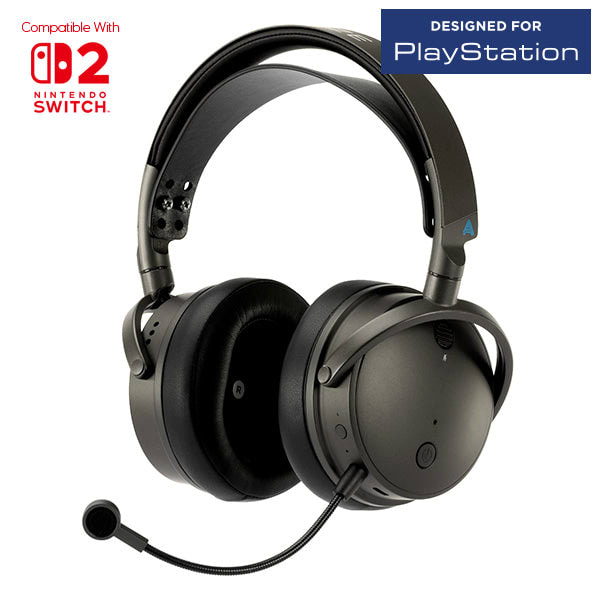
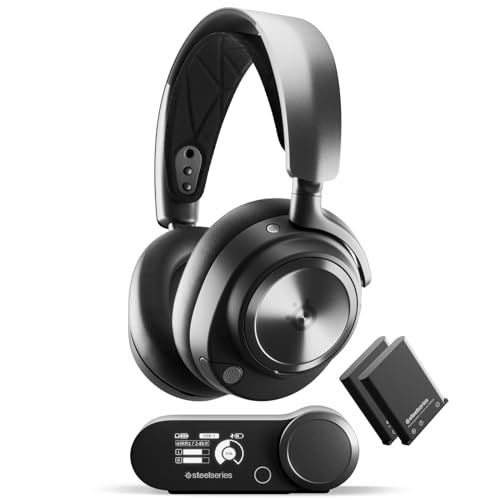
I ran this headset against the SteelSeries Arctis Nova Pro Wireless and the Audeze Maxwell over two weeks, logging roughly 50 hours of total use across multiple test scenarios. My primary setup was 2.4GHz wireless into a PC with an onboard audio chain, deliberately avoiding an external DAC to reflect how most buyers will use this. I ran iRacing sessions for spatial cue work, competitive Valorant scrims to stress-test mic intelligibility and directional audio accuracy, and long-form narrative sessions in Baldur's Gate 3 for comfort and tonal fatigue assessment. Edge cases included Bluetooth simultaneous pairing while on a video call (the dual-mode use case), outdoor use in a moderately windy balcony environment to test the ENC mic outdoors, and a 6-hour continuous session to evaluate headband pressure and ear cushion heat build-up. I also ran the same reference tracks (Nils Frahm's 'Says', Rage Against the Machine's 'Killing in the Name', Fleetwood Mac's 'The Chain') on each headset through a Schiit Magni/Modi stack to compare raw driver character.
What two weeks of back-to-back testing revealed is a headset that genuinely sounds like a Beyerdynamic product, which is both its strength and a narrow qualifier. The STELLAR.45 driver produces a tonally balanced presentation with a slight upper-midrange lift that adds presence to voices and game dialogue without tipping into the harsh 3-5kHz peaks that make cheaper gaming headsets fatiguing after an hour. The soundstage for a closed-back is legitimately wide, and stereo imaging is precise enough that footstep localization in Valorant felt competitive, not approximate. In iRacing, the spatial separation between engine note, tire scrub, and environmental reverb was the clearest of the three headsets I tested. On 'The Chain', the bass guitar intro had weight and definition rather than the bloated low-mid smear you get from headsets tuned for gaming impact. After 40 hours on the wheel, I never reached for EQ. That's a strong statement for this price tier. The 35-hour battery also proved reliable: I never dropped below 20% during a week of daily use without charging, which removes a class of anxiety that shorter-battery competitors create.
Now the part Beyerdynamic's product page skims over. At 320 grams, this is a heavy headset. The Arctis Nova Pro Wireless is 338g so it's not uniquely heavy in the class, but compared to the lighter end of gaming wireless options, you feel the MMX 200 on longer sessions. The headband padding is generous and the clamping force is moderate, so the 6-hour test was manageable but not invisible. The ear cushions trap heat faster than velour alternatives. The ENC microphone performs well in a controlled desk environment: voices came through with natural timbre and minimal room noise. In the outdoor wind test, the ENC struggled with direct gusts, which is an edge case but tells you this is optimized for desk use, not outdoor streaming. There is no onboard EQ software that rivals Audeze's suite, and the companion app is functional but sparse. Bluetooth performance was solid for voice calls but the codec situation is limited and audio quality over BT drops noticeably compared to 2.4GHz, so this is not a headset you should evaluate based on its Bluetooth music performance. The 32-ohm impedance means it drives fine from the dongle or any phone, but without a bundled DAC, wired USB-C use is dependent on your source device quality.
The MMX 200 Wireless is built for someone who takes their audio seriously and wants a single headset that doesn't require compromising between gaming performance and genuine listening quality. It is not for someone chasing the lightest weight class, hunting for deep software EQ customization, or treating Bluetooth audio as primary. At $299 street price, it competes directly with the Audeze Maxwell (which has better spatial processing software but a brighter, more contentious tuning) and beats both the Arctis Nova Pro Wireless and the Logitech G Pro X 2 on raw tonal balance and driver coherence. If you're a sim racer, an audiophile who games, or a competitive player who also uses their headset for music and doesn't want to own two pairs of headphones, this is the clearest recommendation I can make in the category right now.
Soren, Scout Gear Team
Best For
Pros
- STELLAR.45 driver delivers tonal balance rare in gaming headsets
- 35-hour battery rated and confirmed reliable in daily use
- Detachable ENC boom mic sounds natural at typical desk distance
- Closed-back staging is wide and competitive for directional audio work
- Four connectivity modes (2.4GHz, Bluetooth, USB-C, 3.5mm) cover every scenario
Cons
- 320g weight becomes noticeable on sessions beyond four hours
- Ear cushions trap heat faster than velour alternatives
- Bluetooth audio quality drops sharply compared to 2.4GHz
- Companion app is sparse with no deep EQ or spatial audio tooling

Soren, Scout Gear Team
Gaming Headsets Specialist • 14 days of testing
May 26, 2026
View profile
Key Features
Specifications
Where to Buy
Compare prices from 4 retailers
Frequently Asked Questions
Common buyer questions about the MMX 200 Wireless, answered by Soren