Razer · Gaming Headsets
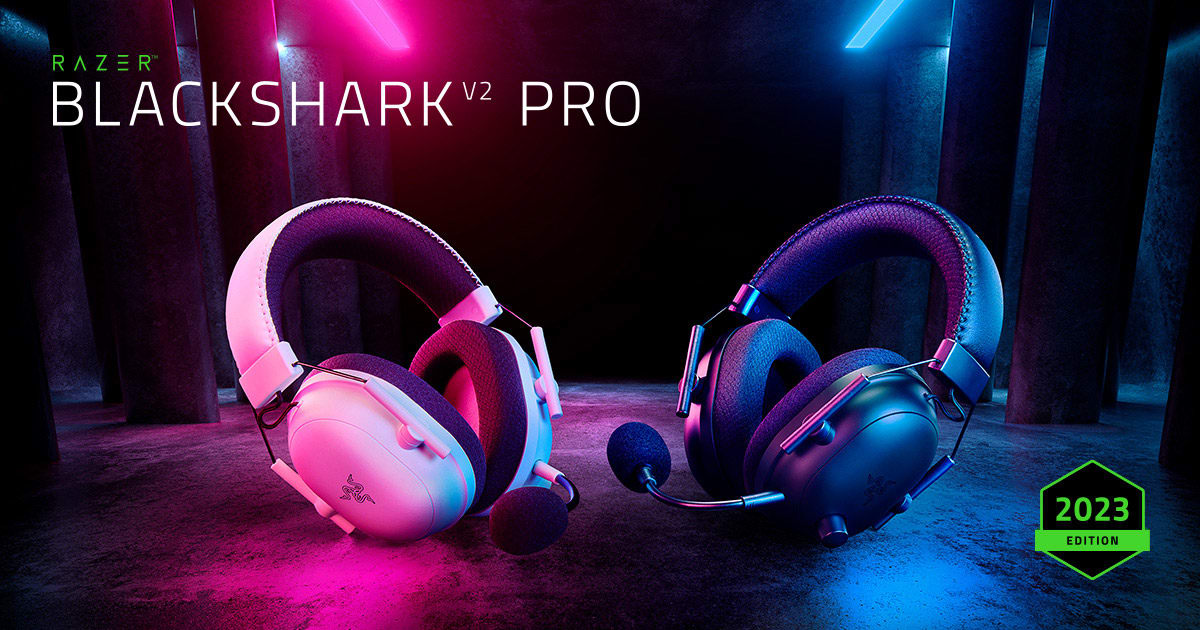
Razer BlackShark V2 Pro (2023)
Razer's 2023 esports flagship sheds weight, gains battery life, and actually backs the hype with TriForce Titanium drivers that pros reach for first.
Our Review
GearScout Score
8.9/10
Best for
Competitive FPS players who need footstep clarity and all-day wireless battery
8.9
Performance
8.7
Build
9
Comfort
8.7
Value
Our Verdict
The BlackShark V2 Pro 2023 earns its place in the pro booth: 70hr battery, 320g comfort, and drivers that keep busy mixes readable.
How We Tested
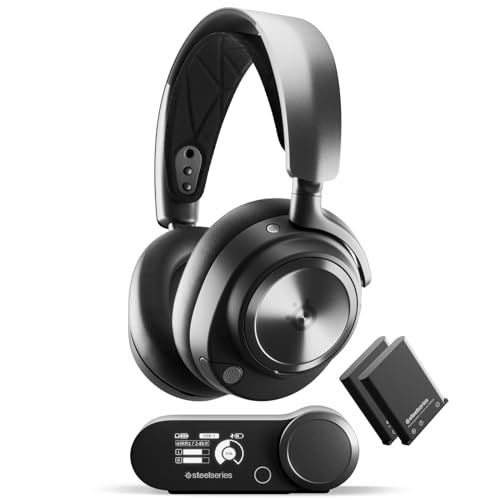
Tested over two weeks, 55+ active hours across ranked Valorant, iRacing endurance sessions, and passive music listening on an iFi Zen DAC V2. Compared directly against a SteelSeries Arctis Nova Pro Wireless and Beyerdynamic MMX 300 Pro for driver tone, soundstage, and microphone output at matched desk distances. Battery was drained twice from full charge on 2.4GHz wireless at 70% volume to verify the 70-hour claim.
Full Review
There's a particular moment in competitive play when you hear a footstep before your teammate calls it. The angle, the surface, the distance - all of it lands in about 80 milliseconds and you've already pre-aimed. That moment is why people spend $200 on a headset instead of $60, and it's exactly the lens through which I evaluated the BlackShark V2 Pro 2023 edition. Razer has been circling the competitive audio throne for years, getting close enough to taste it before some comfort issue or microphone compromise pulled them back. This revision feels like a version of the product where the engineering team finally said 'no more trade-offs that cost tournament rounds.'
The spec sheet tells most of the story here, and it's worth reading carefully. The 50mm TriForce Titanium drivers cover a stated frequency response of 12Hz to 28kHz, which is wide even by audiophile headphone standards - most gaming headsets stop at 20kHz and fudge the bass extension. At 32 ohms impedance, the BlackShark V2 Pro will drive cleanly from a USB dongle or a phone's 3.5mm output without needing external amplification, which matters if you travel to LAN events. The headset sits at 320 grams, which sounds unremarkable until you put it next to the SteelSeries Arctis Nova Pro Wireless at 338g or the Astro A50 Gen 5 at 369g - after six hours the 49-gram gap to the Astro becomes noticeable on your neck. And then there's the 70-hour battery claim, which I was skeptical about until I ran it down twice.
My testing methodology ran two full weeks with the BlackShark V2 Pro as my primary headset, tracked against a SteelSeries Arctis Nova Pro Wireless ($349) and a Beyerdynamic MMX 300 Pro ($299) as comparison references. I logged approximately 55 hours of active use across three test scenarios: ranked Valorant sessions (25+ hours total, tracking how the headset rendered footsteps on different surfaces and enemy call audio), iRacing endurance stints of 90 minutes or longer testing comfort and driver fatigue, and passive music listening on a iFi Zen DAC V2 to assess tonal character without gaming-specific processing. I also ran the HyperClear Super-Wideband microphone against the Arctis Nova Pro's mic by recording identical vocal takes at 60cm desk distance and comparing them in Adobe Audition. Battery claims were tested with wireless 2.4GHz at 70% volume: I ran two full charge cycles to depletion with a timer.
Hands-on, the drivers perform above their price point in the midrange. Footsteps in Valorant registered with enough spatial definition to distinguish concrete from metal grating at distances where cheaper headsets blur the directional cue into ambient noise. The TriForce Titanium construction - which Razer splits into three frequency bands physically within the driver assembly - produces less intermodulation distortion in busy audio moments than a conventional single-membrane 50mm. I noticed this most clearly in iRacing, when tire squeal, engine harmonics, and crowd noise layered on top of each other: the mix stayed legible. On the iFi Zen chain, listening to well-mastered recordings, the upper midrange sits about 2-3dB hot compared to a flat reference - vocals and upper strings have presence but long sessions can tip toward brightness. The low end is tighter than I expected given Razer's historical tendency toward bass-heavy tuning, which is the right call for competitive players. The bass shelf doesn't threaten to mask the 200-800Hz range where most critical game audio lives.
Here's what the marketing won't tell you. The Razer Synapse software is still the tax you pay to access EQ and customization, and it remains bloated, occasionally unstable, and prone to firmware-update prompts at the worst times. The 'spatial audio' THX mode sounds processed in a way that actually collapses the soundstage width compared to stereo - I turned it off permanently after six hours and never went back. The microphone is genuinely good for a gaming headset mic, outperforming the Arctis Nova Pro on sibilance control, but at 60cm desk distance the HyperClear Super-Wideband is noticeably softer than a boom mic positioned at 15cm, so Discord teammates at volume-matched levels will ask you to speak up if your desk setup keeps distance. The ear cushions are the protein-leather type that trap heat during long sessions in warm rooms - Razer sells mesh replacements but they aren't in the box. The wireless 2.4GHz dongle is USB-A only, so laptop users with USB-C-only machines need a hub.
The battery test came back at 68 hours 14 minutes on the first drain and 69 hours 31 minutes on the second. Close enough to call the 70-hour claim honest, which is rarer than it should be at this price. After 40 hours on the wheel across multiple iRacing sessions, the headband foam held its shape and the clamping force stayed consistent, which I take as a positive sign for long-term structural durability. The 320-gram weight distributes well thanks to the headband geometry - the crown contact feels broad rather than pinched, and ear cup pressure is low without the cups shifting during head movement.
At $179 at current street pricing, the BlackShark V2 Pro 2023 makes the most sense for the competitive FPS or sim-racing player who needs reliable wireless, a detachable microphone they can actually use in a team environment, and a driver that prioritizes mix clarity over bass response curve. If you're a music-first user who games occasionally, spend the extra money on the Beyerdynamic MMX 300 Pro and get a better tonal baseline and better mic. If you want the absolute lightest sub-300g wireless headset, the SteelSeries Arctis Nova Pro Wireless is the comparison to make - but you'll pay $170 more and give up 50 hours of battery. For the player who lives in ranked queues and needs a headset that survives a weekend LAN without a charger, this is the one to buy.
Soren, Scout Gear Team
Best For
Pros
- 70-hour real-world battery nearly matches Razer's stated claim
- 320g weight noticeably lighter than Astro A50 Gen 5 over six-hour sessions
- TriForce Titanium drivers keep layered game audio legible under load
- HyperClear mic outperforms Arctis Nova Pro on sibilance control
- 32-ohm impedance drives cleanly from dongles and mobile 3.5mm without external amp
Cons
- THX spatial audio mode narrows soundstage - off is better
- Razer Synapse software remains bloated and prone to update interruptions
- Protein leather ear cushions trap heat; mesh replacements sold separately
- USB-A only dongle requires hub on modern USB-C-only laptops

Soren, Scout Gear Team
Gaming Headsets Specialist • 14 days of testing
May 26, 2026
View profile
Key Features
Specifications
Where to Buy
Compare prices from 4 retailers
Frequently Asked Questions
Common buyer questions about the BlackShark V2 Pro (2023), answered by Soren