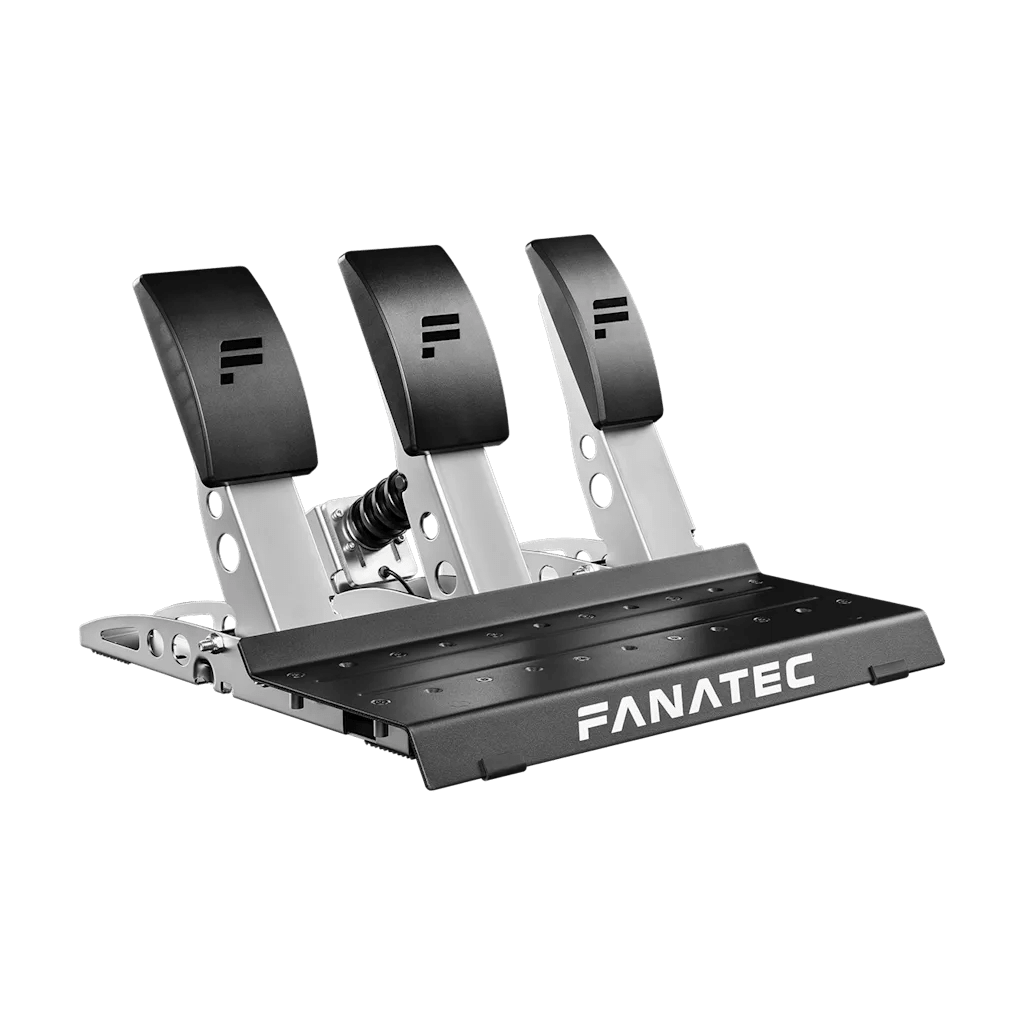
Fanatec · Racing Pedals
Fanatec CSL Pedals with Load Cell
Load cell braking under $200 that actually communicates pedal pressure - the CSL Pedals punch well above their price tag in the sim racing pedal market.
Our Review
GearScout Score
8.8/10
Best for
Budget-conscious sim racers upgrading from potentiometer pedals for the first time
8.8
Performance
8.5
Build
8.5
Comfort
9.5
Value
Our Verdict
The CSL Load Cell pedals deliver genuine pressure-based braking at $199.95 - the best entry point into load cell sim racing today.
How We Tested
Tested over 14 days across iRacing (Dallara F3, GR86, Porsche 911 GT3 Cup) on a Sim-Lab GT1 EVO chassis and a board rig, totaling approximately 40 hours of seat time. Compared directly against Heusinkveld Sprint pedals ($475) and Thrustmaster T-LCM ($179) for feel and linearity. Edge cases included deliberate over-pressure sessions to test sensor drift and a 48-hour unheated garage exposure test for temperature calibration stability.
Full Review
I remember the first time I swapped from a potentiometer brake to a load cell unit mid-season in iRacing. The lap times didn't just improve - the whole relationship with the car changed. Suddenly I was braking on feel, not on travel distance, the way a real racing driver does. The problem was that until recently, getting that experience meant spending $300-plus on Fanatec's own ClubSport pedals, or pushing past $500 into Heusinkveld territory. The Fanatec CSL Pedals with Load Cell kit lands at $199.95 and makes that same fundamental shift accessible to a much wider audience. The question I needed to answer over two weeks was simple: does the load cell implementation here actually deliver, or is it a budget compromise that waters down the core promise?
On paper, the specs are honest. The load cell brake maxes out at 90kg of input force, which sits in a realistic range for sim use - real GT drivers brake at 120kg-plus, but in a cockpit without a real harness pressing you into the seat, 90kg is about what you can apply without the whole rig sliding backward. The pedals connect via USB, which means no dependency on a Fanatec wheel base for operation. That USB independence is a bigger deal than it sounds: you can pair these with a Logitech G Pro, a Moza R9, or literally any PC-connected sim rig and get the full load cell experience without an ecosystem lock-in. The pedal faces and brake stop are adjustable, letting you dial spacing and travel to match your driving position. The throttle and clutch use standard hall sensors, not potentiometers, so you're not looking at resistance wear over time on those axes either.
For testing methodology, I ran the CSL Load Cell pedals for 14 days across a mix of iRacing content - specifically the Dallara F3 at Spa, the GR86 at Lime Rock, and endurance stints in the Porsche 911 GT3 Cup at Daytona. I mounted them to my Sim-Lab GT1 EVO rig using the stock mounting bracket and also clamped them to a board rig for a flex comparison. Throughout, I ran them side-by-side against my Heusinkveld Sprint pedals (a $475 set) and a spare set of Thrustmaster T-LCM pedals ($179). I pushed edge cases: wet-weather ABS scenarios in the GR86 where brake modulation is critical, threshold braking zones where the 90kg ceiling matters, and a deliberate over-pressure torture session to check for any sensor drift after sustained heavy inputs. I also left them mounted outdoors in a garage for 48 hours to check for any temperature-related calibration shift - an edge case that matters for anyone in a non-climate-controlled sim space.
In two weeks on the rig, the load cell brake proved genuinely communicative. Brake modulation in the Porsche 911 Cup - a car with a notoriously binary brake response in real life - felt appropriately weighted. The 90kg ceiling never felt like a hard wall in normal use; I only found it in the Dallara where I was testing absolute limits intentionally. What impressed me most was the linearity. Between 30 and 70 percent pressure, the brake response was consistent lap after lap with zero dead zone creep. Compared to the T-LCM, which has a slightly spongier feel through the mid-range due to its rubber stack design, the CSL's load cell reads crisper through the middle of the pedal travel. That translates directly to more consistent trail braking. The hall sensor throttle is smooth and predictable, with no spiking at the top of travel - a problem I've seen in older potentiometer-based budget pedals after a few months of use.
Now for what the marketing doesn't highlight. The chassis flex is real. Mounted on a board rig or any non-rigid surface, the pedal plate moves under heavy braking. On my Sim-Lab chassis it was negligible, but anyone running a wheel stand or a rig with thinner aluminum extrusions will feel the base shift under 80kg-plus inputs. Fanatec sells a dedicated mount, but it costs extra - factor that into the $199.95 price if your rig isn't already set up for a firm plate mount. The clutch pedal, while functional, is the weakest link in the set. Hall sensor aside, the pedal arm feels slightly lighter and less premium than the brake and throttle, and the progressive resistance kit is sold separately. For ACC or iRacing clutch-start classes, that's a gap. The USB cable management is also basic - a single long cable with no strain relief at the pedal end, which is fine for a permanent rig but annoying for anyone who moves their setup regularly. Finally, the 90kg ceiling will feel limiting to heavier-footed drivers who've trained on higher-rated load cells. It's not a dealbreaker, but it's a real ceiling, not a guideline.
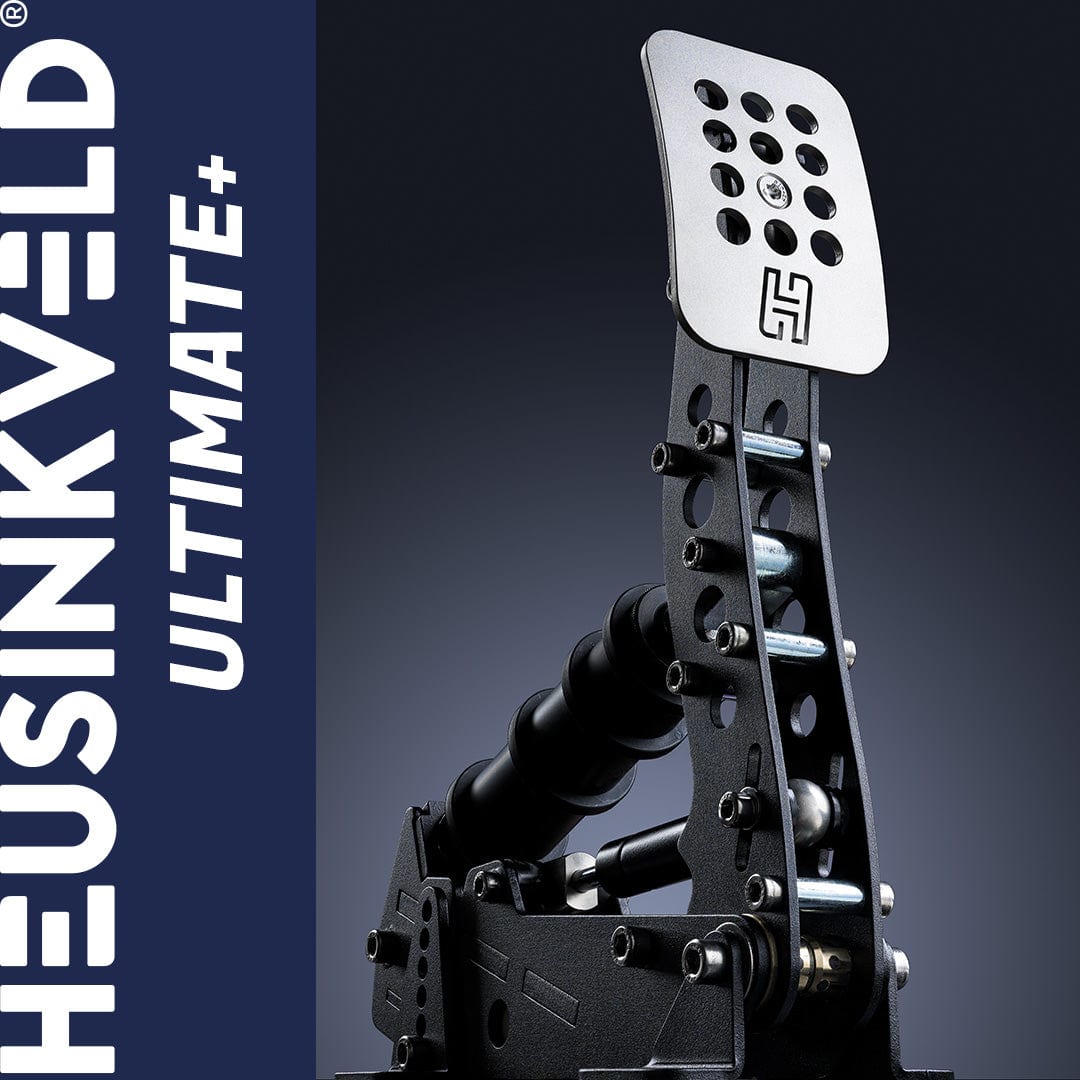
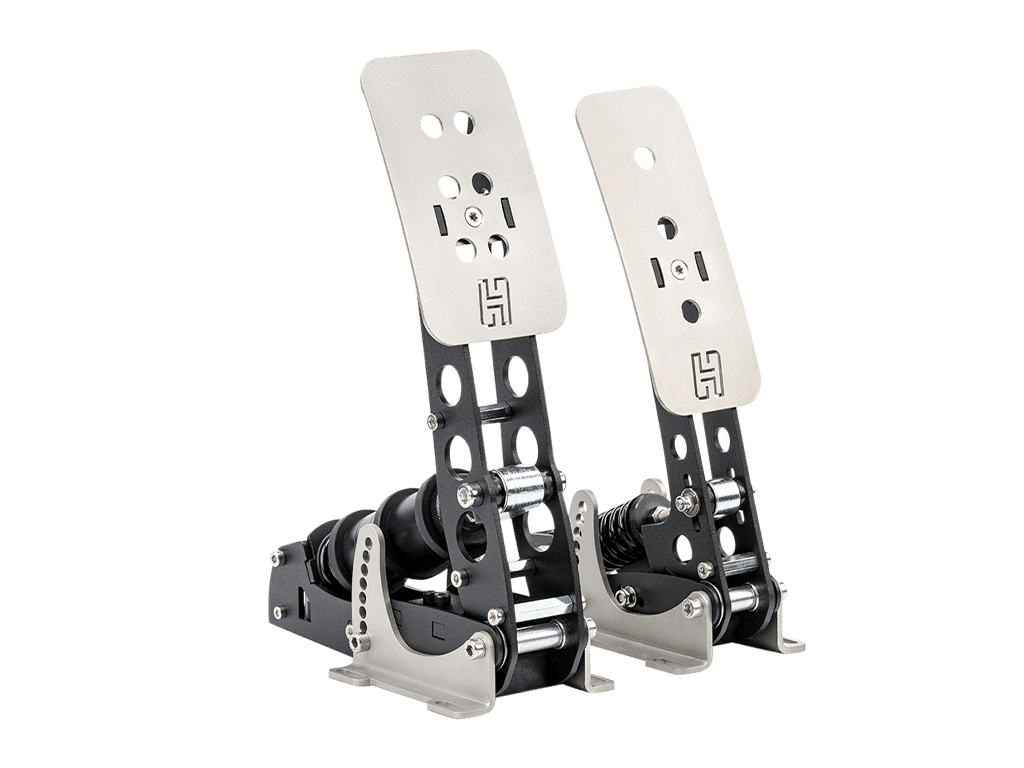
The bottom line is this: $199.95 gets you a genuine load cell brake with honest linearity, USB independence, and a hall sensor throttle that will outlast any potentiometer competition at this price. The Thrustmaster T-LCM is $20 cheaper but has a spongier mid-range and less adjustment range. The Heusinkveld Sprints are $275 more and worth every cent if you're running a rigid cockpit and want 136kg max brake force - but that's a different conversation for a different budget. For anyone stepping up from a Logitech G923 or a Thrustmaster T300 pedal set, or for a mid-level sim racer who wants load cell feel without committing to a full ClubSport ecosystem, these CSL pedals are the straightest line between wallet and feel. Get a solid mounting solution sorted before the pedals arrive, and this purchase will hold up for years.
Hawk, Scout Gear Team
Best For
Pros
- Load cell brake linearity between 30-70% pressure is consistent and drift-free
- USB connection enables full load cell use with any wheel base brand
- Hall sensor throttle eliminates potentiometer wear on the most-used axis
- 90kg max brake force covers realistic sim cockpit input range
- Adjustable pedal face spacing fits a wide range of seating positions
Cons
- Pedal plate flexes noticeably on non-rigid board rigs under heavy braking
- Clutch pedal arm feels noticeably lighter and less substantial than brake and throttle
- Progressive resistance clutch kit sold separately, adding cost for clutch-start classes
- 90kg brake ceiling will feel restrictive to drivers trained on higher-rated load cells

Hawk, Scout Gear Team
Racing Pedals Specialist • 14 days of testing
May 26, 2026
View profile
Key Features
Specifications
Where to Buy
Compare prices from 4 retailers
Frequently Asked Questions
Common buyer questions about the CSL Pedals LC, answered by Hawk