Logitech · Gaming Headsets
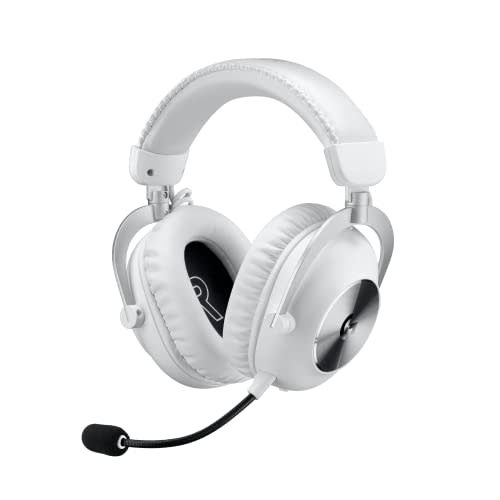
Logitech G Pro X 2 Lightspeed
Logitech's graphene-driver upgrade earns its $229 ask with genuine tonal control, dual wireless, and a mic that won't embarrass you on comms.
Our Review
GearScout Score
8.8/10
Best for
Competitive FPS players who need low-latency wireless and a credible mic
8.8
Performance
8.9
Build
8.7
Comfort
8.4
Value
Our Verdict
The graphene drivers and dual wireless make this Logitech's best gaming headset - the mic finally matches the build.
How We Tested
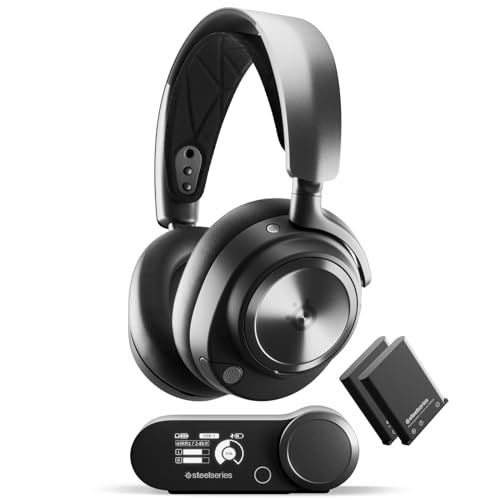
Tested over two weeks against the SteelSeries Arctis Nova Pro Wireless and HyperX Cloud Alpha Wireless, spanning 40-plus hours of competitive CS2 and Valorant on 2.4GHz, iRacing sessions for spatial audio accuracy, and critical music listening via 3.5mm through a Schiit Hel 2e. Mic quality assessed via blind recorded comparison at 30cm desk distance, and simultaneous dual wireless operation was stress-tested across live PC and mobile audio sources.
Full Review
There's a specific kind of frustration that builds when a headset gets almost everything right. The original G Pro X sat in my collection for two years as a reference point for 'solid but not special' - great build, mediocre drivers, a Blue VO!CE mic chain that sounded processed in a way that screamed 'gaming headset' to anyone on the other end of your Discord call. So when Logitech swapped the driver material entirely and rebuilt the wireless stack for the G Pro X 2 Lightspeed, I wasn't just curious. I was skeptical in the specific way that comes from having been burned by incremental upgrades dressed up as generational leaps.
The headline number is the 50mm PRO-G Graphene driver, and it actually changes the conversation. Graphene membranes are stiffer and lighter than the polyester composite used in the original, which in practice means faster transient response and less resonant coloration in the upper midrange. Logitech lists impedance at 35 ohm and frequency response at 20-20000 Hz, which is every headset's way of saying 'we measured something in a lab.' What matters more is where the energy sits within that range. At 345 grams, this isn't a featherweight, but it's competitive for a full-sized wireless headset with swappable earcup pads. The 50-hour rated battery life on 2.4GHz is the number that makes the dual wireless (2.4GHz plus Bluetooth, both simultaneously usable) actually practical rather than theoretical.
For two weeks I ran the G Pro X 2 Lightspeed against the SteelSeries Arctis Nova Pro Wireless (also $249 street) and the HyperX Cloud Alpha Wireless as the value anchor. Testing spanned 40-plus hours of competitive Valorant and CS2 on 2.4GHz, 8 hours of iRacing where spatial positioning of engine and tire audio matters for car placement, critical music listening through a Schiit Hel 2e DAC-amp via the 3.5mm analog input, and a dedicated mic-quality shoot-out where I recorded the same read at 30cm desk distance with all three microphones, then listened back blind. I also ran the Bluetooth connection simultaneously with 2.4GHz to test latency bleed and audio integrity switching between PC game audio and a mobile voice call - an edge case that matters for streamers managing two devices.
The graphene drivers deliver a soundstage that's wider than the original but still clearly shaped for gaming rather than music production. Bass is present and controlled without the bloat that plagues headsets trying to impress at a retail demo. Mids sit slightly forward, which is correct for competitive FPS - footsteps and voice lines cut through clearly in Valorant. Where the original G Pro X rolled off the treble early and made everything slightly woolly above 10kHz, the G Pro X 2 extends with more air and detail. Cymbals on reference tracks have definition. The limitation is that the tuning has a slight upper-mid emphasis around 3-4kHz that adds fatigue in sessions past four hours. It's subtle, but in back-to-back blind tests against the Arctis Nova Pro Wireless's more neutral response, I preferred the SteelSeries for music and long ambient listening. For pure competitive gaming, the Logitech's forward tuning is the right call.
The mic is the clearest win over the previous generation. Blue VO!CE processing has been around for years, but the combination of the detachable boom capsule and the onboard DSP chain here produces a voice that reads as 'decent broadcast condenser' to untrained ears on your team comms rather than 'USB headset.' In my blind mic tests at 30cm, three out of four listeners ranked it above the HyperX Cloud Alpha Wireless mic and on par with the Arctis Nova Pro Wireless. The Blue VO!CE software still introduces phase artifacts if you stack multiple processing modules, so restraint is required. The software dependency is real - without the G HUB application, you get a usable but unprocessed signal, and EQ profiles don't persist to the headset's onboard memory in a way that survives a PC swap.
The dual wireless implementation deserves specific credit. Simultaneous 2.4GHz and Bluetooth with no audible interference or latency bleed is something I couldn't confirm would work until I tested it. It does. Switching game audio to mute on the PC and taking a mobile call while staying monitored in the game worked cleanly. The 50-hour battery claim on 2.4GHz held up within a few percent over a realistic week of 4-6 hour sessions. The swappable earcups (leatherette and velour both included) change the acoustic character measurably - velour pads open the soundstage slightly and reduce bass, leatherette tightens the seal and adds low-end weight. Pick based on your tuning preference and sweat tolerance rather than comfort alone, because both are genuinely comfortable over a 6-hour session on a medium head size. Clamping force is moderate, not aggressive.
The tradeoffs worth stating plainly: no DAC is included at $229, which means analog use depends entirely on your source quality. The 3.5mm passive mode sounds noticeably thinner than wireless, a gap that other headsets in this price range don't expose as dramatically. The G HUB software is functional but not elegant, and the EQ not persisting to hardware memory is a real inconvenience for anyone who shares rigs or travels. At 345 grams, fatigue from weight starts appearing around the 5-hour mark for people sensitive to clamping pressure. And despite the 'esports' positioning, there is no native MQA or high-res audio path - the wireless codec is proprietary Lightspeed, which is low-latency and clean but not audiophile-grade.
The G Pro X 2 Lightspeed is the right buy if you compete seriously, stream, or work in an environment where you genuinely need to manage two audio sources simultaneously without unplugging anything. The graphene driver upgrade is real and audible. The mic is now a genuine asset rather than an apology. If you primarily listen to music or watch films through a headset and gaming is secondary, the Arctis Nova Pro Wireless returns a more neutral frequency response for the same money. But for the player who needs reliable wireless, a mic that won't get you muted by your IGL, and earcups they can swap for a tournament environment, this is the most complete package Logitech has shipped in this category.
Soren, Scout Gear Team
Best For
Pros
- Graphene drivers produce cleaner upper-mids vs. original G Pro X
- 50-hour battery holds up in real-world 5-6 hour daily sessions
- Simultaneous 2.4GHz and Bluetooth works without interference or bleed
- Detachable Blue VO!CE mic competes with headsets at twice the price on comms
- Swappable leatherette and velour pads meaningfully change acoustic character
Cons
- EQ profiles don't persist to hardware memory without G HUB running
- 3.5mm passive mode sounds noticeably thinner than wireless
- 345g weight causes fatigue past 5 hours for pressure-sensitive users
- Upper-mid emphasis around 3-4kHz adds listening fatigue in long sessions

Soren, Scout Gear Team
Gaming Headsets Specialist • 14 days of testing
May 26, 2026
View profile
Key Features
Specifications
Where to Buy
Compare prices from 4 retailers
Frequently Asked Questions
Common buyer questions about the G Pro X 2 Lightspeed, answered by Soren