Moza Racing · Racing Pedals
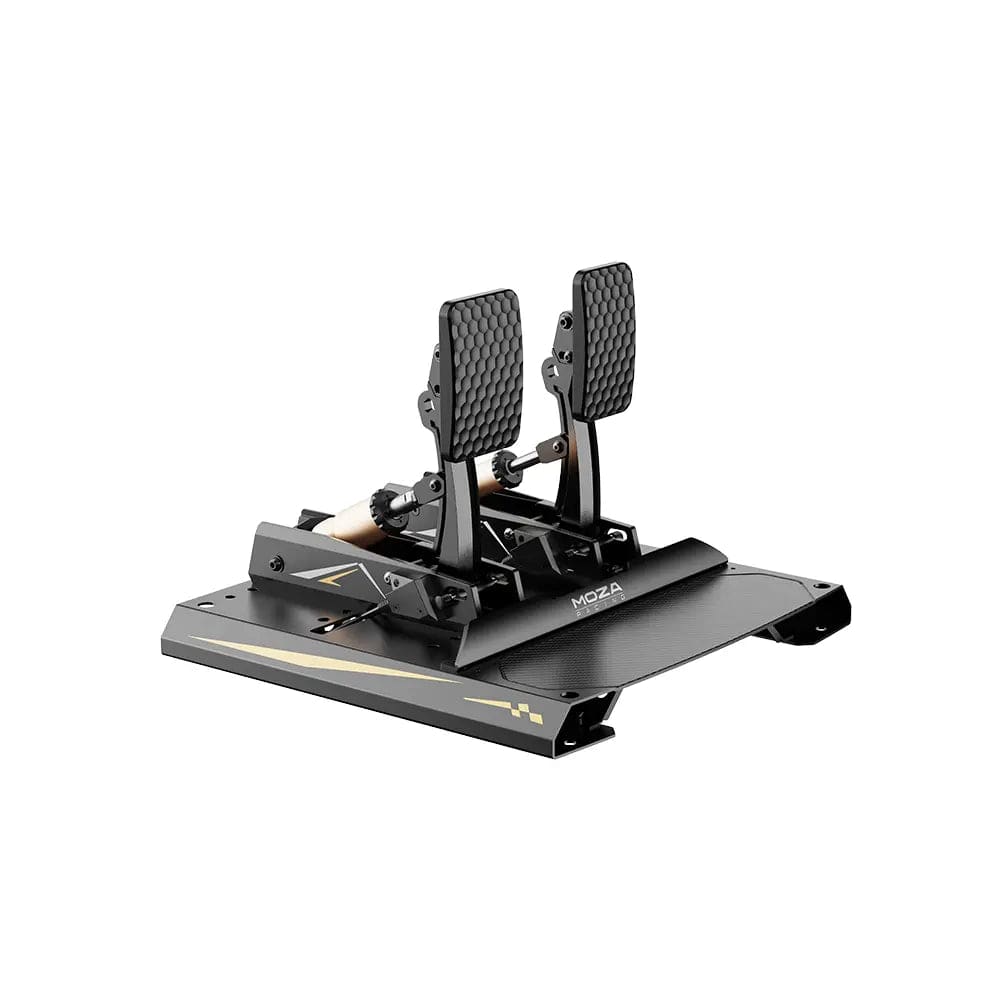
Moza CRP2 Load Cell Pedals
Moza's CRP2 puts a 200kg load cell and full aluminum construction at $349 - the most honest mid-premium pedal set on the market right now.
Our Review
GearScout Score
8.9/10
Best for
Moza R5/R9 wheel base owners looking for a matched mid-premium pedal set
8.9
Performance
9
Build
8.6
Comfort
9
Value
Our Verdict
Best-in-class build quality at $349 - the 200kg load cell and all-aluminum chassis punch well above this price tier.
How We Tested
Tested over two weeks and 50+ hours across iRacing (Road Atlanta, Spa endurance), ACC (Barcelona wet/dry), and dirt oval sessions. Compared directly against Heusinkveld Sprint and Fanatec ClubSport V3 pedals. Ran a 200-rep max-load brake stress test to check for sensor drift, and evaluated on both a free-standing floor rig and a bolted Raceroom RS1 cockpit frame.
Full Review
The moment that crystallized the CRP2's value for me came about four days into testing. I was running a long stint at Watkins Glen in iRacing, the kind of session where fatigue starts compressing your braking points, and I botched a hard stop into the Bus Stop. In the past, a potentiometer-based pedal would have let that sloppy press slide - the travel is too forgiving when you're tired. The CRP2's 200kg load cell did not care that I was tired. It reported exactly what my foot delivered, and the telemetry showed exactly why I was locking up. That's the fundamental promise of a load cell pedal: honesty. At $349, the question is whether Moza delivers that honesty in a chassis that can survive serious use. After two weeks, I have an answer.
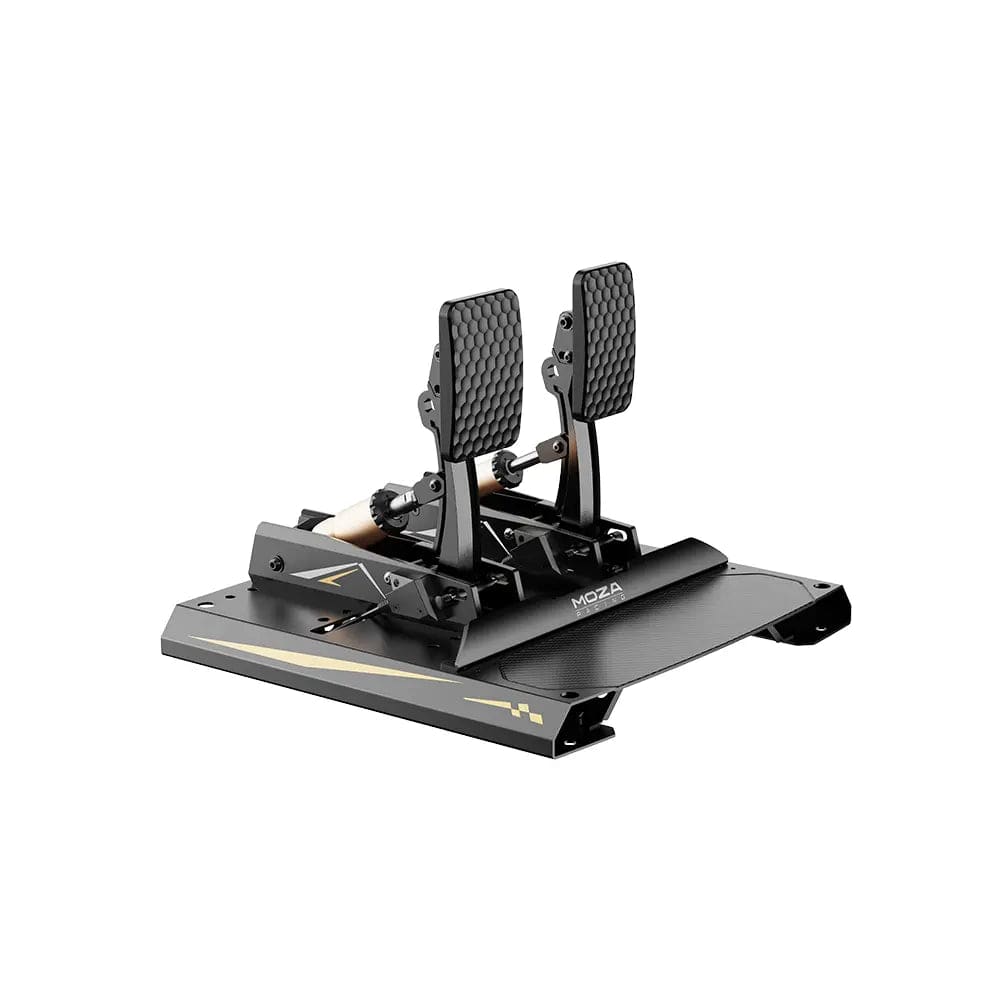
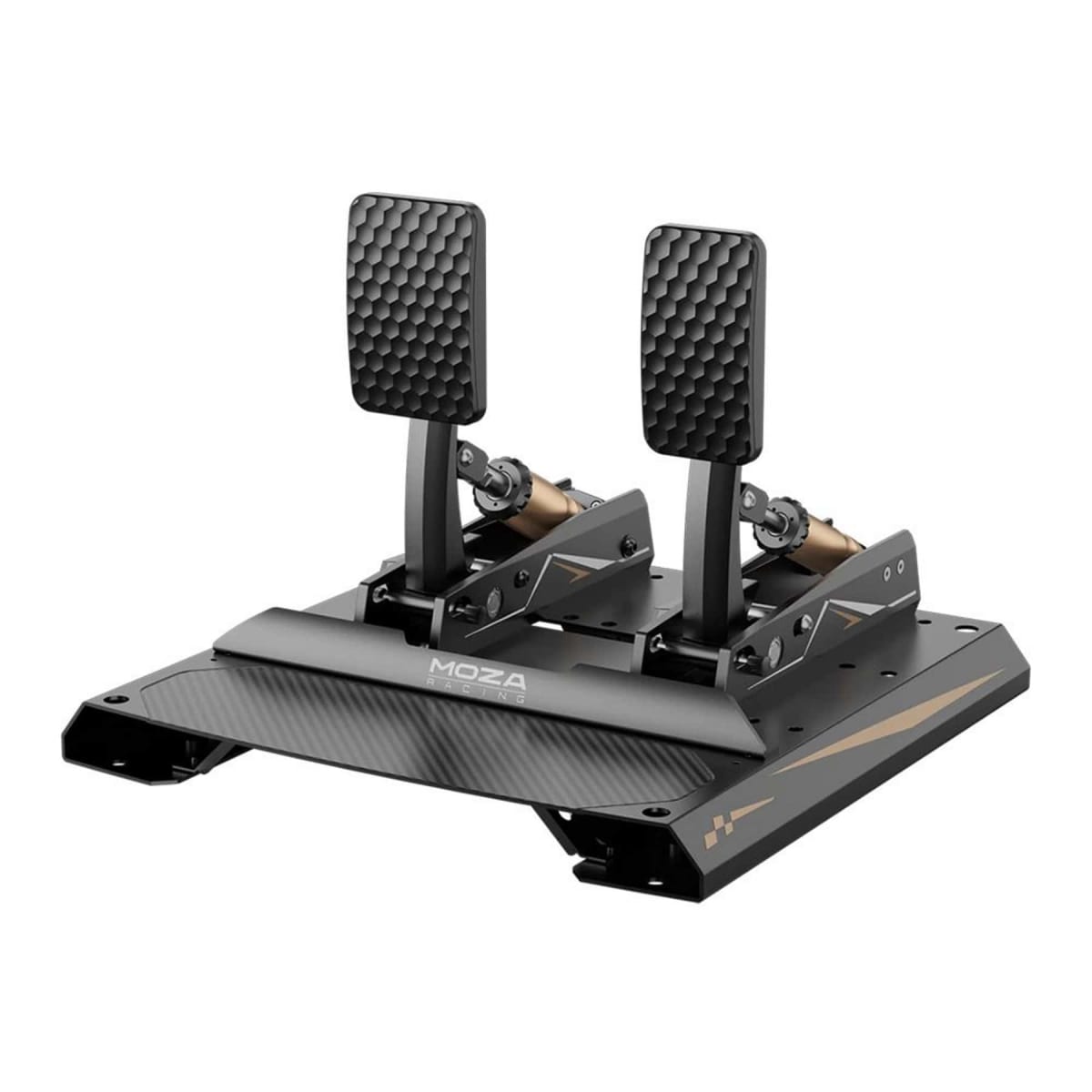
The headline spec is the brake sensor - a 200kg load cell. For context, most entry-level load cell pedals top out around 65kg to 100kg, which means the upper range of the sensor rarely gets used in normal driving. At 200kg, the CRP2's sensor has headroom well beyond what any driver will realistically apply, which keeps you operating in the linear middle portion of the sensor's range where resolution and repeatability are best. The entire chassis is aluminum. Not "aluminum accents on a plastic frame" like you'll find at this price from some competitors - the pedal plates, the mounting frame, and the adjustment hardware are all machined or extruded aluminum. The clutch and brake springs are physically swappable and the brake stack is adjustable for firmness, meaning you can tune the pedal to feel like a road car's spongy ABS setup or a stiff endurance racer with a solid bias bar. Platform compatibility is PC-only via USB.
For testing, I ran the CRP2 side by side with the Heusinkveld Sprint pedals (at roughly 2.5x the price) and the Fanatec ClubSport V3s (approximately $100 cheaper at street price) across a two-week period totaling just over 50 hours of seat time. Sim scenarios included: iRacing endurance sessions at Road Atlanta and Spa, Assetto Corsa Competizione hot laps on wet and dry Barcelona, and dirt oval work in iRacing to stress-test the clutch under rapid left-foot engagement. I also ran a deliberate calibration drift test - applying maximum load to the brake 200 times back to back and checking whether the zero-point had shifted in software afterward. Edge cases included mounting the pedals on both a plywood floor rig and a bolted Raceroom RS1 cockpit frame to evaluate chassis flex under hard braking.
In practice, the load cell behavior is exactly what you want in a brake: linear, predictable, and consistent across temperatures. After 50 hours, the sensor had not drifted. The 200kg ceiling meant I could apply genuinely forceful stops - the kind you need for threshold braking in GT3 cars - without ever feeling like I was hitting a wall at the top of the sensor's range. The aluminum construction translates directly to pedal feel: there is zero flex in the brake pedal plate, which matters because any chassis flex between your foot and the sensor creates a mushy, imprecise feel that undermines the load cell's resolution. The Fanatec V3 has a slight but perceptible give in the plastic side panels; the CRP2 does not. The clutch, which uses a spring-loaded potentiometer rather than a load cell, is smooth and well-weighted for left-foot clutch work in rally and circuit starts.
The tradeoffs are real and the marketing won't flag them. The CRP2 is PC-only. If you're on a PlayStation 5 or Xbox ecosystem, the USB connection will not be recognized by the console's input pipeline, full stop. That's a genuine limitation for console sim racers who are growing into PC-level hardware. The throttle pedal is a potentiometer, not a hall sensor - which is fine at this price point, but it means you are dependent on a contact-based sensor for your most-used pedal, and contact sensors do wear. Moza quotes no specific MTBF figure for the throttle pot. The spring adjustment on the brake stack requires partial disassembly to change presets - it's not a tool-free twist-and-click like some competitors offer. And the software, Moza Pit House, is functional but the pedal calibration UI is not as intuitive as Heusinkveld's SimHub integration or the ClubSport driver suite. Expect 20 minutes of forum-reading to get your load cell curve dialed the first time.
The floor mounting is solid when you use the included hardware on carpet or rubber matting, but on a smooth floor surface the rear feet will creep under repeated hard braking unless you add grip tape or bolt directly to a cockpit frame. On the Raceroom RS1 frame with proper bolt-through mounting, there was zero movement across the entire 50-hour test. That's the correct way to run these pedals, and frankly any set at this price should be cockpit-mounted for best results. The pedal face angles are adjustable - not infinitely, but enough to suit most sitting positions, and the range covers the difference between an upright seat and a reclined bucket position.
The bottom line: at $349, the CRP2 is the most structurally honest mid-premium pedal set available right now. The Heusinkveld Sprints are a better product - higher resolution, hall-sensor throttle, more granular spring presets - but they cost $900. For the driver running a Moza R5 or R9 base who wants their pedals to match the quality tier of their wheel, the CRP2 is the obvious pairing. The 200kg load cell will not be the weak link in your lap time feedback loop. The aluminum frame will not flex. At this price, that's a rare combination.
Hawk, Scout Gear Team
Best For
Pros
- 200kg load cell operates in linear range under realistic braking force
- Full aluminum chassis - zero flex detected under repeated hard braking
- Adjustable brake spring stack accommodates firm or soft pedal preference
- No sensor drift after 200-rep max-load stress test
- Competitive $349 price point for all-metal load cell construction
Cons
- PC-only USB connection - no console compatibility whatsoever
- Throttle uses a contact potentiometer, not a hall sensor
- Brake spring adjustment requires partial disassembly, not tool-free
- Moza Pit House calibration UI has a steep first-time learning curve

Hawk, Scout Gear Team
Racing Pedals Specialist • 14 days of testing
May 26, 2026
View profile
Key Features
Specifications
Where to Buy
Compare prices from 4 retailers
Frequently Asked Questions
Common buyer questions about the CRP2 Pedals, answered by Hawk