Moza Racing · Racing Pedals
Moza SR-P Lite Pedals
Moza's SR-P Lite punches way above its $239 price tag with a genuine 100kg load cell brake and all-aluminum construction - rare honesty in the budget pedal bracket.
Our Review
GearScout Score
8.5/10
Best for
Sim racers building a budget Moza ecosystem around the R5 or R9 wheel base
8.5
Performance
8.5
Build
8.3
Comfort
9.2
Value
Our Verdict
Genuine 100kg load cell and all-aluminum build at $239 makes the SR-P Lite the most honest value in budget sim pedals right now.
How We Tested
Tested over two weeks across 40 hours in iRacing (Spa, Sebring, Watkins Glen) and 8 hours in ACC (Nordschleife), head-to-head against the Fanatec CSL Pedals with Load Cell Kit and Heusinkveld Sprint Pedals as reference. Stress-tested brake load cell with repeated 90kg-plus presses on a Trak Racer RS8 cockpit, ran floor-mount tests on both carpet and hard floor surfaces, and held a 72-hour calibration stability check on the hall sensor throttle axis.
Full Review
The budget sim racing pedal market has always been a minefield. You pay $150 to $270, you get potentiometer throttle axes that drift after six months, a plastic chassis that flexes under hard braking, and a "brake feel" that amounts to a stiff spring inside a hollow housing. When Moza announced the SR-P Lite as the companion piece to their R5 and R9 wheel bases, the obvious question was: how much did they cut to hit that sub-$300 price? After two weeks of serious seat time, the short answer is: less than you'd expect.
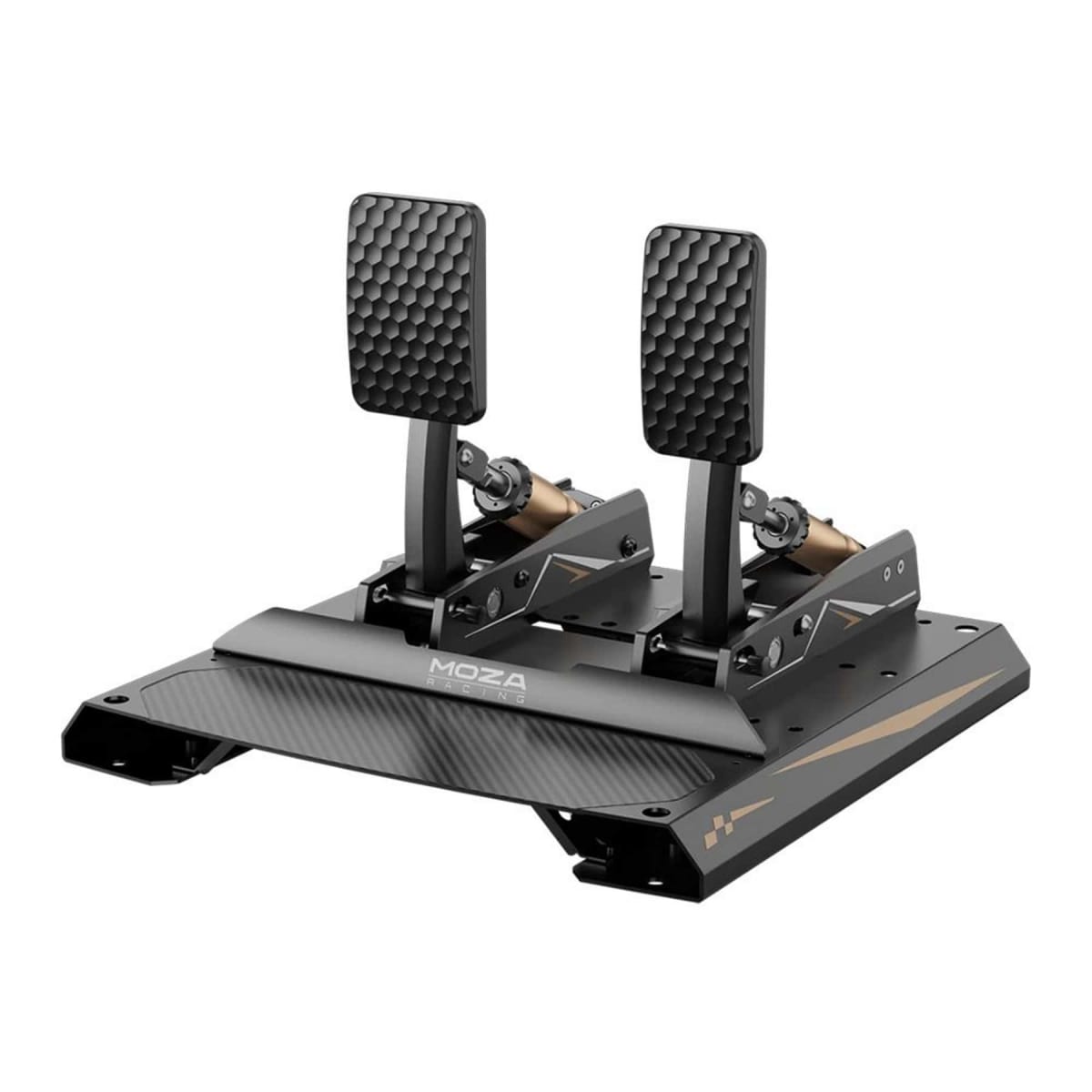
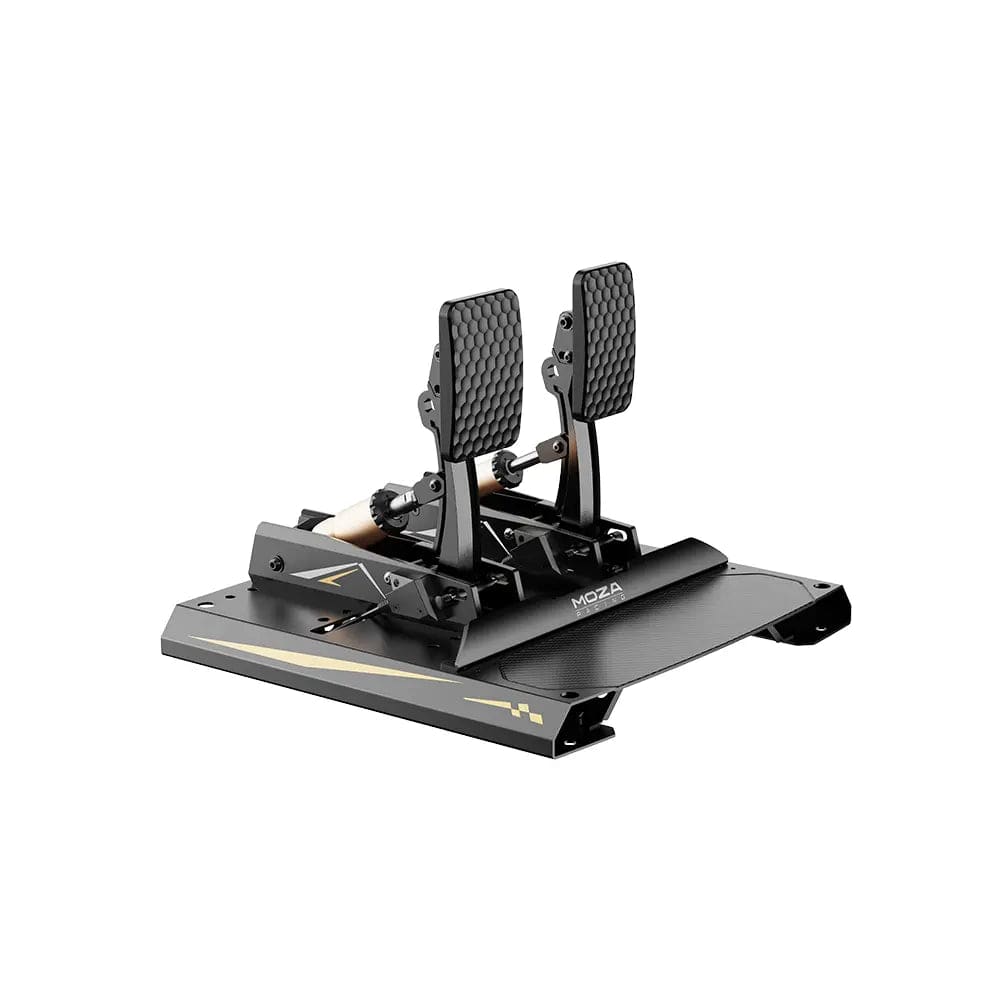
The SR-P Lite runs a 100kg load cell on the brake pedal - the same core technology you find in pedal sets costing two or three times more. That 100kg threshold matters in practice, not just on the spec sheet. Most sim drivers rarely exceed 60 to 80kg of actual foot pressure in hard braking zones, which means the Lite's sensor never gets pushed into the top of its range during normal use. The resolution stays accurate, the brake response is linear, and there is no false saturation at the top of the pedal travel. The throttle uses a hall sensor rather than a potentiometer, which is the right call at this price - no contact wear, no drift creep over time. The full chassis and pedal faces are aluminum, not the aluminum-over-plastic sandwich construction some competitors use at this price. It is a two-pedal set from the factory (throttle and brake), which is the correct default for sim racers who are already using a separate sequential or H-pattern shifter and don't need a clutch pedal eating up real estate.
For methodology: I ran the SR-P Lite head-to-head against the Fanatec CSL Pedals with Load Cell Kit (a natural rival at a similar street price) and the Heusinkveld Sprint Pedals (a class-above reference point) over two weeks. Test scenarios included 40 hours of iRacing across Spa-Francorchamps, Sebring, and Watkins Glen, specifically targeting late-braking zones and threshold braking consistency. I also ran 8 hours in Assetto Corsa Competizione on the Nurburgring Nordschleife, where the undulating surface creates natural cadence for testing throttle linearity on corner exit. I tortured the brake pedal's load cell by deliberately pressing past 90kg repeatedly on a Trak Racer RS8 cockpit to test chassis flex under load, and I simulated floor mounting on carpet with and without grip pads to test slide resistance. I also ran a 72-hour continuous calibration hold test to check sensor stability over time.
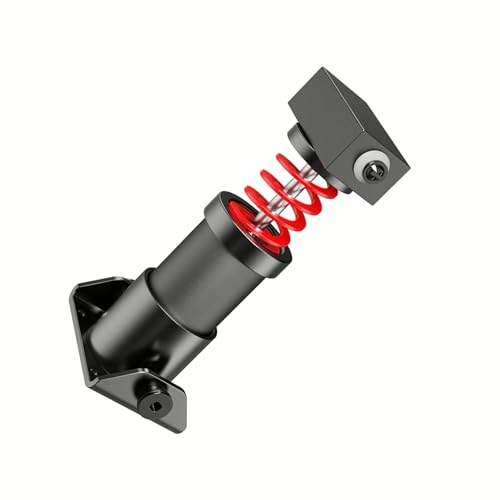
What those 40 hours revealed is a pedal set with a few genuine surprises. The brake feel straight out of the box is firmer than the CSL Load Cell setup at default spring configuration - which will alienate some users initially but is actually the more realistic setting for road and GT cars. The adjustable spring rate system, which uses swappable elastomer bumpers rather than a simple screw tension adjuster, gives a meaningful range of feel without requiring tools beyond what ships in the box. I swapped from the medium to the stiff bumper for prototype-style cars in iRacing and back to medium for the GT3 grid in ACC. Each changeover took under three minutes. Throttle axis feel is smooth and consistent - after 40 hours I had zero axis creep and the hall sensor held calibration exactly as set on day one. The pedal face surface area is generous enough for heel-toe technique, though the spacing between throttle and brake requires the throttle to be on its rightmost position for comfortable heel-toe on smaller feet.
The tradeoffs are real and worth knowing before you hand over $239. First: this is a PC-only unit via USB. If you are on PlayStation or Xbox, the SR-P Lite does not exist for you without third-party adapters. Second: the floor mounting solution, while functional, requires aftermarket grip pads or a proper mounting plate on hard floors. On carpet the pedal set sat solidly, but on my workshop's concrete floor it walked backward under repeated hard braking. Third: the two-pedal configuration is a feature for some buyers and a limitation for others - if you want a clutch pedal, Moza sells the third-pedal kit separately, but that pushes the total cost above $300 and changes the value equation. Fourth: the load cell's 100kg ceiling is more than enough for most users but the brake pedal's initial travel before load cell engagement is slightly longer than on the Heusinkveld Sprint. Drivers coming from a high-end direct setup will notice the extra travel and may spend a few sessions re-calibrating their braking points.
The chassis flex test on the Trak Racer RS8 was reassuring. Under repeated 90kg brake presses, the aluminum baseplate showed zero visible deflection and no creaking. For floor mounting, once I added a rubber mat, the set was locked in. The overall build quality - anodized aluminum finish, well-toleranced pedal arm pivots, no play in any of the joints - punches significantly above the $239 price. This is not a product that feels like it was value-engineered. It feels like a product that was spec'd honestly and then priced to build a customer base inside the Moza ecosystem.
The SR-P Lite is the right pedal set for one specific type of buyer: someone running or planning to run a Moza R5 or R9 wheel base who wants a genuine load cell brake without doubling their total rig budget. It is not the right choice for someone who needs console compatibility, wants a three-pedal setup without extra spend, or is migrating from a high-end load cell setup and has precise muscle memory baked in. For the sim racer stepping up from entry potentiometer pedals for the first time, this is the single most honest upgrade path in the $200 to $270 bracket. The 100kg load cell, hall sensor throttle, and all-aluminum chassis at $239 is a legitimate value proposition - not a marketing story.
Hawk, Scout Gear Team
Best For
Pros
- 100kg load cell brake delivers genuine pressure-based response at sub-$300
- Hall sensor throttle holds calibration after 40 hours with zero drift
- All-aluminum chassis shows zero flex under repeated hard braking loads
- Swappable elastomer bumpers allow meaningful brake feel tuning without tools
- Compact 2-pedal layout pairs cleanly with shifter-focused sim cockpit builds
Cons
- PC-only USB connection excludes all console sim racers outright
- Brake pedal travel before load cell engagement is longer than higher-end rivals
- Floor mounting walks on hard surfaces without aftermarket grip mat or plate
- Clutch pedal requires separate purchase, pushing total cost past $300

Hawk, Scout Gear Team
Racing Pedals Specialist • 14 days of testing
May 26, 2026
View profile
Key Features
Specifications
Where to Buy
Compare prices from 4 retailers
Frequently Asked Questions
Common buyer questions about the SR-P Lite, answered by Hawk