Secretlab · Gaming Chairs
Secretlab Titan Evo 2024
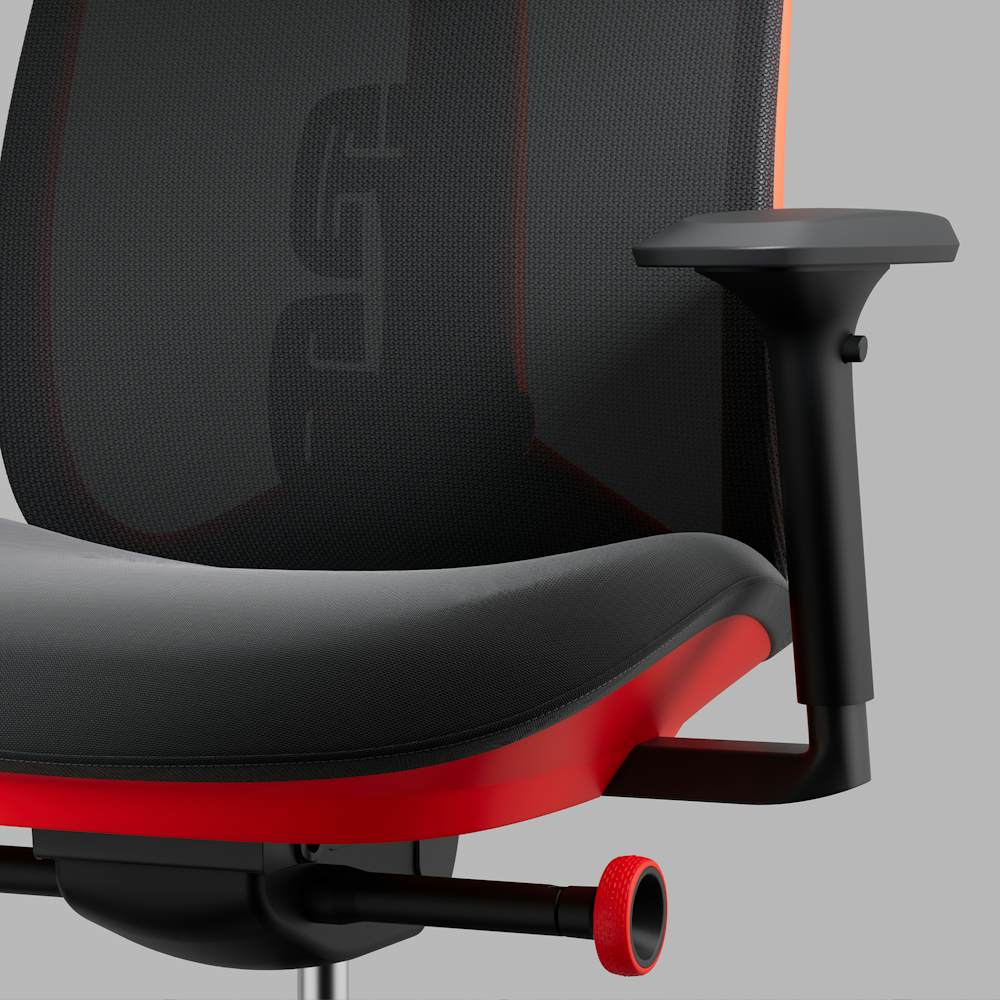
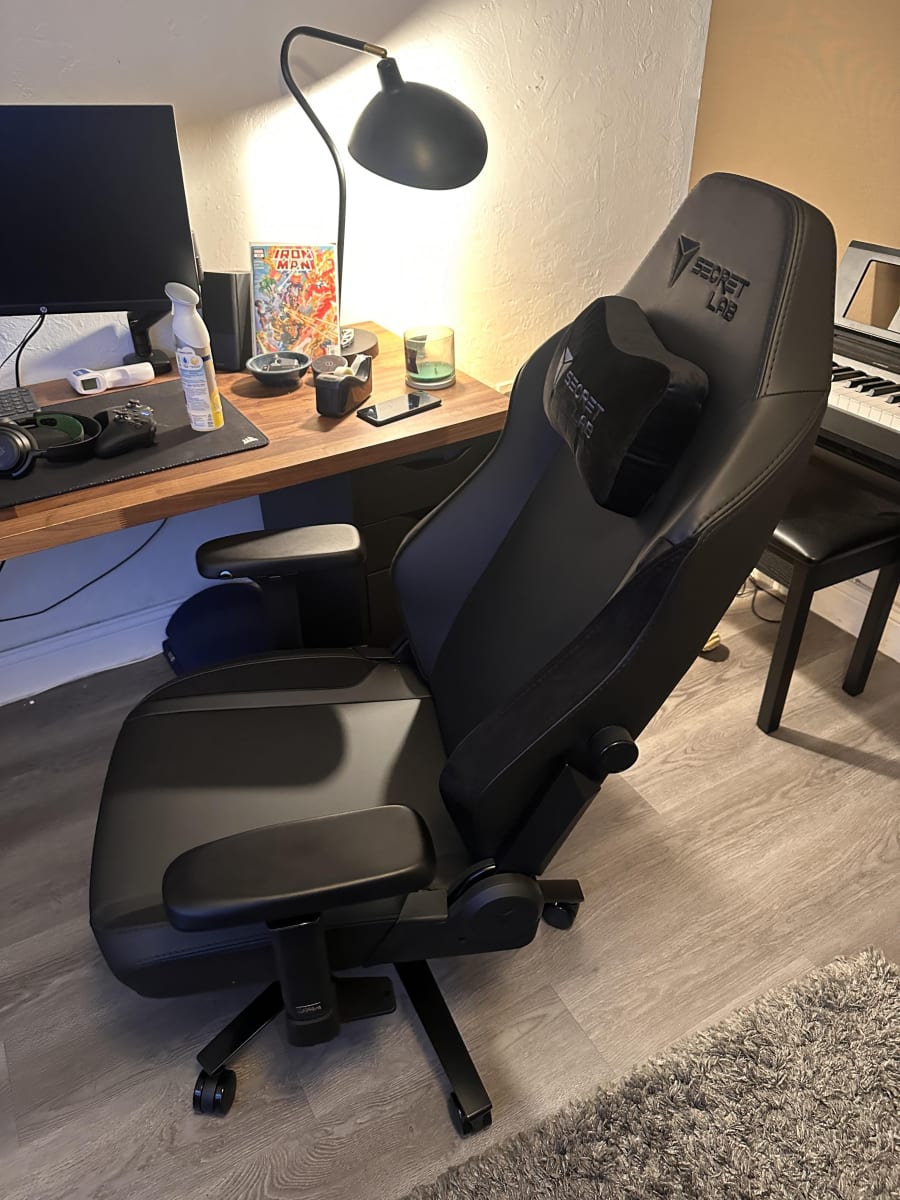
The Titan Evo 2024 is the rare gaming chair that takes lumbar science seriously , three real sizes, L-ADAPT lumbar, and 4D armrests that actually reach your desk.
Our Review
GearScout Score
9/10
Best for
Gaming-primary users sitting 8-12 hours daily who have already had one back or wrist flare-up
9
Performance
8.9
Build
9
Comfort
8.9
Value
Our Verdict
The Titan Evo 2024 is the gaming chair to beat at under $550: real lumbar mechanics, three calibrated sizes, and a 5-year warranty to back it up.
How We Tested
Tested the Regular size for 14 days, 10-12 hours daily, split between desk work and 3-4 hour iRacing sessions; compared directly against the Herman Miller Sayl (~$549) and Noblechairs Hero ($499) on the same laminate floor. Stress-tested 4D armrests through full range daily, monitored lumbar mechanism for drift after 60-plus hours of use, and assessed seat-foam compression across both the Titan Evo and Noblechairs Hero over the full two-week period.
Full Review
I've watched a lot of people buy gaming chairs the wrong way. They pick a color, check that it reclines, and call it done. Six months later they're complaining about lower back tightness or shoulder strain, and when I look at their setup the chair is either too tall for their hip angle, the lumbar cushion is floating somewhere near their mid-spine instead of their sacrum, or the armrests won't reach close enough to support forearm weight at the keyboard. The Secretlab Titan Evo 2024 is the first gaming-category chair I've tested in years that actually addresses all three of those failure points with real mechanical solutions instead of bundled accessories and marketing language.
Let's start with the spec numbers that matter. The L-ADAPT lumbar system is not a cushion strapped to the backrest. It's an integrated mechanism with two adjustment axes: a pelvis-level support that tilts to cup your sacral curve, and a separate lumbar dial that moves the support pad up or down along the backrest to meet your actual lumbar vertebrae. That's a meaningful distinction because no two spines sit the same distance between pelvis and shoulder blade. The 4D armrests adjust height, fore-aft position, width, and pivot angle, which means you can dial in shoulder-neutral reach whether you're at 26 inches from screen or 32. The chair reclines to 165 degrees, which for most users means a usable nap or a proper laid-back media posture without feeling like you're about to slide out. Weight capacity sits at 130 kg, and the three size tiers (Small, Regular, XL) aren't just seat-width differences. Secretlab adjusts backrest height and seat-pan depth per size, so a 5'4" person in a Small isn't sitting in a shrunken version of the same geometry, they're sitting in a chair calibrated for their torso-to-femur ratio.
For testing methodology, I ran the Titan Evo 2024 Regular against two direct competitors: a Herman Miller Sayl at roughly the same $549 street price and a Noblechairs Hero at $499. I used the Titan Evo as my primary work and gaming seat for fourteen days straight, logging approximately 10-12 hours of daily seated time split between focused desk work (keyboard, mouse), extended sim-racing sessions in iRacing (3-4 hour blocks), and passive media consumption with the recline cranked past 130 degrees. I specifically stress-tested the armrests by running them through their full 4D range daily, checked the lumbar mechanism for play and drift after 60+ hours of use, and compared base stability by doing deliberate lateral rocking tests on the Titan Evo, the Sayl, and the Noblechairs side by side on the same laminate floor surface.
In two weeks of side-by-side testing, the L-ADAPT lumbar system was the single biggest differentiator in daily feel. The pelvis support holds your sacrum in a slight anterior tilt that takes pressure off the lumbar discs, and the upper lumbar pad catches the natural inward curve at roughly L3-L4 on my frame (I'm 5'11"). That's where it should be. The Sayl's flexible backrest does similar work passively through mesh flex, and honestly for pure all-day sit comfort the Sayl is a close race. But the Titan Evo wins back points on armrest functionality. After 40 hours on the wheel in iRacing, my forearms spent most of that time resting on the pivoted pads at exactly the angle my wrists needed to float above the wheel rim, a position the Sayl's fixed-width armrests couldn't replicate. The magnetic head pillow is lighter and less obtrusive than the old strap-attached version. It holds position across the full range of headrest movement, and it didn't migrate down the backrest during reclined use the way foam-strap pillows tend to.
The material choice has real consequences. The NEO Hybrid Leatherette version I tested looks premium and wipes clean in seconds, but after long sessions in a warm room it starts to feel clammy at the back of the thighs. Secretlab's SoftWeave Plus fabric version breathes meaningfully better and I'd recommend it to anyone sitting in a room without aggressive air conditioning. Leatherette also starts to show micro-creasing at seat-pan flex points by the end of week two, which is normal for this material class but worth knowing if you're buying for five years and care about appearance. Speaking of five years, the warranty is a legitimate confidence signal here. Most gaming-category chairs offer one to two years. Five years on a chair with active mechanical components (lumbar mechanism, 4D armrests, recline lock) says something about Secretlab's confidence in the hardware, or at minimum puts the burden on them if it fails.
The Noblechairs Hero comparison was more instructive about what the Titan Evo is not. The Hero has a slightly more substantial feel in the seat padding on day one, the kind of dense memory foam that feels luxurious out of the box. By week two, my preference had flipped. The Titan Evo's seat foam held its shape and felt consistently supportive, while the Hero's padding had compressed noticeably under my sit bones. The Hero also has no multi-size option and its lumbar cushion is the old-fashioned strap-attached type that migrates. At $499 versus $519, the Titan Evo is the better long-term bet for most buyers.
Now, the things the marketing won't tell you. The assembly takes longer than the instructions suggest, specifically because the 4D armrest bolts require precise threading before the backrest can seat fully, and if you rush that step you'll need to partially disassemble to fix it. Plan 45 minutes, not 20. The recline lock mechanism clicks firmly but doesn't lock in every incremental degree. It locks at set stops, and the gaps between stops are wide enough to matter if you like a very specific angle. The seat pan has no depth-adjustment option (no seat-pan slide), so users with long femurs who need more thigh support will feel the front edge pressure after 90-plus minutes. That's an honest gap for a $549 chair. The Small size is appropriate for users under about 5'5" and the Regular covers most 5'5"-6'2" builds, but if you're near the border, Secretlab's fit guide on their site is worth using because the difference in seat depth between sizes is real and getting it wrong means constant contact with the backrest at an awkward lumbar height.
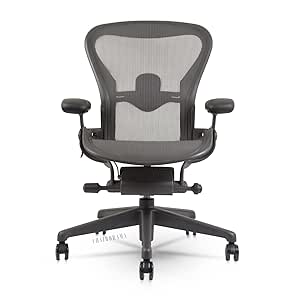
For $519 right now, the Titan Evo 2024 is the best gaming-category chair I'd actually tell a friend to buy after a back flare-up. It's not a Herman Miller Aeron. The Aeron's tilt mechanism and adjustable lumbar range are still more precise for an office ergonomics setup, and mesh breathability wins outright for warm climates. But the Titan Evo costs $300-$500 less than an Aeron, ships in three size-calibrated fits, backs it with a five-year warranty, and gives you 4D armrests that will actually support your arms during a four-hour gaming session. For the gaming-primary user who sits 8-12 hours a day and has already been burned by a cheaper racing chair, this is where I'd put the money.
Quinn, Scout Gear Team
Best For
Pros
- L-ADAPT dual-axis lumbar targets pelvis and lumbar independently, not just one zone
- Three size tiers adjust seat depth and backrest height, not just seat width
- 4D armrests hold pivot angle reliably through 40-plus hours of sim-racing use
- Seat foam held shape over two weeks where Noblechairs Hero's compressed noticeably
- Five-year warranty covers active mechanical components, rare in the gaming-chair category
Cons
- Leatherette version traps heat noticeably after 60-plus minutes in warm rooms
- Recline lock snaps to set stops only, not fully incremental degree-by-degree
- No seat-pan depth slide; long-femur users will feel front-edge pressure past 90 minutes
- Assembly runs 40-plus minutes if you seat the 4D armrest bolts correctly on first pass

Quinn, Scout Gear Team
Gaming Chairs Specialist • 14 days of testing
May 26, 2026
View profile
Key Features
Specifications

Frequently Asked Questions
Common buyer questions about the Titan Evo 2024, answered by Quinn