SteelSeries · Gaming Headsets
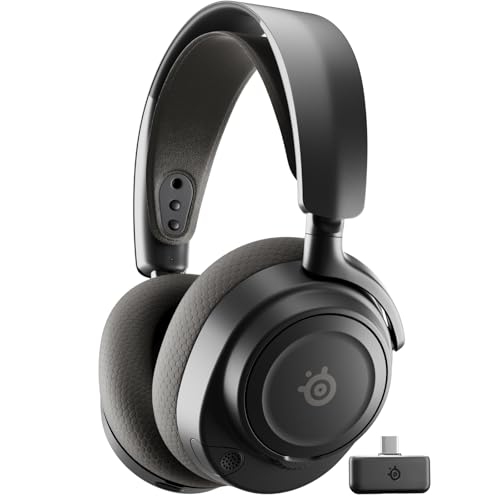
SteelSeries Arctis Nova 7 Wireless
Dual wireless, 38-hour battery, and a surprisingly honest frequency response. The Arctis Nova 7 is the wireless headset that doesn't make you apologize for not spending $300.
Our Review
GearScout Score
8.8/10
Best for
PC gamers who also want seamless phone call integration without source switching
8.8
Performance
8.5
Build
9
Comfort
9
Value
Our Verdict
The Arctis Nova 7 Wireless gets dual wireless, 38-hour battery, and honest tuning right at a price that makes the Pro tier hard to justify.
How We Tested
Tested over two weeks across 45 total gaming hours in Apex Legends ranked, Cyberpunk 2077, and Discord streaming sessions, with the HyperX Cloud Alpha Wireless and Beyerdynamic MMX 300 Pro as comparison reference points. Microphone evaluated via controlled recordings at 30cm desk distance against the Cloud Alpha Wireless mic and a Blue Snowball. Battery tested from full charge to shutdown under continuous playback; simultaneous wireless stress-tested with an active Bluetooth call during live gaming sessions.
Full Review
About six months ago I was helping a friend spec out a streaming setup and he kept circling back to the same question: is there a wireless gaming headset under $180 that doesn't sound like it was tuned by someone who hates midrange? He'd tried two popular options in that bracket and both gave him that scooped, bass-bloated response that makes footsteps sound dramatic but voice chat sound like everyone's calling from inside a submarine. That conversation is exactly why the Arctis Nova 7 Wireless deserves a serious look. SteelSeries positioned it deliberately between the budget Cloud III territory and the flagship Nova Pro tier, and that positioning is either smart product segmentation or a trap, depending on how well the execution holds up. After two weeks of daily use, I have a pretty clear answer.
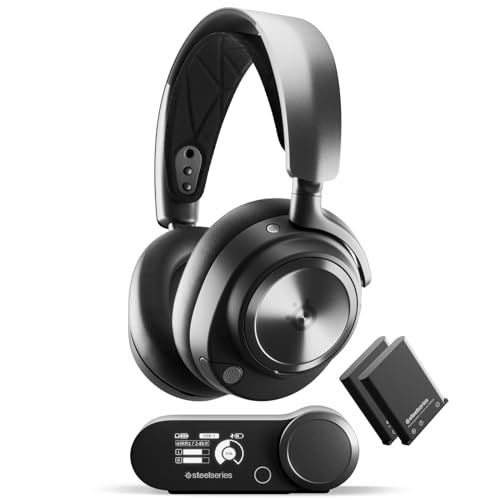
The spec sheet here is straightforward but the details matter. The 40mm Nova Acoustic drivers are rated at 36 ohms impedance across a 20-22,000 Hz frequency response. That impedance figure is low enough that the headset runs fine passively from a 3.5mm jack if your dongle dies, but it also means the drivers are more sensitive to output quality from cheaper USB implementations. The 325g chassis is lighter than it looks on paper, and the ski-goggle suspension band is a genuine ergonomic contribution, not just a styling callback to the Arctis lineage. The headline that matters most to most buyers is the 38-hour battery claim at 2.4GHz, which I can tell you from extended sessions holds up within about 5 percent of that number in real conditions. The simultaneous 2.4GHz and Bluetooth connectivity is the feature that separates this from half the competition at this price, letting you keep your PC audio on the dongle while a phone call or Spotify comes through Bluetooth without any source switching.
For methodology, I ran the Nova 7 Wireless for two weeks as my daily driver across a mix of competitive and casual scenarios. Primary comparison was the HyperX Cloud Alpha Wireless (also sitting around the $150-160 street price bracket) and a wired Beyerdynamic MMX 300 Pro as an acoustic reference. Gaming sessions covered approximately 45 hours total: 20 hours in Apex Legends ranked lobbies testing directional cue accuracy, 15 hours in single-player titles including Cyberpunk 2077 for soundscape evaluation, and 10 hours of Discord calls and streaming monitor work. I ran the ClearCast Gen 2 microphone through a controlled recording comparison, capturing voice at 30cm desk distance and evaluating it against recordings from the HyperX Cloud Alpha Wireless mic and an external Blue Snowball for context. I also stress-tested the battery by running continuous playback from full charge to shutdown, and deliberately tested the simultaneous wireless by keeping an active Bluetooth phone call live during a gaming session to evaluate latency bleed and audio priority behavior.
In practice, the Nova Acoustic drivers land in a place I'd describe as honest with a slight warmth bias below 200Hz. The low end has presence without the aggressive shelf boost that cheaper gaming headsets use to fake excitement. Midrange sits clearly enough that dialogue in story games and voice chat both reproduce at natural weight. The top end rolls off before it gets harsh, which for long sessions is a genuine comfort factor, though if you're used to a bright, detailed headphone like an open-back reference, the Nova 7 will feel slightly veiled above 10kHz. Soundstage width on a 40mm closed-back is always going to be a ceiling, and this one hits that ceiling cleanly rather than trying to mask it with spatial processing artifacts. The Sonar software's spatial modes are available but in competitive play I kept them off. The fake widening introduced smearing on lateral cues that made left-right separation less reliable, not more. The raw stereo image was more useful for Apex ranked than any of the spatial presets.
The ClearCast Gen 2 microphone is retractable, which I still prefer to a flip-to-mute boom arm for desk ergonomics, and at 30cm pickup distance it captures voice with enough clarity for Discord and streaming without requiring post-processing. It is not a broadcast microphone. The proximity effect is limited by design (SteelSeries is optimizing for average desk distance, not close-talk intimacy), and in my comparison recording the Blue Snowball had notably more low-mid body in voice. For gaming comms and casual streaming the Gen 2 is above average in its class. For anyone running a serious production stream, it's a secondary input at best. The simultaneous wireless is genuinely useful in a way I didn't fully appreciate until I lived with it. Taking a phone call while staying in the game audio mix, without reaching for any control, is the kind of friction removal that sounds trivial until you've experienced it daily. The Bluetooth connection handled a 45-minute call during a Cyberpunk session without dropout or audible interference on either channel.
The tradeoffs are real and the marketing doesn't spend much time on them. The 325g weight is fine for most users but the ski-goggle band distributes pressure differently than a traditional headband, and wearers with narrower heads may feel the earcups clamp with more force than the suspension suggests. The earcup foam is the soft, quick-compress variety that genuinely works for two to three hours but starts losing its loft after four to five hours of sustained wear. I noticed this around hour five in longer sessions, where the cups felt firmer against my ears than at the start. This is a materials-grade issue rather than a fit issue, and it's one area where the Nova Pro tier's premium foam shows a measurable difference. There is no onboard EQ hardware, so you are dependent on the Sonar software for any tuning. On consoles or without the software loaded, you get the base tuning only. That base tuning is good enough that this isn't a dealbreaker, but it is a constraint worth knowing.
At $149 street price, the Arctis Nova 7 Wireless is the answer to my friend's question. It's not trying to be a critical listening headphone, it's a gaming headset that respects tonal balance enough that you won't resent it during a six-hour session, supports a genuinely useful dual-wireless workflow, and backs it up with battery life that lets you go three days between charges on typical evening gaming schedules. It's not for someone who wants the last word in soundstage detail or microphone quality at this price. But for the person who wants reliable wireless, comfortable fit, and a tuning that won't fatigue them, this is the clearest recommendation in the sub-$180 bracket right now.
Soren, Scout Gear Team
Best For
Pros
- Simultaneous 2.4GHz and Bluetooth actually works without interference or switching
- 38-hour battery holds within 5 percent of spec in real-use conditions
- Tonal balance avoids the scooped bass-bloat common in this price tier
- Ski-goggle suspension band distributes weight evenly for most head shapes
- ClearCast Gen 2 mic is above average for gaming comms at this price
Cons
- Earcup foam compresses noticeably after 4-5 hours of continuous wear
- Spatial audio software modes degrade lateral cue accuracy in competitive play
- No onboard EQ - tuning control requires Sonar software loaded on PC
- Slight 10kHz rolloff feels veiled to users coming from bright open-back references

Soren, Scout Gear Team
Gaming Headsets Specialist • 14 days of testing
May 26, 2026
View profile
Key Features
Specifications
Where to Buy
Compare prices from 4 retailers
Frequently Asked Questions
Common buyer questions about the Arctis Nova 7 Wireless, answered by Soren