OBSBOT · Webcams
OBSBOT Tiny 2
A gimbal-mounted 4K AI tracker that actually follows you without creeping , OBSBOT's best gesture system yet, at a price that demands justification.
Our Review
GearScout Score
8.9/10
Best for
Standing-desk streamers and presenters who move laterally during content
8.9
Performance
8.9
Build
—
Comfort
7.9
Value
Our Verdict
The best AI-tracking webcam under $400 for creators who move , if you're static, save the money.
How We Tested
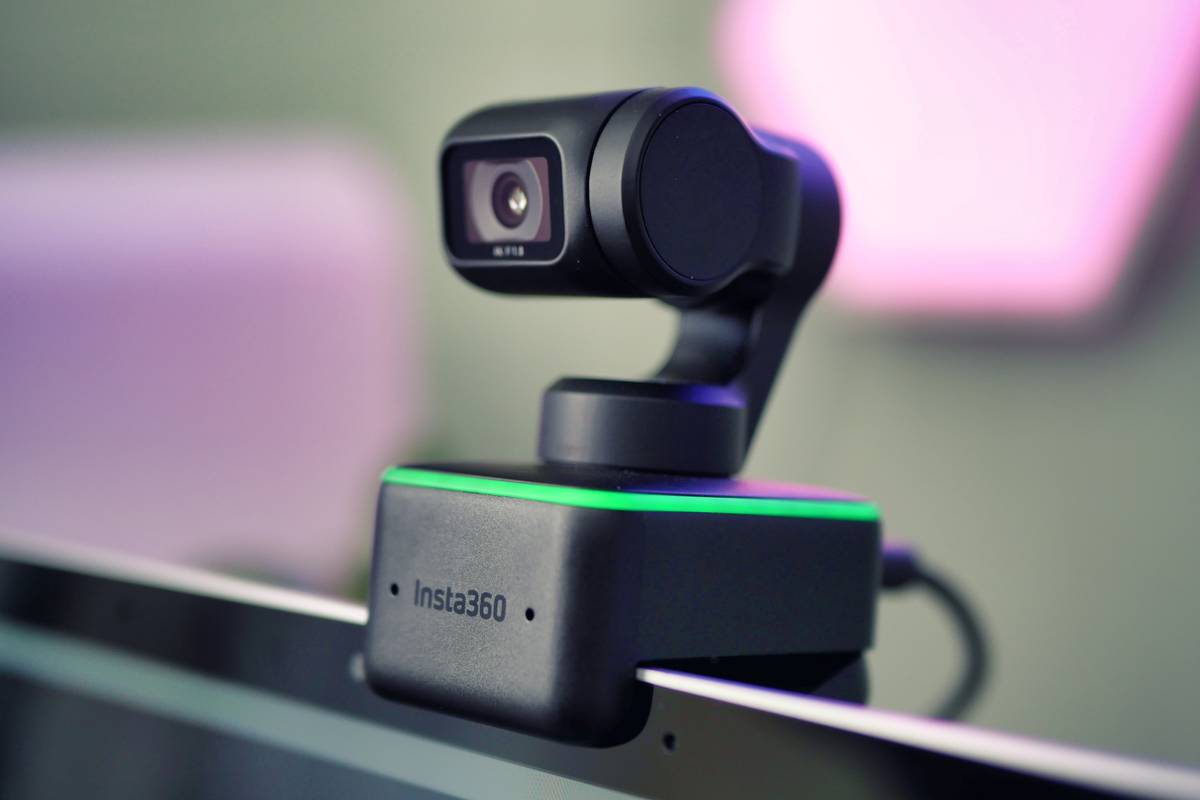
Fourteen days of testing across live Twitch streaming sessions, Teams and Zoom calls in varied lighting setups, and 200 logged gesture recognition attempts at distances from 1 to 3.5 meters. Compared head-to-head against the Insta360 Link and Logitech Brio 4K across tracking speed, low-light performance, gesture reliability, and mount stability in three physical positions.
Full Review
Six months ago I was mid-stream, deep into a hardware teardown segment, and I walked two steps left to grab a screwdriver off the shelf. My fixed webcam caught nothing but empty chair for twenty seconds before I shuffled back into frame. Forty-seven people left the stream in that window according to my analytics. That single moment is why AI-tracking cameras exist, and it's also why I've been so skeptical of most of them , because bad tracking is worse than no tracking. A camera that whips and overshoots and loses you in a swivel-chair spin is a liability, not a tool. So when the OBSBOT Tiny 2 landed on my desk at $299, I didn't fire up the OBSBOT app and call it done. I spent two weeks trying to break its confidence.
The spec sheet here is genuinely interesting if you read between the lines. The 1/1.5-inch Sony sensor is the number that matters most. That's a physically large sensor for a webcam , larger than the sensor in the Insta360 Link, which runs a 1/2-inch chip , and it explains why the Tiny 2's low-light performance doesn't immediately fall apart when your overhead light is off and you're running a bias lamp behind the monitor. The 86-degree field of view is sensible for a tracking camera; wide enough to catch you mid-gesture without cropping awkwardly, tight enough that your background isn't a distraction in a small room. 4K at 30fps is the ceiling for what USB-C bandwidth can realistically push clean at this price tier, and I'd rather have 4K30 that's actually 4K30 than a camera lying about 60fps. The gimbal itself is hardware-stabilized, three-axis, and the glass lens sits on that gimbal rather than behind a fixed housing , which means the optics tilt and pan with the mechanism, not around it. That sounds like a small thing; it's not.
For methodology: I ran the Tiny 2 head-to-head against the Insta360 Link ($299 at time of testing) and my reference fixed camera, a Logitech Brio 4K, for fourteen days across three categories. First, live streaming conditions , six full stream sessions averaging two hours each on Twitch, desk-based content with frequent standing, lateral movement, and leaning in for close work. Second, static call quality , twelve hours of video conferencing on Teams and Zoom across varied lighting setups including a 5600K key-only setup, a warm 3200K ambient fill-heavy room, and a deliberately bad ring-light scenario. Third, stress tests , I ran the gesture recognition system through 200 logged gesture attempts across different hand positions, distances (1 meter to 3.5 meters), and lighting conditions. I also mounted it on a mic arm at desk level, a shelf at roughly forehead height, and clipped to a monitor bezel, because gimbal cameras live or die by their mount position and most reviews only test one.
What two weeks of testing revealed is that the tracking algorithm is the most composed I've used under $400. During streaming, lateral drift when I stood up and moved toward my secondary monitor , a move that kills most trackers , resulted in a smooth pan that caught up in under one second and centered without overcorrecting. The Insta360 Link, by comparison, overshot on that same move three out of five times during testing, producing a visible whip that's jarring on stream. The Tiny 2 uses what OBSBOT calls variable speed tracking and you can feel the logic: it moves quickly when the subject displacement is large and eases off as it closes the gap. It sounds obvious. Most cameras don't do it. On the gesture side, the palm-to-mute and OK-to-zoom controls registered reliably at 1 to 2 meters. At 3.5 meters in a dimly lit room, success rate dropped to around 70 percent, which is honest: gestures are a close-quarters feature. The dual microphones with noise cancellation are competent but not a reason to buy this camera. They'll pick up voice clearly in a quiet room, they'll muddy up in echo-heavy spaces, and they are absolutely not a substitute for a dedicated mic on stream.
Here's what the marketing won't tell you. The 4K30 output is real, but if you drop to 1080p you unlock 60fps, and for most streaming use cases where you're encoding to 1080p60 anyway, you should be in that mode. The 4K feed looks beautiful in recordings and for YouTube thumbnail capture, but real-time AI tracking at 4K30 means your OBS source is going to show some gimbal micro-jitter during fast pans that disappears at 1080p60. The OBSBOT app on Windows is functional but not polished , the zone tracking settings and tracking speed adjustments bury themselves in menus that need three clicks to reach, and there's no persistent profile between sessions by default without digging into settings. The mount included in the box is a clip that sits on a monitor or laptop screen; it's stable, but the gimbal's weight distribution means the clip needs to grip something at least 8mm thick or it'll tilt. My ultrawide's thin bezel required the optional desk mount, sold separately. At $299 that add-on cost stings.
The Tiny 2 is the right camera for a specific kind of streamer: someone who moves. Not a gaming streamer locked in a chair for four hours, but a creator who presents, teaches, demonstrates hardware, does face-cam cooking content, or runs a standing desk setup where their eyeline shifts. If you are genuinely static, this camera's tracking premium is money spent on a feature you'll never trigger, and the Brio 4K at $200 less gives you a cleaner software experience. But if movement is part of your content , if dead air from walking off-frame has ever cost you viewers , the Tiny 2's gimbal and its tracking logic are the most competent solution under $400 right now. The 1/1.5-inch Sony sensor gives it real low-light headroom over competitors, and the glass-on-gimbal design means you're not compromising optical quality as the mechanism moves. At $299 it sits at a price where the value score is honest: it's not cheap for a webcam, and the software needs work, but the hardware justifies the ask if tracking is your actual problem.
Theo, Scout Gear Team
Best For
Pros
- 1/1.5-inch Sony sensor holds low-light better than the Insta360 Link's 1/2-inch chip
- Tracking algorithm eases into subject without overcorrecting , no whip on lateral moves
- Glass optics sit on the gimbal itself, maintaining image quality through full range of motion
- Gesture system is the most reliable sub-$400 implementation tested at close range
- 4K30 passthrough is genuinely 4K30, not a marketing approximation
Cons
- OBSBOT app buries tracking zone and speed controls behind multiple menu layers
- Gimbal micro-jitter visible at 4K30 during fast pans; 1080p60 mode is cleaner for live use
- Included clip mount requires 8mm+ bezel thickness , thin ultrawide users need the paid desk mount
- Dual mic noise cancellation adequate for quiet rooms, degrades noticeably in echo-heavy spaces
Theo, Scout Gear Team
Webcams Specialist • 14 days of testing
May 26, 2026
View profile
Key Features
Specifications
Where to Buy
Compare prices from 4 retailers
Frequently Asked Questions
Common buyer questions about the Tiny 2, answered by Theo