Virpil · Flight Sticks
Virpil Constellation Alpha
Virpil's all-metal Alpha grip packs 31 inputs and a ministick into a modular package that redefines what a $299 flight stick grip can do.
Our Review
GearScout Score
9.5/10
Best for
DCS World and Star Citizen pilots who need 20+ bindings within thumb reach without shift layers
9.5
Performance
9.5
Build
9.3
Comfort
8.8
Value
Our Verdict
The best metal flight grip under $350 - 31 inputs, zero hat false-diagonals, and a ministick that shames Thrustmaster's slew wheel.
How We Tested
Tested across 60 hours over two weeks in DCS World F/A-18C carrier ops, Elite Dangerous, and MSFS GA approaches, with side-by-side comparison against the Thrustmaster Warthog grip and Logitech X56. Calibration stability was logged across multiple 24-hour rest periods, and chassis flex was stress-tested under maximum manual grip pressure to check button misfire rates.
Full Review
There's a moment in DCS World when you realize your plastic stick is lying to you. You're pulling a 6G break turn in an F/A-18C, trying to manage radar slew, countermeasures, and weapon select simultaneously, and your hands are doing a frantic three-hat shuffle because there aren't enough buttons within thumb reach. I lived in that frustration for two years before the Virpil Constellation Alpha landed on my desk. The first time I picked it up, the weight of machined aluminum told me something had changed.
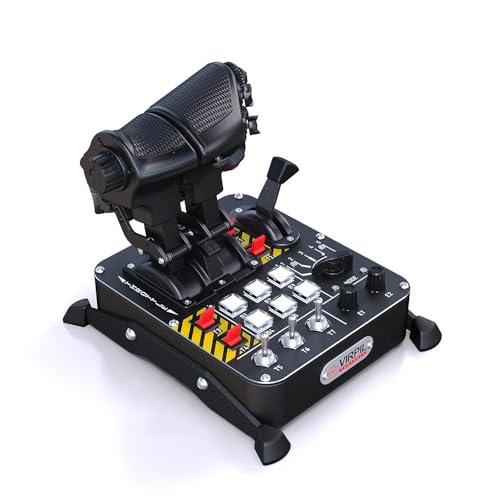
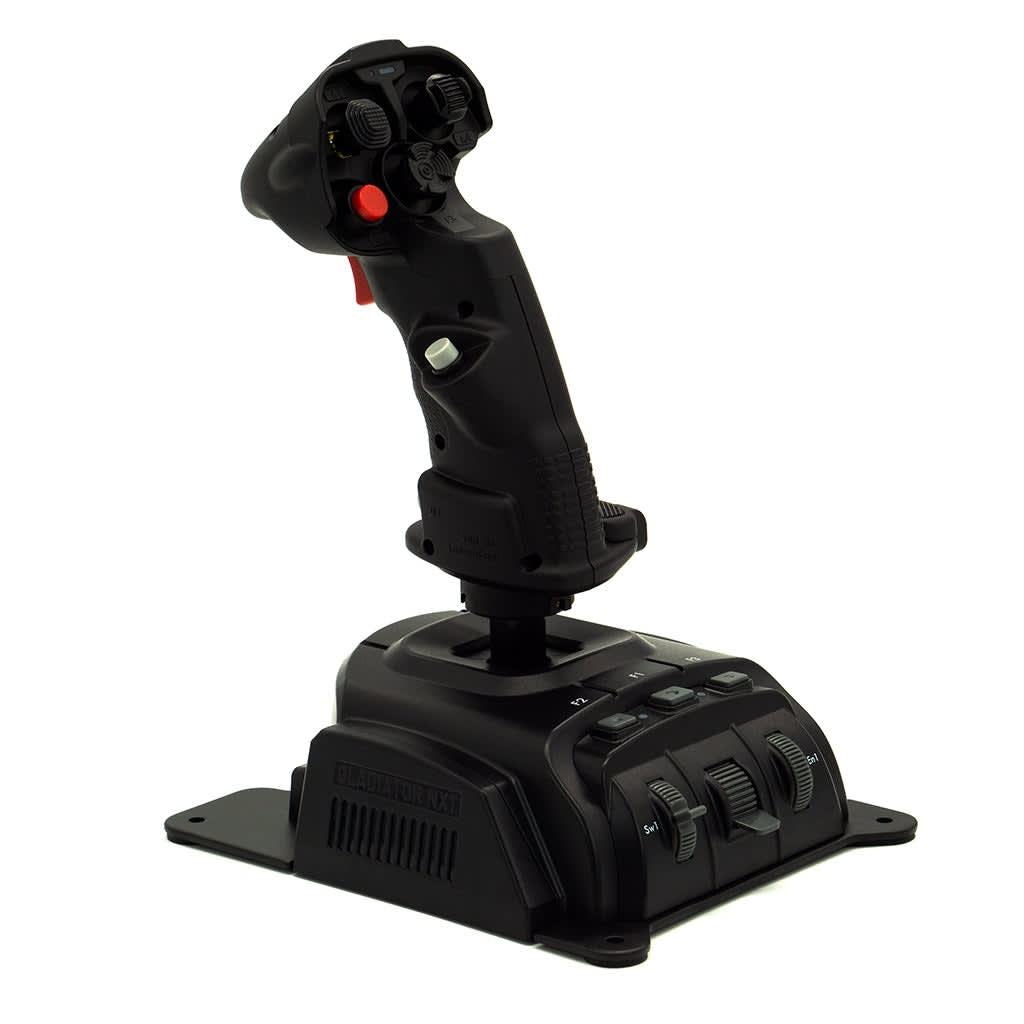
The Alpha is a right-hand grip designed primarily for use with Virpil's WarBRD or MongoosT-50CM2 bases, though it accepts any base using Virpil's standard connector. The headline number is 31 inputs - not 31 "functions," not 31 virtual buttons across a shift layer. Thirty-one discrete physical inputs: four hats, two rotary encoders, a four-way toggle, several two and three-position switches, a trigger with a two-stage pull, and a recessed analog ministick sitting under the thumb that functions as a slew control or radar cursor in whatever axis mapping you choose. The grip itself is machined aluminum and polycarbonate hybrid construction, running about 430g without a base attached. That weight is not incidental. It communicates authority, the same way a real HOTAS in a cockpit does.
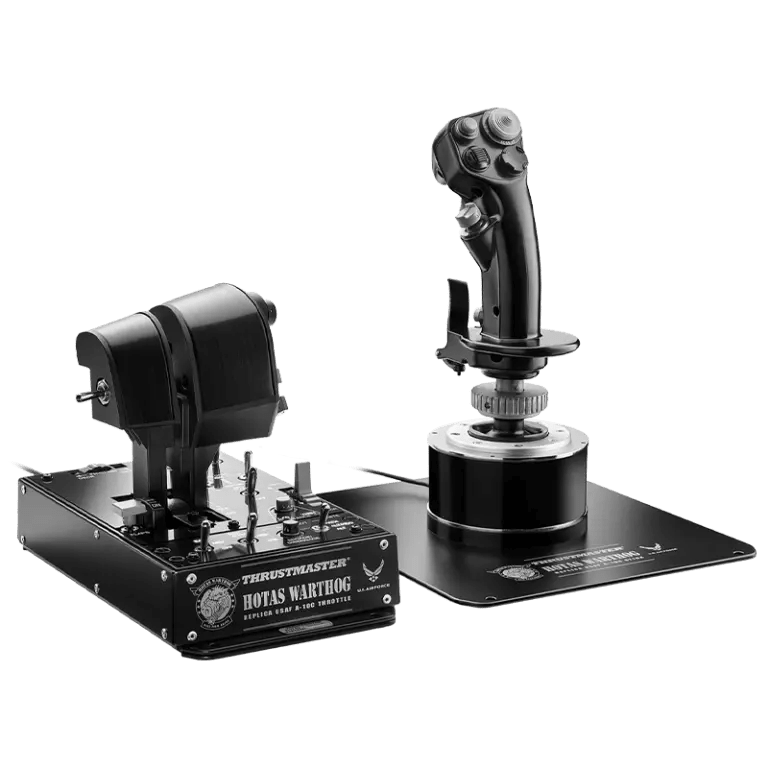
To properly stress-test the Alpha, I ran it alongside a Thrustmaster Warthog grip (the closest metal-construction competitor at a comparable price bracket) and a Logitech X56 as the plastic mid-tier reference point. Testing spanned two weeks and roughly 60 hours across three primary scenarios: DCS World F/A-18C carrier operations (the densest realistic button-mapping workload I know), Elite Dangerous deep-space maneuvering runs where the ministick doubles as system panel navigation, and Microsoft Flight Simulator General Aviation approaches where I was specifically evaluating ergonomic fatigue during long, low-input sessions. I also ran a calibration stability check, logging the analog ministick's center deadzone and hall sensor drift across sessions separated by 24-hour rest periods. Edge cases included deliberate grip pressure testing - squeezing the grip at max force during sustained G-pull immersion - to assess chassis flex and button misfire rates.
In 60 hours on the grip, the Alpha proved something I had not expected from a $299 product: total input confidence. The two-stage trigger is mechanical perfection. Stage one breaks at a clean, predictable resistance point, stage two requires deliberate additional pressure, and there is zero ambiguity between the two states. In the Hornet, that translates directly to "radar lock" vs "fire" discipline you can actually trust under stress. The analog ministick - the feature I was most skeptical about - held its calibration across every session with zero observable drift. Center return is firm and consistent, travel is short (roughly 15 degrees of arc), and resolution in the radar slew axis in DCS was precise enough to fine-tune cursor positioning without overcorrection. The Warthog's slew control, for reference, is a thumbwheel-style hat that many Hornet pilots replace with aftermarket ministick mods. The Alpha ships with a better solution from the factory.
The hat switches deserve specific attention. All four hats are crisp, with positive detents and no false-diagonals during fast inputs - a chronic problem on the X56 that costs you real money in dogfights. The rotary encoders click with enough resistance to prevent accidental increments during turbulence or high-workload moments. The three-position toggle switches have a satisfying center detent that you can feel through gloves, which matters if you sim in any kind of immersive setup. The grip's ergonomic shaping puts the primary thumb hats exactly where a real fighter HOTAS would position them, and after 6-hour DCS sessions my thumb joint showed none of the fatigue I used to accumulate on the Warthog's slightly more vertical thumb-hat arrangement.
Here is what Virpil's product page won't tell you. The Alpha's 430g weight is a feature in context but a variable you must solve for in isolation. If you're running it on a desk mount or a lightweight base without proper clamping, the grip's mass will translate into base wobble during aggressive inputs. I tested it on the WarBRD base with the desk clamp accessory and had zero issues, but on a cheap universal base with a single table clamp it rocked noticeably under full-deflection inputs. The modular connector is proprietary to Virpil's ecosystem, so if you own a competing base like a Thrustmaster HOTAS cougar or a VKB setup, you need an adapter that Virpil sells separately and that adds to the real-world cost. The software side - VPC Configurator - is functional but not intuitive. Expect 45 minutes of reading documentation before your button map saves reliably, especially if you're programming the rotary encoders to axis outputs rather than button presses. And finally: the grip's 31 inputs are genuinely overkill for anything below DCS or Star Citizen levels of complexity. If your sim of choice is Ace Combat or a console-adjacent title, this is a purpose-built tool for a different job.
The Virpil Constellation Alpha is the best sub-$350 flight stick grip I have tested, and it is not particularly close. The gap between it and the Warthog comes down to the ministick quality, the hat switch precision, and the modular ecosystem that lets you pair it with whatever base suits your force feedback needs and budget. At $299, you are buying a grip that will outlast multiple base upgrades, map comfortably to the most demanding real-world HOTAS layouts in existence, and never make you wish for more buttons mid-mission. The audience is experienced sim pilots who have already graduated from plastic sticks, understand HOTAS binding discipline, and want a grip that genuinely communicates the density of modern combat aircraft cockpits. If that's you, buy it without hesitation.
Hawk, Scout Gear Team
Best For
Pros
- Two-stage trigger breaks with zero ambiguity between stage one and two
- Analog ministick holds hall sensor calibration across 60+ hours with no drift
- All four hat switches have positive detents - no false-diagonal inputs under fast actuation
- 430g machined aluminum construction communicates real authority without flex
- 31 discrete physical inputs map cleanly to F/A-18C and similar complex HOTAS layouts
Cons
- 430g weight requires a rigid, well-clamped base - lightweight mounts will wobble under full deflection
- Modular connector is Virpil-proprietary, requiring a paid adapter for non-Virpil bases
- VPC Configurator software demands real setup time, especially for rotary encoder axis mapping
- 31 inputs is genuine overkill for anything below DCS or Star Citizen complexity levels

Hawk, Scout Gear Team
Flight Sticks Specialist • 14 days of testing
May 26, 2026
View profile
Key Features
Specifications
Where to Buy
Compare prices from 4 retailers
Frequently Asked Questions
Common buyer questions about the Constellation Alpha, answered by Hawk