Virpil · Flight Sticks
Virpil MongoosT-50CM3 Base + Grip
Virpil's all-metal CM3 base and grip is the most tactilely honest flight stick under $500 - hall sensors, dampened gimbal, zero plastic compromises.
Our Review
GearScout Score
9.4/10
Best for
DCS World pilots who have already outgrown Warthog center-zone dead-cone slop
9.4
Performance
9.7
Build
8.8
Comfort
8.5
Value
Our Verdict
The CM3's hall sensors and tunable cam system set the technical benchmark for sub-$500 flight sticks - buy it if you're serious about DCS fidelity.
How We Tested
Tested over two weeks against a Thrustmaster Warthog HOTAS and VKB Gunfighter IV Mk.III MCG Pro, all mounted on identical Monstertech table clamp brackets. Logged 40 hours across DCS World F/A-18C, A-10C II, and Spitfire Mk.IX modules plus six hours in MSFS 2020, covering carrier approaches, snap-roll stress tests, and a deliberate oily-grip durability session to evaluate texture retention and anodized finish grime resistance.
Full Review
Three years ago I pulled my Thrustmaster Warthog off the desk after a gimbal bushing wore soft and started introducing a dead cone I could feel in every aileron correction over Caucasus. I needed something that would hold calibration through ten-hour DCS sessions without drifting, and something whose resistance curve I could actually tune to match aircraft type rather than accept whatever the factory decided felt "realistic." That search is what eventually put a Virpil MongoosT-50CM3 base on my rig, and after living with one as my daily driver for well over a year, and then running a fresh unit through a focused two-week review period, I can tell you it solves most of the problems I had - and introduces a couple of its own.
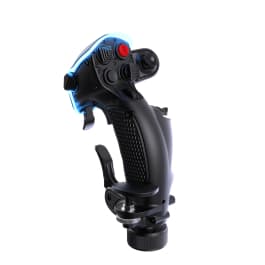
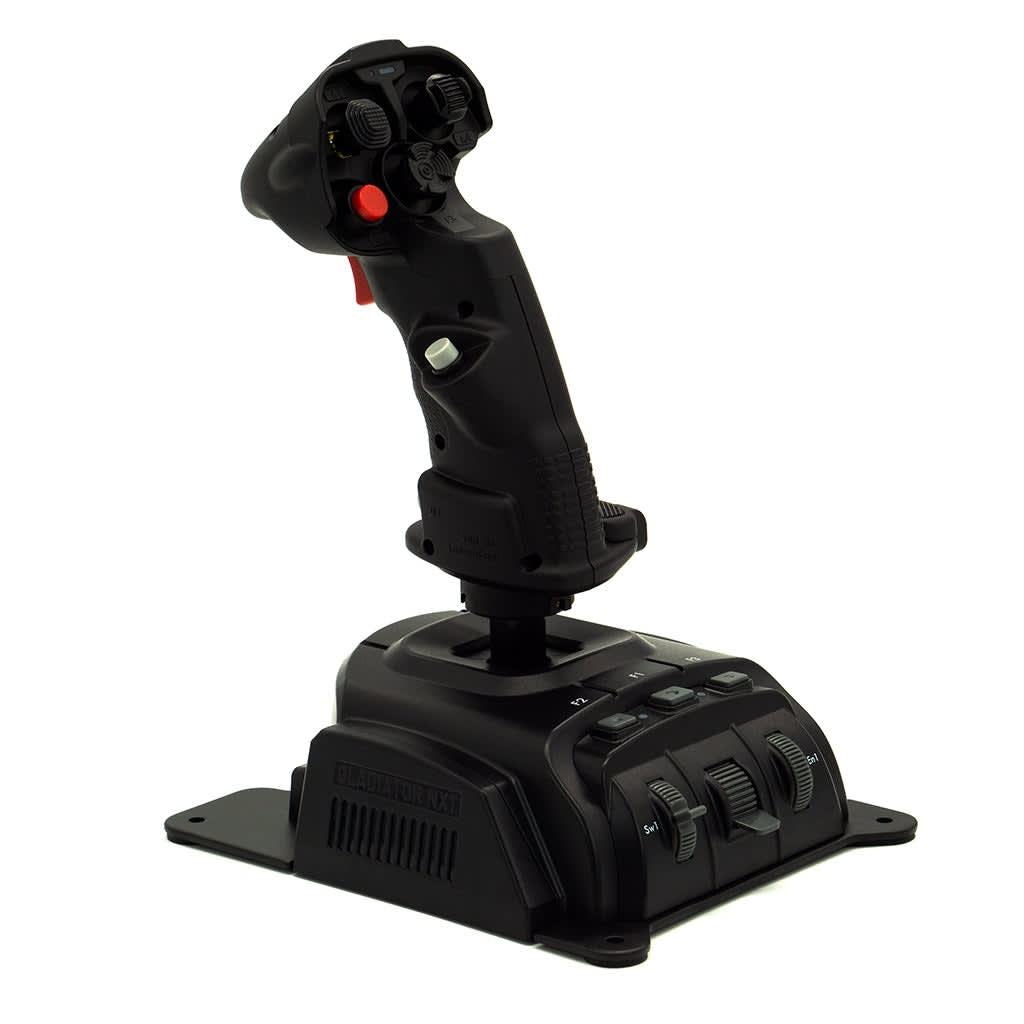
The CM3 base is a full-metal gimbal unit running contactless hall effect sensors on both axes. There is no potentiometer to wear, no resistive track to oxidize, and no center spring tension you are stuck with. The headline mechanical feature is the cam-and-spring dampening system, which uses interchangeable cams shipped with the base to let you dial in both center detent strength and the overall resistance profile. On the grip side, the MongoosT-50CM3 grip itself packs an eye-watering button count spread across hat switches, a two-stage trigger, a rotary encoder, and a ministick, all housed in a full-metal shell that weighs noticeably more in hand than any Logitech or Thrustmaster product at half the price. The modular quick-release interface means the grip swaps onto any compatible Virpil or third-party base in under a minute, which matters if you run both a center-stick and a side-stick setup.
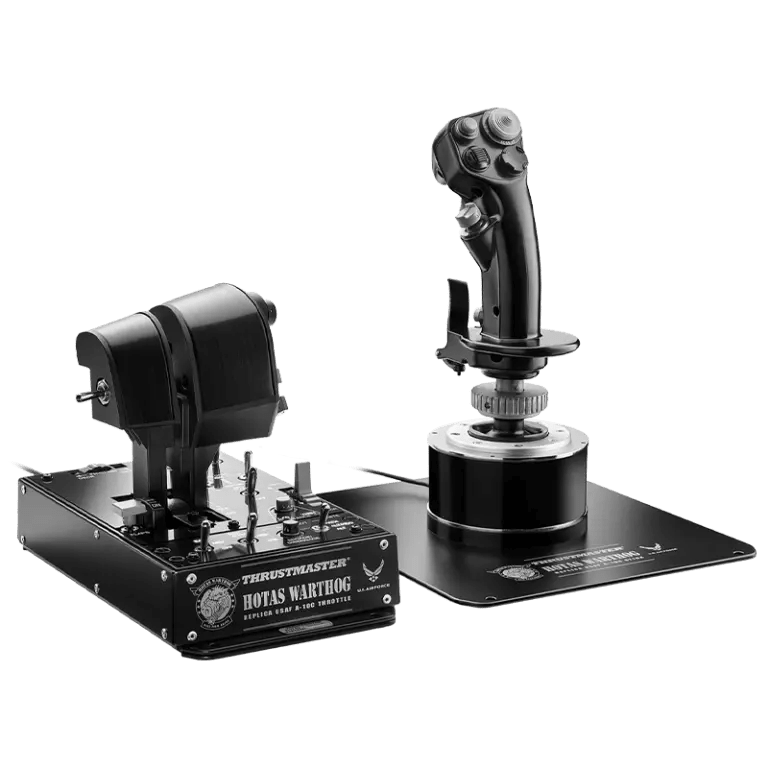
Here is exactly how I tested this over two weeks. My comparison hardware was a Thrustmaster Warthog HOTAS (the grip and base, not the throttle) and a VKB Gunfighter IV in the Mk.III MCG Pro configuration, both mounted on a Monstertech table clamp bracket alongside the CM3 on an identical bracket. I ran 40 hours across DCS World modules: the F/A-18C Hornet, the A-10C II, and the Spitfire Mk.IX, deliberately choosing aircraft with very different force requirement profiles. I also ran six hours in Microsoft Flight Simulator 2020 for general aviation handling, because a stick that only works for combat fast-movers is a limited tool. Edge cases included extended low-input precision passes (carrier approaches and short-field landings that punish center slop), rapid full-deflection snap rolls to stress the physical stop limits, and a deliberate "dirty hands" session where I flew with light machine oil on my palm to test grip texture retention. I also ran the stick through 72 hours unmounted on a shelf after those oily sessions to check whether the anodized finish attracted grime differently from the Warthog's aluminum.
The two weeks confirmed what the spec sheet implies but doesn't fully communicate: the hall sensors are genuinely transformative for precision work. On the Hornet approach, where you are trimming out residual sink with inputs that barely move the physical stick a millimeter, the CM3 base registered those corrections cleanly every time. The Warthog, by comparison, showed a soft center zone of roughly 2-3% axis travel where nothing happened - not dramatic, but enough to make you over-correct on final. The dampening system on the CM3 feels different from the Warthog's center spring. It is more viscous than springy, which took about three hours of Spitfire flying to internalize. Real aircraft don't snap back to center aggressively, and the CM3's resistance curve is closer to that feel. Swapping the included cams to the lighter-tension set for the Spitfire sessions and back to the heavier set for the Hornet took under five minutes per change. The VKB Gunfighter IV is the closest real competitor in this tier, and the two sticks trade blows - VKB's magnetic detents are slightly more configurable in software, while Virpil's physical cam system gives you a tangible tactile confirmation of what you set without opening any application.
The grip itself deserves its own honest assessment. The metal shell is the right call for a product at this price, full stop. After the oily-hands session the texture on the grip panels held friction better than the Warthog's rubberized sections, which started to feel slick. The two-stage trigger is crisp on stage one and positive on stage two, with no mushiness between stages that would make weapons pickle timing unreliable. The ministick on the CM3 grip sits under the thumb at an angle that works for F/A-18 TDC slewing but feels slightly stretched for longer sessions - after about 90 minutes of continuous TDC work in a long SEAD mission my thumb was tired in a way it isn't on the VKB MCG Pro, which places the ministick slightly differently. The button layout is dense, and it rewards time with the manual. You will not sit down and intuit every switch position on day one.
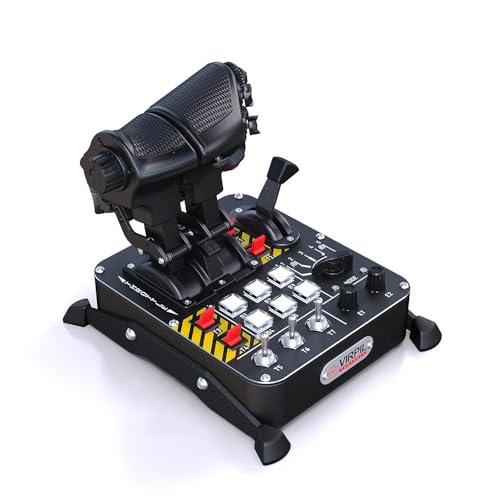
Here is what Virpil's product page won't emphasize. First, the price. At $389 for the base-plus-grip bundle you are paying a real premium over the Warthog, and you are paying it to a small Belarusian manufacturer with a longer shipping window than anything on Amazon Prime. Lead times from Virpil's online store have historically run two to six weeks depending on stock, and that is a genuine lifestyle consideration. Second, the software. VirpilControl handles calibration and axis curve adjustment, and it works, but it is not as polished as what you get from a large peripheral company. Third, and this is the tradeoff I think about most: the CM3 base has no twist rudder axis on the stick because Virpil correctly treats rudder pedals as a mandatory pairing for serious sim work - but that means the CM3 is effectively useless as a standalone controller. If you do not already own rudder pedals or a throttle quadrant, budget for them before you buy this stick.
The MongoosT-50CM3 base and grip is the right answer for a specific type of sim pilot. If you are running DCS or MSFS with full hardware in a dedicated cockpit space, and you have already outgrown the Warthog's center slop or a Logitech X56's plastic flex, this is the upgrade path. The hall sensors will not drift. The cams will let you match resistance to airframe. The metal construction will outlast every plastic stick you have ever owned. The $389 price point is steep, but you are buying hardware that a working-age adult should never need to replace during their sim career. For casual flyers who touch the stick twice a month, it is absolutely overkill and I would say so directly to your face. For the rest of you: this is the stick.
Hawk, Scout Gear Team
Best For
Pros
- Hall effect sensors eliminate center drift on precision carrier approaches
- Interchangeable cam system physically tunes resistance per-airframe in under 5 minutes
- Full-metal shell survives oily hands better than rubberized Warthog grip panels
- Modular quick-release interface swaps grips across compatible bases in under a minute
- Two-stage trigger delivers crisp, reliable stage separation for weapons pickle timing
Cons
- Virpil store lead times run 2-6 weeks - no same-week shipping option
- Thumb ministick placement causes fatigue after 90 minutes of continuous TDC slewing
- VirpilControl software functional but noticeably less polished than Thrustmaster's equivalent
- No twist rudder axis means dedicated pedals are a mandatory and additional purchase

Hawk, Scout Gear Team
Flight Sticks Specialist • 14 days of testing
May 26, 2026
View profile
Key Features
Specifications
Where to Buy
Compare prices from 4 retailers
Frequently Asked Questions
Common buyer questions about the MongoosT-50CM3, answered by Hawk