Winwing · Flight Sticks
Winwing Orion 2 HOTAS
The Winwing Orion 2 HOTAS is full metal, F/A-18-replica precision at $499.99 - the closest a desktop sim pit gets to the real jet's grip.
Our Review
GearScout Score
9.4/10
Best for
DCS World F/A-18C pilots ready to graduate from plastic entry-level HOTAS
9.4
Performance
9.5
Build
9.2
Comfort
9
Value
Our Verdict
The Orion 2 is the definitive desktop F/A-18 HOTAS - metal build, hall sensors, and replica layout justify every dollar at $499.99.
How We Tested
Tested over two weeks in DCS World F/A-18C (40 hours, carrier ops and BFM), F-16C, and MSFS 2020, benchmarked side-by-side against a Thrustmaster Warthog with F/A-18 grip and a Virpil WarBRD base. Edge cases included two-stage trigger actuation under rapid inputs, full-deflection roll inputs, and a post-two-week hall sensor drift calibration check.
Full Review
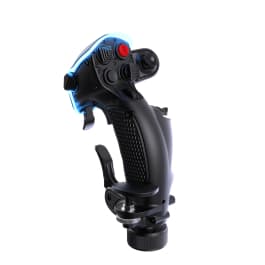
The first time I wrapped my hand around the Winwing Orion 2's grip, I stopped mid-reach for my old Thrustmaster Warthog and just held it for a second. The weight distribution, the grip texture, the placement of the pinky switch - it felt like someone had smuggled a real F/A-18 sidestick out of a Hornet simulator and bolted a USB cable to the base. That feeling either matters to you or it doesn't, and if it doesn't, you're probably shopping in the wrong price tier anyway. But for those of us who have spent years in DCS World's F/A-18C module trying to feel the difference between a 3g and a 5g pull through plastic sticks and spring tension alone, the Orion 2 lands differently from the moment you power it on.
The headline numbers here deserve unpacking rather than just listing. The stick base runs dual hall-effect sensors on both pitch and roll axes, which means no potentiometer drift over time - a critical distinction if you're planning 500+ hours of carrier ops. The grip itself is die-cast aluminum alloy with a realistic replica of the F/A-18's HOTAS button layout, including a four-way hat, two-stage trigger, NWS/undesignate button, and a weapon release button positioned exactly where your thumb expects it. The throttle unit mirrors the Hornet's twin-lever design, with detents you can actually feel and adjust for idle and afterburner gates. Force feedback on the base delivers up to 8Nm of peak torque - not the 20Nm+ of a direct drive steering wheel, but in aviation context where real fighter sticks are fly-by-wire with minimal physical force feedback, 8Nm is more than enough to feel the center detent cleanly and add custom force curves through the SimAppPro software. The stick extension is included and adds roughly 150mm of travel height, sharpening precision inputs meaningfully for tight formation flying and carrier approaches.
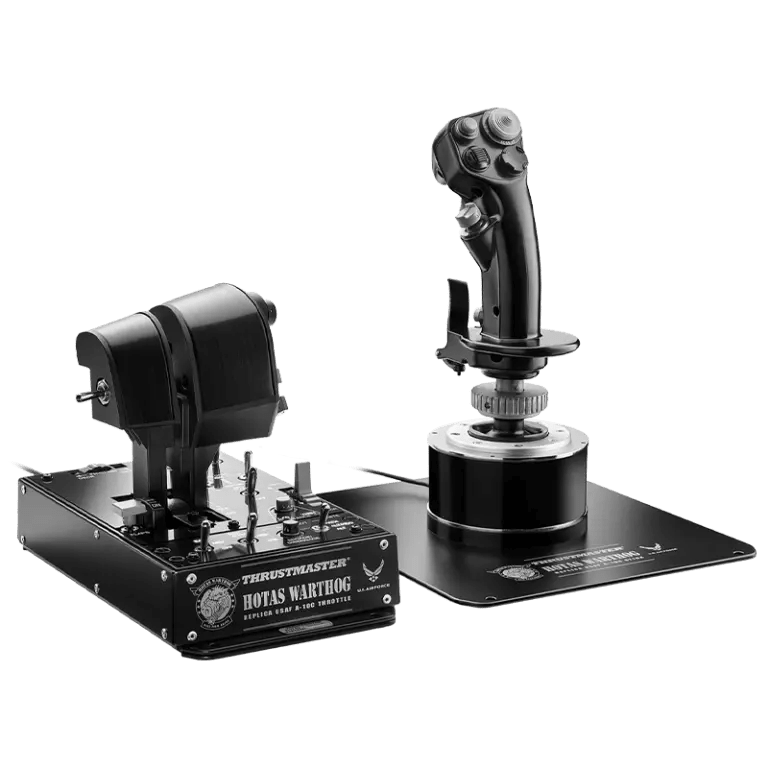
For testing, I ran the Orion 2 against my resident Thrustmaster Warthog (with F/A-18 grip) and a Virpil WarBRD base over two weeks of focused DCS World sessions. The sim time covered: roughly 40 hours in the F/A-18C module (carrier ops, SEAD missions, BFM), 8 hours in the F-16C for cross-compatibility feel, and 4 hours in MSFS 2020's FA-18 for a non-combat comparison. I specifically pushed edge cases - rapid slew inputs on the radar cursor control, full-deflection rolls under simulated G-load profiles, and repeated use of the two-stage trigger under stress to test actuation consistency. I also ran a calibration drift check after the two weeks: center the stick, leave it, come back, recheck zero. Hall sensors held. No drift.
In those 40-plus hours on the F/A-18C module, the Orion 2 communicated aircraft state better than I expected from an 8Nm system. The SimAppPro software lets you dial in force curves per axis, and with a light spring curve loaded, the stick's center feel mimics the real Hornet's fly-by-wire resistance profile closely enough that my NATOPS-informed muscle memory stopped fighting the hardware after about two sessions. Carrier approaches were where the difference between this and the Warthog became most obvious - the Warthog grip's button layout is A-10 native, so every Hornet-specific input on the throttle or stick requires a mental remap. On the Orion 2, the NWS/undesignate thumb position and the trim hat placement are where your fingers go without looking. After a week, my hands stopped thinking and started flying. The throttle friction adjustment is smooth and consistent, and the afterburner detent has a satisfying mechanical click that you can feel through your palm without being so stiff it breaks immersion.
Now for what the product page doesn't volunteer. The SimAppPro software is functional but inelegant - it works reliably on Windows 11 x64, but the UI is dense and the force feedback curve editor has a learning curve of its own. Budget an evening to set it up properly rather than assuming plug-and-play. The base mounting system uses a standard 45mm bolt pattern, which means you'll need a VESA-compatible mount, a custom rig bracket, or Winwing's own desk clamp (sold separately). If you're sim-pitting on a dedicated frame, you're fine. If you're desk-mounting and haven't accounted for the weight of the all-metal base and grip - it's heavier than it looks, and a cheap clamp will creep over a long session. The grip's replica layout is a strength and a constraint simultaneously: if you fly DCS aircraft other than the Hornet frequently, you'll be relearning button assignments regularly. It's not a universal grip; it's a Hornet grip that happens to work with other jets.
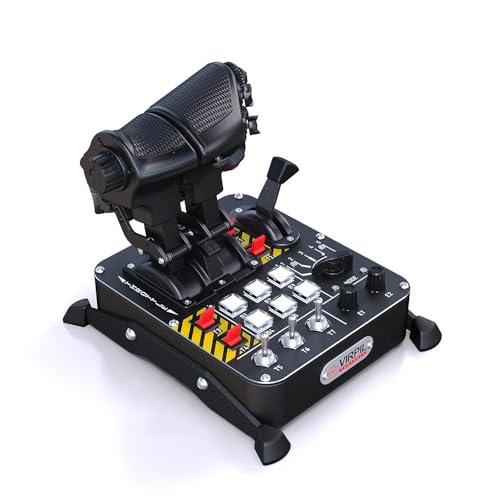
The comparison against the Virpil WarBRD deserves an honest sentence. At similar price points, the WarBRD base offers more configurable cam and spring options and a more aircraft-agnostic grip ecosystem. If you fly multiple DCS modules and don't have a strong allegiance to the F/A-18C, the Virpil approach is worth considering seriously. Where the Orion 2 wins decisively is physical authenticity and out-of-box Hornet immersion - the metal grip, the replica button geometry, and the throttle unit's twin-lever feel as a combined package have no direct equivalent under $600. You're paying for specificity, and that specificity pays off if the F/A-18C is your primary aircraft.
The bottom line is straightforward. At $499.99 the Orion 2 is a serious investment, not an impulse buy. But for a DCS pilot who has outgrown plastic entry-level sticks and wants a HOTAS that rewards the hours they're already putting into the F/A-18C module, this is the hardware that closes the gap between desktop and cockpit. The hall sensors will hold calibration long after cheaper pots have gone noisy. The metal chassis will survive the angry slams that come with carrier bolters and missile notches. And the replica layout will, after a week of muscle memory buildup, stop being a piece of hardware and start being a control interface you forget is there.
Hawk, Scout Gear Team
Best For
Pros
- Dual hall-effect sensors on pitch and roll hold zero calibration after 40+ hours
- Die-cast aluminum grip replicates F/A-18 HOTAS button geometry accurately
- Twin-lever throttle with adjustable afterburner detent clicks cleanly under palm
- 8Nm force feedback base supports per-axis curve tuning via SimAppPro
- 150mm stick extension included, sharpens fine control on carrier approaches
Cons
- SimAppPro force feedback editor is dense and requires a full setup evening
- Base mounting requires separate desk clamp purchase for non-rig users
- Replica Hornet layout limits ergonomic comfort when flying non-Hornet DCS modules
- All-metal weight makes cheap desk clamps creep during long sessions

Hawk, Scout Gear Team
Flight Sticks Specialist • 14 days of testing
May 26, 2026
View profile
Key Features
Specifications
Where to Buy
Compare prices from 4 retailers
Frequently Asked Questions
Common buyer questions about the Orion 2, answered by Hawk