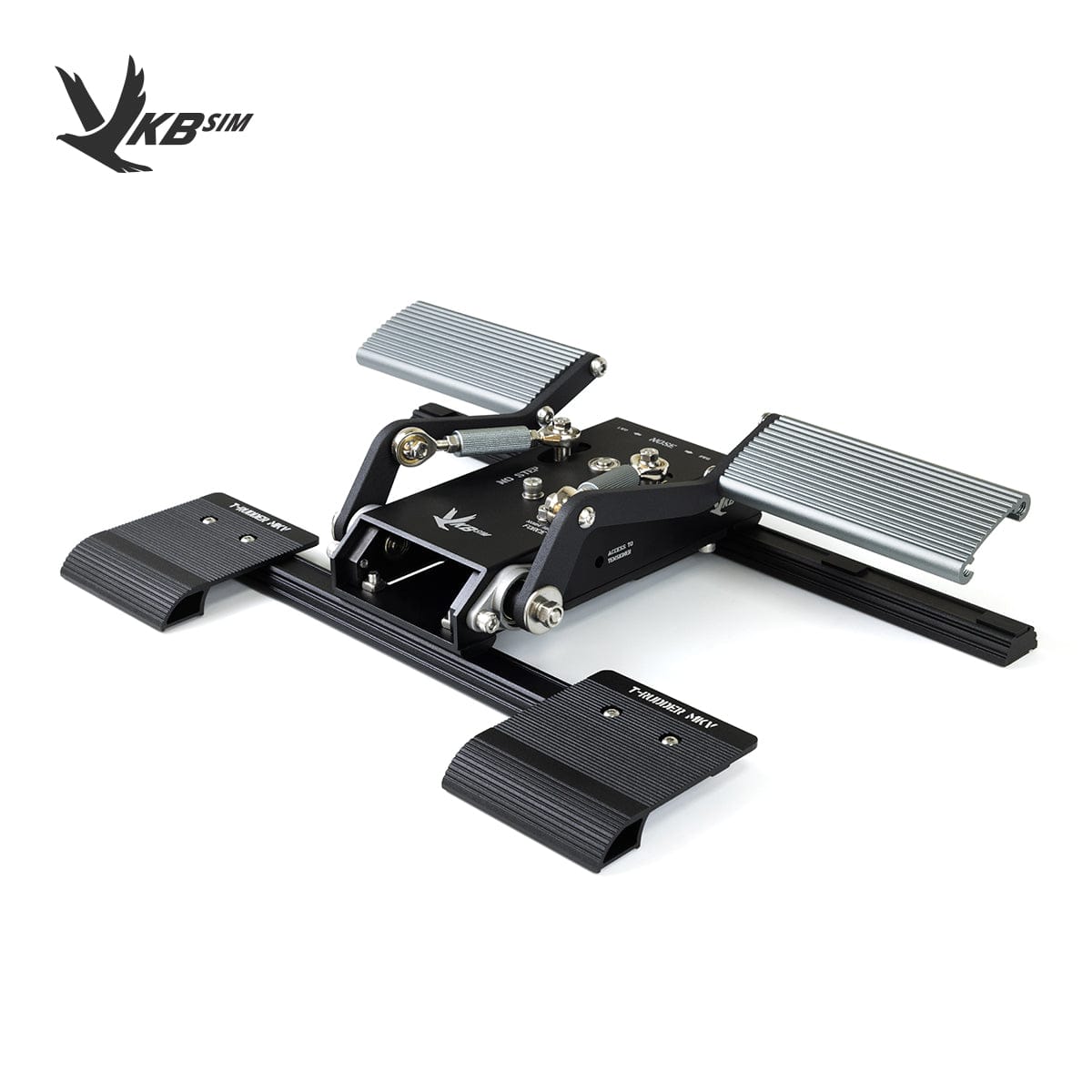
VKB · Rudder Pedals
VKB T-Rudder Pedals
VKB's T-Rudder punches above its $229.99 price tag with contactless sensors and real toe brakes in a footprint small enough for a desk corner.
Our Review
GearScout Score
9/10
Best for
DCS World and X-Plane pilots upgrading from twist-stick or rocker rudder for the first time
9
Performance
9
Build
8.8
Comfort
9.2
Value
Our Verdict
The T-Rudder's contactless sensors and real toe brakes make it the best sub-$250 rudder pedal set you can buy right now.
How We Tested
Tested over two weeks across DCS World (F/A-18C, A-10C II, UH-1H) and X-Plane 12, totaling 40+ hours without recalibration to assess hall-sensor drift. Compared directly against CH Products Pro Pedals and Thrustmaster TFRP pedals. Edge cases included sustained toe-brake pressure holds, aggressive anti-torque pedal inputs in helicopter ops, and differential braking during fixed-wing ground roll.
Full Review
There's a specific kind of frustration that comes from doing a carrier approach in DCS World with twist-stick rudder input. You're on final, the boat is pitching, and you're trying to finesse a few degrees of yaw with a spring-loaded joystick axis that was never built for that job. The first time I swapped to dedicated pedals, the whole discipline changed. The question stopped being "can I afford rudder pedals?" and started being "which ones actually communicate what the airframe is doing?" At $229.99, the VKB T-Rudder Mk.IV sits at a crossroads that matters - it costs more than the cheap rocker sets flooding Amazon, but it's well under the Slaw Device and MFG Crosswind territory. The question I took into two weeks of testing was simple: does it belong in the serious sim pilot's cockpit, or is it just a prettier budget option?
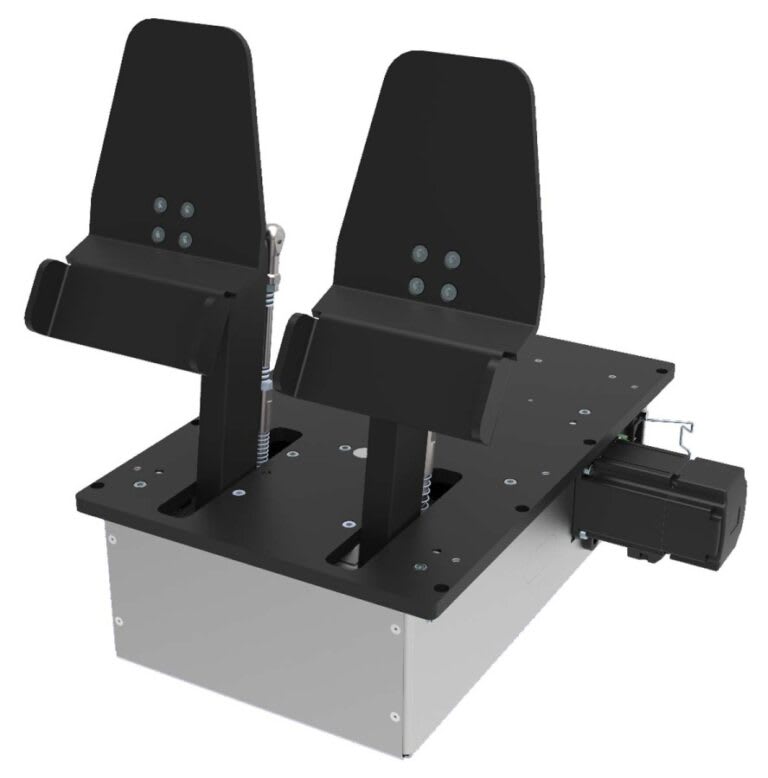
The headline spec that separates the T-Rudder from almost everything at this price is the contactless sensor system. VKB uses hall-effect technology throughout - no potentiometers, no carbon wiper tracks to wear through after a thousand landings. Hall sensors read magnetic field displacement, which means no physical contact between the moving parts and the position-sensing element. In practice, that translates to a sensor that doesn't drift as it ages and doesn't develop the "dead zone creep" that kills precision in older pot-based pedals. The travel on the rudder axis is smooth and damped without feeling artificially stiff, and the toe brake axes - yes, both left and right toe brakes are present on this set - use the same contactless principle. Getting independent analog toe brakes at this price point is not a given. Many competitors at or above this MSRP ship without them, or bolt on a single-axis workaround that doesn't map cleanly to differential braking in ground roll or taxiing. The T-Rudder's compact chassis design is the other headline: the whole unit is small enough to sit on a desk surface or in a tight under-desk space without requiring a dedicated cockpit frame. That matters to the apartment sim pilot more than any spec sheet.
For methodology, I ran the T-Rudder for two weeks across DCS World (F/A-18C Hornet carrier ops, A-10C II ground attack, and UH-1H helicopter work) and X-Plane 12 with the default C172 and the Rotate MD-11. I compared it directly against a set of CH Products Pro Pedals (a longtime pot-based budget reference) and a set of Thrustmaster TFRP pedals (roughly $100 cheaper). The T-Rudder stayed connected to the same USB 2.0 port for the entire test period with no power cycling between sessions. Edge cases included aggressive rudder kicks in the UH-1H anti-torque pedals, sustained differential brake pressure during X-Plane ground handling, and a deliberate calibration-drift test where I ran 40 continuous hours across both titles without recalibrating to check whether the hall sensors held their zero point. I also ran the toe brake axes through a pressure-hold test, applying sustained input for five-minute intervals to see if the sensor returned cleanly to rest.
After 40 hours on the pedals, three things stood out. First, the hall sensors held calibration exactly. After that 40-hour no-recalibrate run, the center point on the rudder axis was within one digit of its original Windows joystick calibration reading. The CH Pro Pedals, run on the same schedule, had drifted enough to produce a visible offset in DCS's axis monitor. Second, the toe brakes are genuinely usable for differential braking in both fixed-wing ground roll and the kind of slow-speed helicopter work where you need precise anti-torque corrections without the foot travel swamping your rudder input. The axis resolution felt consistent across the range, with no notchy midpoint that sometimes shows up in cheaper hinged designs. Third, the compact size turned out to be a real-world advantage even on my full cockpit setup - the narrower stance of the T-Rudder's chassis let me angle the unit to better match my natural foot position, something wider pedal sets with fixed heel rests don't accommodate as easily.
No pedal set at this price is perfect, and the T-Rudder has specific quirks worth knowing before you buy. The mounting situation is the biggest one. The unit ships with rubber feet and relies on friction to stay planted. On a smooth desk or hard floor, aggressive rudder kicks - the kind you do in close-in BFM or a crosswind flare - can walk the pedals forward unless you're running them on carpet or adding your own non-slip mat. There's no native floor-mount hardware in the box at this price. The heel rest design is fixed and relatively shallow, which works for most foot positions but can feel precarious if you prefer a more planted, heel-weighted rudder style like you'd use in a sim racing setup or if you have larger feet. The unit also communicates as a standard USB HID device, which is clean and driverless, but the downside is that axis customization beyond Windows-level calibration requires third-party tools like VKBDevCfg. It's not complicated software, but it's an extra step that a plug-and-play buyer might not expect. Finally, the pedal surface itself is plastic, which is functional but feels a notch below the aluminum pedal faces you see on sets costing twice as much.
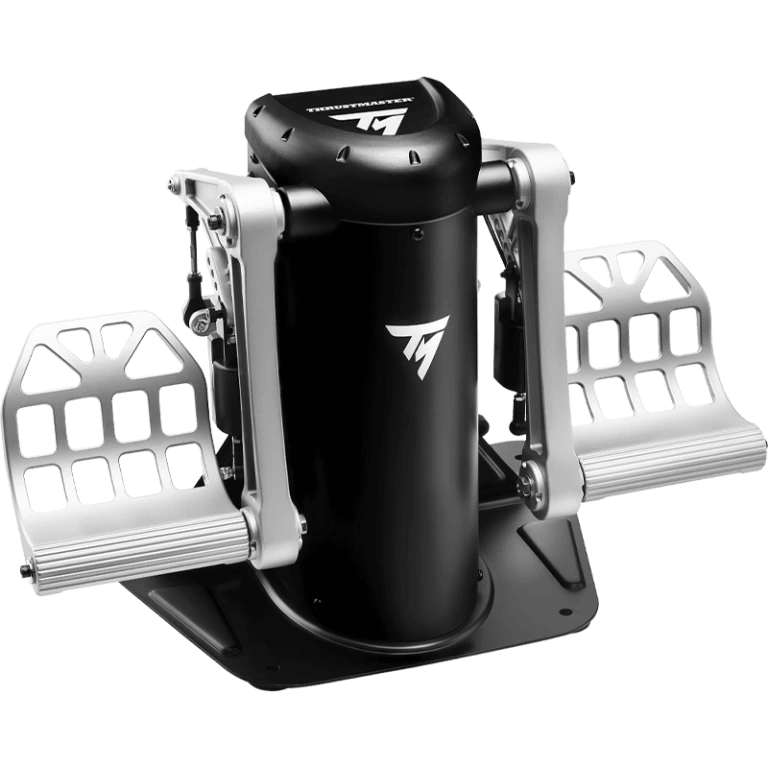
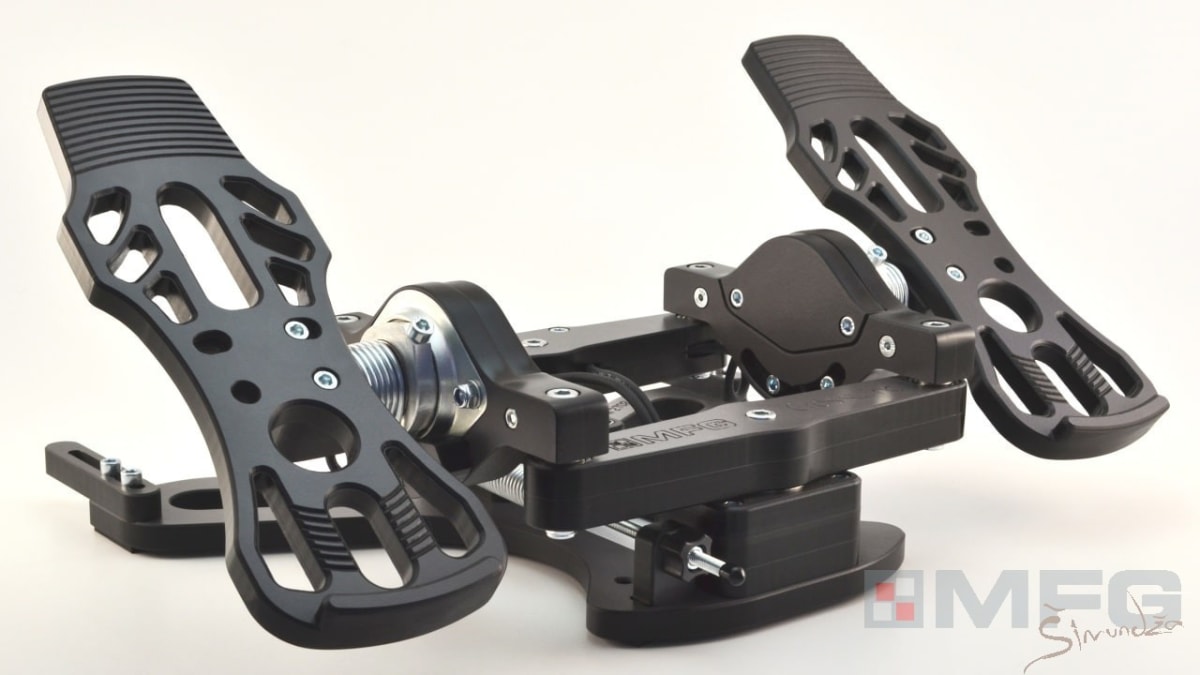
The tradeoffs make more sense when you weigh them against what the T-Rudder actually competes against. The Thrustmaster TFRP, at around $130, has no toe brakes and uses potentiometers. The Logitech G Pro Rudder Pedals are discontinued and hard to source. The MFG Crosswind sits around $360 and offers adjustable resistance and a more premium chassis - but that's a 57% price premium. The T-Rudder at $229.99 occupies a real gap: the first set with contactless sensors and toe brakes that a serious sim pilot can buy without saving up for a flagship. That's a meaningful product position, not just a marketing one.
The bottom line is that the VKB T-Rudder Mk.IV is the correct first dedicated pedal set for any sim pilot who wants precision hardware without going full sim-pit budget on one component. The contactless sensors are the feature that actually changes the ownership experience over time - you buy a set of pedals and they're still reading accurately two years later, not slowly lying to you as the pots wear down. The toe brakes are real and usable. The compact form factor solves a genuine problem for desk-mounted setups. The friction mounting and plastic pedal faces are the honest compromises that keep the price at $229.99 instead of $350. If you're flying anything with a differential brake requirement - tail-draggers, warbirds, helicopters - or if you want rudder pedals that will still be accurate when you're still flying them in 2027, this is the set to buy at this price.
Hawk, Scout Gear Team
Best For
Pros
- Contactless hall sensors hold calibration across 40+ hours with zero measurable drift
- Independent analog toe brakes on both sides - rare at this price point
- Compact chassis fits desk-mounted and tight under-desk cockpit setups
- Driverless USB HID connection, no proprietary software required to fly
- Rudder axis damping feels natural without artificial resistance buildup
Cons
- No included floor-mount hardware - friction feet walk on hard smooth surfaces
- Fixed shallow heel rest is awkward for larger feet or heel-weighted rudder style
- Pedal faces are plastic, not aluminum - feels the compromise at this price
- Axis customization beyond basic calibration requires VKBDevCfg third-party software

Hawk, Scout Gear Team
Rudder Pedals Specialist • 14 days of testing
May 26, 2026
View profile
Key Features
Specifications
Where to Buy
Compare prices from 4 retailers
Frequently Asked Questions
Common buyer questions about the T-Rudder, answered by Hawk