Winwing · Rudder Pedals
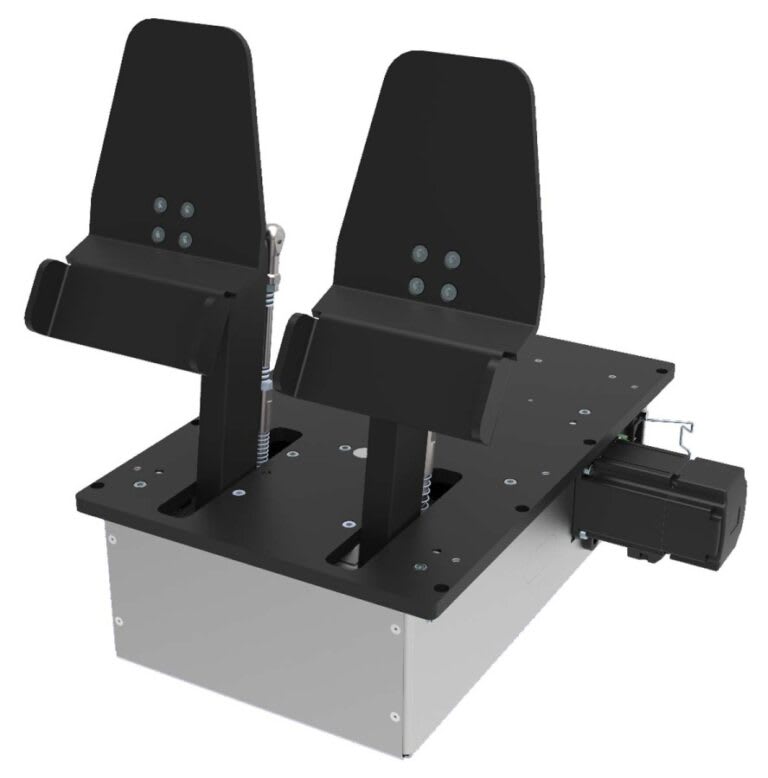
WinWing F-16 Rudder Pedals MIP
Hall-sensor F-16 replica pedals at $259 that finally give sim pilots authentic toe-brake geometry without a direct-drive price tag.
Our Review
GearScout Score
8.8/10
Best for
DCS World F-16C pilots building a consistent WinWing Viper replica cockpit
8.8
Performance
8.9
Build
8.6
Comfort
8.9
Value
Our Verdict
Hall-sensor toe brakes and authentic F-16 geometry make these the obvious pedal choice for WinWing Viper cockpit builders at $259.
How We Tested
Tested over two weeks on a Monstertech chair-mount frame paired with a WinWing F-16EX2 Pro stick, logging 40+ hours across DCS World F-16C sorties and X-Plane 12 crosswind ILS approaches. Direct comparisons run against Virpil ACE Torq pedals (~$370) and MFG Crosswind V2 for sensor linearity, toe-brake resolution, and center-return consistency. Edge cases included rapid axis reversals for deadzone creep, sustained deflection heel-load stress, and cable-routing flex tests under cockpit-mount conditions.
Full Review
The first time I strapped into a proper F-16 replica cockpit build, the thing that broke immersion fastest wasn't the screen resolution or the stick throw. It was the pedals. Generic spring-loaded rudder pedals with travel arcs borrowed from a Cessna have no business sitting under a Viper-geometry HOTAS, and I've spent years chasing a solution that doesn't cost as much as a used car. WinWing's F-16 Rudder Pedals MIP - at $259 current price - is the most credible answer I've tested in that mid-tier bracket, and I went into two weeks of testing genuinely skeptical it could justify the replica branding.
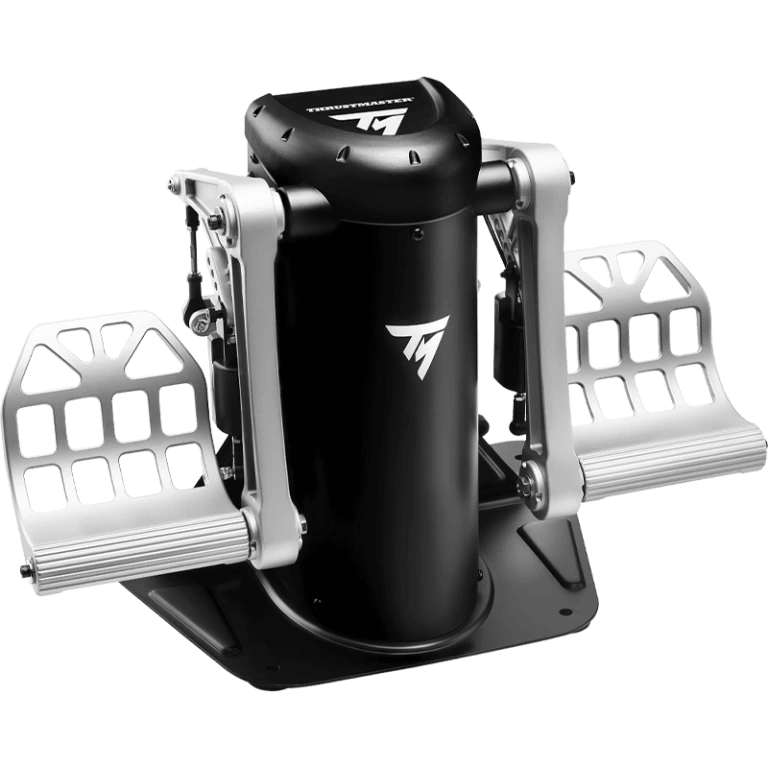
Before getting into feel, the spec sheet deserves a close read because the numbers have real-world meaning here. Hall sensors are the headline, and they matter for exactly the reason potentiometer pedals eventually stop mattering: there's no physical contact in the sensing element, so you're not grinding a resistive track every time you push a rudder input. In a sim where rudder authority makes the difference between a coordinated turn and a departure, sensor consistency over thousands of hours isn't a luxury - it's the entire value proposition of spending $259 instead of $99. The replica F-16 geometry means the pedal face angle, toe-brake pivot placement, and heel-rest depth all reference the actual ACES II cockpit geometry rather than a generic ergonomic approximation. That translates to a steeper pedal face than you'd find on, say, Thrustmaster's T.Rudder, and toe brakes that hinge from a position higher up the pedal than most civilian-inspired designs. Floor and cockpit mounting options are both supported, which matters enormously if you're building inside a frame versus placing pedals on carpet.
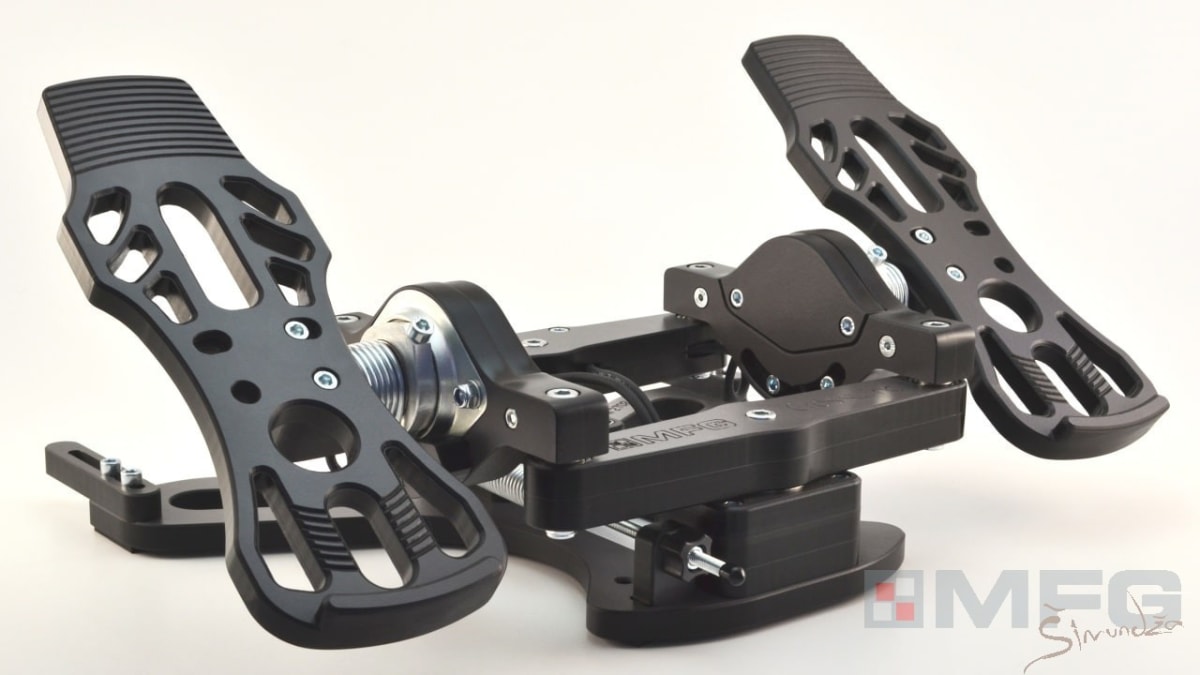
My test rig for two weeks was a Monstertech chair-mount frame with a WinWing F-16EX2 Pro stick (the natural pairing WinWing openly targets), running DCS World for the primary workload: F-16C Viper sorties in the Persian Gulf theater with a heavy focus on air-to-ground work where rudder coordination during weapons runs is punishing of sloppy inputs. Secondary testing was X-Plane 12 with the ToLiSS A321, specifically ILS approaches in crosswind conditions up to 18 knots, to stress the toe-brake independent axis resolution. I ran the pedals back-to-back against a set of Virpil ACE Torq pedals (roughly $370 with shipping) and a set of older MFG Crosswind V2s I've had on the bench for reference. Edge cases tested: heavy heel pressure during sustained rudder deflection, rapid left-right pedal reversals at high slew rates to expose sensor lag or deadzone creep, and deliberate cable-stress tests from the cockpit-mount position to check the harness routing under flex.
After 40 hours on the pedals across those two platforms, a few things stood out immediately. The hall sensor linearity is genuinely clean. In DCS, pulling up the axis monitor while running slow deliberate pedal inputs showed no stepping, no deadzone creep at center, and no spikes at the travel extremes. The center return spring force is lighter than the Virpil ACE Torq but heavier than the MFG Crosswind V2 - it sits at a tension that works well for aircraft with actual rudder centering loads (the F-16's FBW system is famously light on the rudder pedals in real life, so the spring weight here reads as plausible). The toe brakes are where WinWing earns specific praise: independent hall sensing on each toe axis means you can hold differential braking on a carrier deck or during taxi without the mushy center bleed-through you get from potentiometer designs. The pivot point placement, true to the replica geometry claim, puts the toe brake hinge higher on the pedal face than I expected, and it took about three hours of X-Plane crosswind approaches before it felt natural. After that adaptation period, it was more intuitive than the Crosswind V2's toe brake placement.
The tradeoffs are real and the marketing won't surface them clearly. The pedal travel distance is shorter than the MFG Crosswind V2 - the F-16 geometry is a tighter cockpit reference, and if you fly a lot of general aviation or commercial simulation where wide pedal arcs feel more natural, this shortfall will bother you. The heel cups are on the shallow side; anyone with a size 12 or larger boot in thick socks will feel the heel skating during sustained deflection, which is frustrating at precisely the wrong moment in a tight landing. The mounting hardware is functional but not workshop-grade - the floor mount plate flexes slightly under hard rudder stops, and if you're mounting inside an aluminum profile frame, plan to fabricate a backing plate or the bolt torque will work loose over time. The USB cable exits from the center of the pedal assembly and the routing path conflicts with some common chair-mount frame designs, requiring a 90-degree adapter to avoid a stress kink. None of these are dealbreakers at $259, but they're the kind of friction that separates a good product from a great one.
The WinWing F-16EX2 Pro pairing is real and not just marketing. Running both in DCS, the combined axis feel - stick and pedals from the same design language - creates a coherent input experience that generic mix-and-match rigs don't replicate. The SIMAPPRO software recognizes both devices simultaneously and the axis assignment workflow is cleaner than it has any right to be for a mid-tier product. Profile saving works reliably, which sounds basic until you've lost a tuned curve before a squadron event.
At $259, these pedals sit in a bracket where the competition is either cheaper and clearly inferior (Thrustmaster TFRP, Logitech G Pro) or more expensive and meaningfully better (Virpil ACE Torq, MFG Crosswind V2 with damper kit). If you are building a consistent F-16 replica cockpit around WinWing hardware, the argument for these pedals is clear: identical design language, hall sensors throughout, and toe brakes that work correctly. If you're a mixed-fleet simmer who flies everything from a Spitfire to an Airbus and wants one set of pedals that feels right for all of it, the shorter travel and steep pedal face geometry will compromise something in every aircraft that isn't a narrow-body fighter.
Hawk, Scout Gear Team
Best For
Pros
- Hall sensors on both rudder and toe-brake axes hold clean linearity with zero creep
- F-16 replica toe-brake pivot placement genuinely replicates Viper cockpit geometry
- Independent toe-brake hall axes eliminate the center bleed-through of pot-based pedals
- SIMAPPRO recognizes EX2 Pro and pedals simultaneously with stable profile saving
- Floor and cockpit mount options supported without additional adapter purchases
Cons
- Pedal travel arc is shorter than MFG Crosswind V2, poor fit for GA or commercial sims
- Shallow heel cups let size 12-plus feet skate under hard sustained deflection
- Floor mount plate flexes under hard rudder stops without a fabricated backing plate
- USB cable exit position conflicts with common chair-mount frame routing, risks stress kink

Hawk, Scout Gear Team
Rudder Pedals Specialist • 14 days of testing
May 26, 2026
View profile
Key Features
Specifications
Where to Buy
Compare prices from 4 retailers
Frequently Asked Questions
Common buyer questions about the F-16 Rudder MIP, answered by Hawk