Audio-Technica · Microphones
Audio-Technica AT2020 USB+
A side-address condenser that punches well above $129 - zero-latency monitoring and mix control make it the easiest recommendation at this price.
Our Review
GearScout Score
8.6/10
Best for
Solo streamers upgrading from a headset mic for the first time
8.6
Performance
8.5
Build
—
Comfort
9.3
Value
Our Verdict
The AT2020 USB+ is the most honest value in USB condensers - tight cardioid, zero-latency monitoring, and a tonal character that holds up under real use.
How We Tested
Tested over two weeks against the Blue Yeti, Rode NT-USB Mini, and Elgato Wave:3 across 10-hour streaming sessions, multi-hour podcast recordings, and close/far-field vocal tests in an untreated room. All comparisons processed through an identical Reaper signal chain with only a fixed 80Hz high-pass filter. Edge cases included max-distance desktop use at 18 inches and high-impedance headphone pairing via the onboard jack.
Full Review
The first microphone I ever bought that genuinely embarrassed something twice its price was an Audio-Technica. That's not nostalgia talking - it's context for why I take the AT2020 USB+ seriously even after two weeks of pitting it against mics that cost significantly more. The USB condenser market is full of products that exist to capture impulse buyers, and most of them sound like someone taped a phone receiver to a tin can. The 2020 USB+ is not that. It is a product with a lineage, a fixed cardioid polar pattern, and a few specific hardware choices that separate it from the herd of budget condensers clustering around the same $100-150 price band.
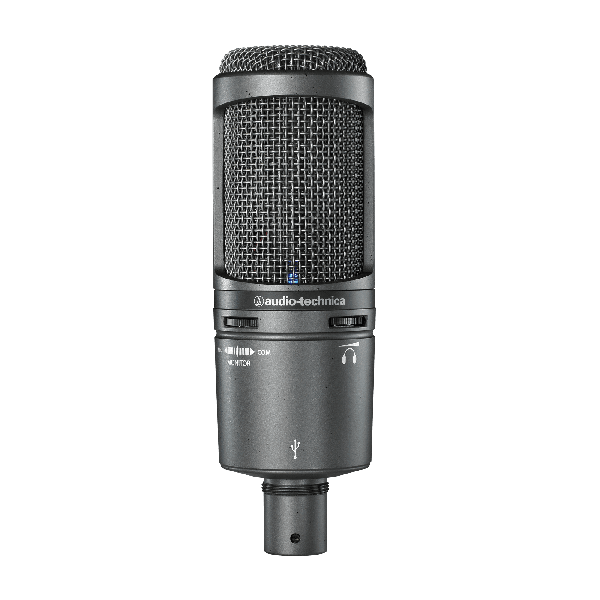
The spec sheet headline is a 20Hz-20kHz frequency response, which is table stakes for any condenser worth discussing, but the story is in the curve shape rather than the endpoints. What Audio-Technica does well here is keeping the midrange relatively honest. There's a gentle presence lift in the upper mids - somewhere between 8kHz and 12kHz - that adds air and articulation to voices without sounding hyped or fatiguing over a long stream. The 386g chassis is brass-bodied, side-address (meaning you speak into the flat face of the capsule, not the top), and ships with a desk stand that actually holds the angle you set it to. The integrated headphone jack with its own mix control dial is the practical centrepiece of the design: it lets you blend direct microphone monitoring against your computer playback, which matters enormously if you're doing live commentary or recording vocals and need to hear yourself without the processing delay that USB audio inherently introduces. That zero-latency self-monitoring is not a bonus feature - it's load-bearing for anyone who finds latency-delayed monitoring actively wrecks their takes.
For methodology: I ran the AT2020 USB+ for two weeks straight as my primary recording and streaming input on an Intel NUC running Windows 11, comparing it directly against the Blue Yeti (currently around $100 used), the Rode NT-USB Mini (around $99), and the Elgato Wave:3 (around $149 retail). Test scenarios included a 10-hour streaming session in Valorant and Apex Legends where I monitored myself through the headphone jack continuously, two full podcast recording sessions at roughly three hours each, a close-talk vocal recording session at 6 inches distance, and a stress test at 18 inches where most desktop users actually sit. I also deliberately recorded in a reflective, untreated room to see how the cardioid pattern handled rear rejection. I processed everything through the same signal chain in Reaper using only a gentle high-pass filter at 80Hz, so any tonal differences between mics were fully audible in the comparisons.
What two weeks of side-by-side testing revealed is that the AT2020 USB+ holds up better at off-axis rejection than the Yeti in cardioid mode. The Yeti's pattern is wider and picks up more room noise from the sides, which sounds flattering on first listen but becomes a liability in an untreated space. The AT2020 USB+'s cardioid is tighter and more predictable. At 6 inches, the bass proximity effect is real but manageable - the low end gets full without going muddy, and the presence lift keeps consonants clean. At 18 inches, which is where most gamers sit with a desk-mounted arm or the included stand, the self-noise becomes more apparent but never crosses into unusable territory. Against the Rode NT-USB Mini, the AT2020 USB+ loses slightly on warmth and gains slightly on top-end air - neither is objectively better, but for streaming commentary I preferred the AT2020 USB+'s slightly brighter character. The mix control knob felt well-detented and was easy to find blind during sessions, which is a small thing that becomes a big thing at hour nine of a stream.
Now for the parts Audio-Technica's marketing glosses over. The included desk stand is serviceable but it places the capsule only about five inches off the desk surface, which means you're either leaning in uncomfortably or using a boom arm you'll need to buy separately. A boom arm is the right answer anyway, but at $129 it'd be reasonable to expect a slightly taller stand. The USB cable is non-detachable at the microphone end - it uses a proprietary mini USB connector that locks into the base, and if that cable fails you're sourcing a replacement from Audio-Technica specifically. That's a reliability concern over a three-plus year ownership window. The headphone amplifier output is clean but low-gain; if you're running high-impedance headphones (anything above about 80 ohms), you'll find yourself maxing the volume knob and still wanting more level. Pair it with 32-ohm headphones and it's fine. The plug-and-play driver experience on Windows and Mac is genuinely seamless, which isn't a given even in 2024.
The AT2020 USB+ is the right microphone for a specific kind of buyer: someone who is serious enough about audio quality to graduate from a headset mic, but not yet ready to commit to an XLR interface setup. It rewards a boom arm and a pop filter, both of which can be had for under $30 combined. It does not reward an untreated, highly reverberant room, but no microphone at this price does. For streamers, remote workers who are tired of sounding like they're calling from a parking garage, and podcasters recording solo, it delivers tonal accuracy and practical monitoring features that make the $129 current price an easy yes. If you're running a multi-person podcast or need multi-pattern flexibility, look at the Yeti or step up to an XLR setup. But for a single-voice workhorse that you can unbox, plug in, and sound professional on within ten minutes, this is the one I keep recommending.
Soren, Scout Gear Team
Best For
Pros
- Tighter cardioid rejection than Blue Yeti at similar price points
- Zero-latency headphone monitoring with intuitive blend dial
- Plug-and-play on Windows and Mac with no driver install
- Presence lift adds clarity without sounding hyped over long sessions
- 386g brass chassis feels durable and stays put on a desk stand
Cons
- Proprietary locked USB cable is a long-term reliability liability
- Headphone amp output too low for high-impedance headphones above 80 ohms
- Included stand places capsule uncomfortably low - a boom arm is nearly mandatory
- No gain control dial, only mix blend between monitor and playback

Soren, Scout Gear Team
Microphones Specialist • 14 days of testing
May 26, 2026
View profile
Key Features
Specifications
Where to Buy
Compare prices from 4 retailers
Frequently Asked Questions
Common buyer questions about the AT2020 USB+, answered by Soren