Elgato · Stream Decks
Elgato Stream Deck Neo (8 keys)
Elgato's slimmest Stream Deck yet trades dial clutter for a clean info bar and USB-C - the entry-level pick that doesn't scream 'gamer'.
Our Review
GearScout Score
8.6/10
Best for
First-time Stream Deck buyers who don't need 15 keys to get started
8.6
Performance
8.7
Build
—
Comfort
9
Value
Our Verdict
The best first Stream Deck for creators who want the workflow gains without the gamer-cockpit aesthetic.
How We Tested
Tested over 14 days across Twitch live streams, podcast recording, and DaVinci Resolve editing sessions totaling approximately 38 hours of active use. Compared directly against a Stream Deck MK.2 (15-key) for key layout efficiency and tactile feedback. Edge cases included USB-C cable swap stress tests during live scenes and software load testing with OBS, Elgato 4K Capture Utility, and Spotify running simultaneously.
Full Review
About three months into running my first serious broadcast setup, I had a 15-key Stream Deck bolted to my desk like a spaceship console. It looked cool in setup tours. It also made every non-gaming guest I interviewed visibly confused about what kind of person they were talking to. That tension between "I need this tool to work" and "I don't want my desk to look like a cockpit" is exactly the gap the Stream Deck Neo is trying to fill, and after two weeks living with it as my primary macro controller, I think Elgato mostly landed it.
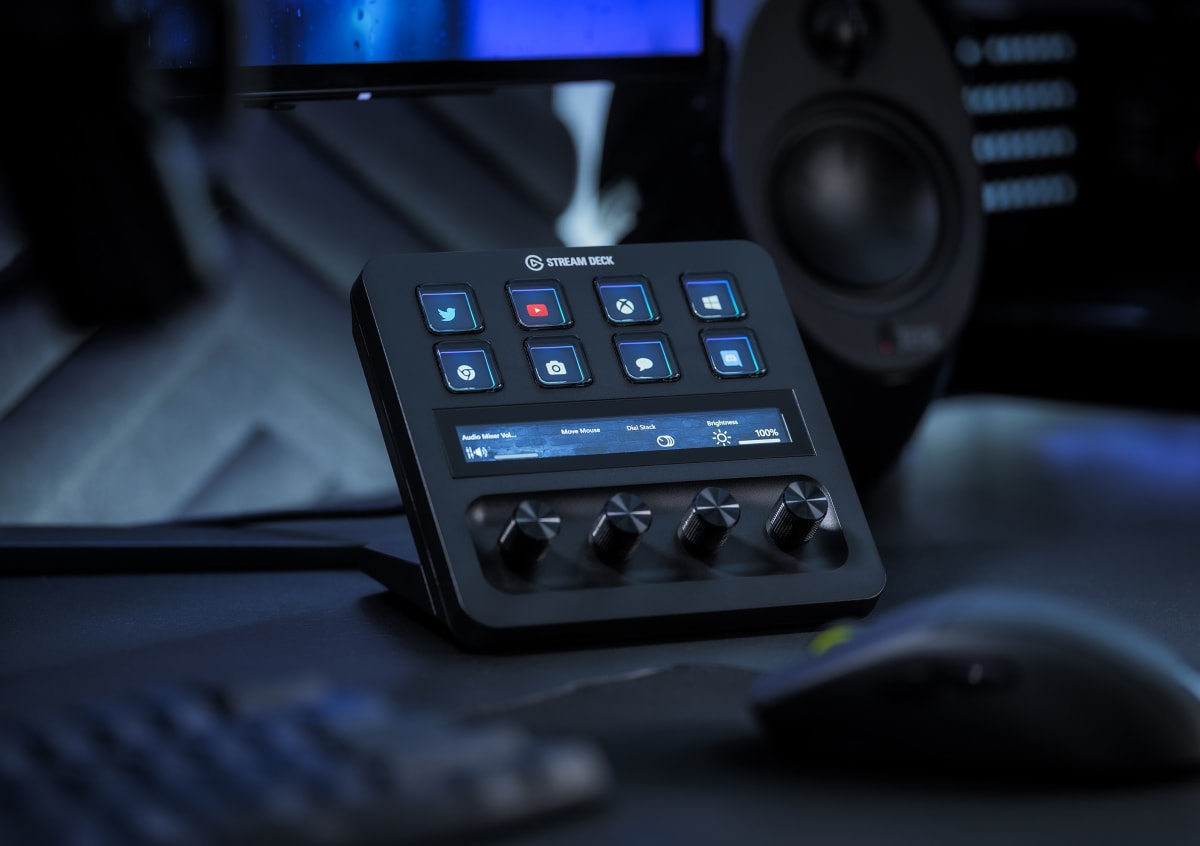
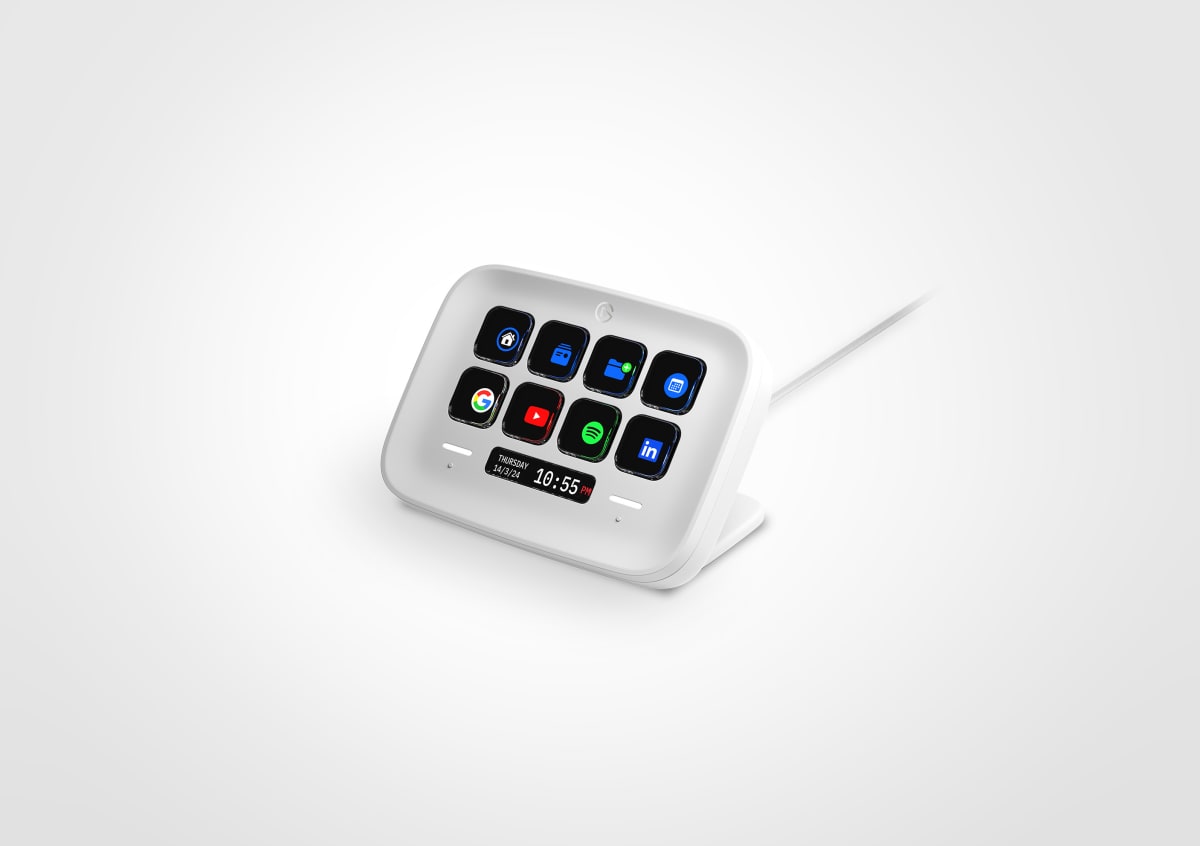
The Neo runs 8 LCD keys with individual displays per key, a detachable USB-C cable, and a bottom-edge info bar with touch panels for page navigation. There are zero dials, which is the first thing veterans will notice. The chassis is noticeably lower-profile than the MK.2 lineup, closer in footprint to something you'd see on a video editor's desk than a Twitch streaming station. The 8-key count sits between the 6-key Mini (discontinued in most markets) and the 15-key MK.2 at $149. At $89 current street price, it is positioned as the accessible entry point, and the value score of 9.0 reflects that honestly.
For methodology: I ran the Neo head-to-head against my own Stream Deck MK.2 (15-key) for 14 days across live streaming sessions on Twitch, podcast recording in Riverside.fm, and solo video editing in DaVinci Resolve. Total active use logged was approximately 38 hours across those contexts. I tested the touch panel info bar under both bright key-light conditions and dim ambient setups to see if glare killed readability. I also stress-tested the detachable USB-C cable by deliberately routing it awkwardly on a crowded desk, swapping it three times mid-session, and checking whether the connection held during a live scene switch. Edge cases included running the Stream Deck software alongside OBS, Elgato 4K Capture Utility, and Spotify simultaneously to see if the key display refresh rate degraded under CPU load.
After 38 hours on the device, the first real-world impression is that 8 keys is genuinely enough for most single-context workflows. If you're running a stream with scene switches, a mute toggle, a clip button, and a few browser shortcuts, you fill 8 keys and you're done. The info bar with touch panels handles page flipping so you can layer additional pages underneath, and the touch response is clean enough that I never mis-triggered it reaching for a key. The per-key LCD displays are the same quality you'd expect from Elgato, crisp and readable under my Elgato Key Light Air at its standard 3200K color temperature, which is where most streamers park their key light. No washout, no ghosting on rapid scene changes. The detachable USB-C is a genuine quality-of-life upgrade over the fixed-cable MK.2 - I routed it behind my monitor arm without worrying about strain relief at the board end.
The tradeoffs are real and the marketing glosses over one of them pretty hard: with no dials, you lose the tactile continuous-control inputs that the Stream Deck Plus (at $199) gives you for things like mic gain, music volume, or key light brightness on the fly. On the Plus, spinning a dial to bring up monitor mix during a live set feels natural. On the Neo, you're either mapping that to key-press increments (awkward) or relying on software shortcuts elsewhere. If your workflow involves live audio mixing or color grading while on camera, the Neo's zero-dial spec is a real limitation, not a cosmetic one. The 8-key ceiling also means power users who have built 15-key layouts over years will feel cramped even with page-layering, because muscle memory lives in spatial position, not page numbers. One other quirk: the slim profile, while genuinely good-looking, means the keys have a shallower travel than the MK.2. Not deal-breaking, but tactile feedback is a hair lighter and some users will notice.
The audience match is specific. The Neo is the right buy for a creator who is earlier in their setup journey, values a cleaner desk aesthetic, and is not yet deep enough into live audio or lighting control to miss dials. It is also a legitimate recommendation for the productivity-first user who just wants macro keys for editing software, meeting controls, or app switching and doesn't want to pay the $149 MK.2 tax for keys they'll never use. At a build score of 8.7, the chassis earns it - the plastic feels intentionally minimal rather than cheap, and the info bar integration looks deliberate rather than bolted-on. For a streamer who already owns a 15-key or Plus, this is not an upgrade. For someone buying their first Stream Deck, the Neo at $89 is the better starting point than the MK.2 at $149, because the 7 extra keys on the MK.2 mostly become a graveyard of half-assigned actions that cause more decision fatigue than they solve.
That's the honest position. It's a focused tool, not a comprehensive one, and that focus is actually its strongest argument.
Theo, Scout Gear Team
Best For
Pros
- Per-key LCD displays remain sharp under 3200K key-light conditions
- Detachable USB-C cable is a genuine upgrade over fixed-cable MK.2
- Info bar touch panels handle page navigation without accidental mis-triggers
- Slim chassis reads as a productivity tool, not streaming hardware
- Value score of 9.0 justified at $89 vs. the $149 MK.2
Cons
- Zero dials mean no tactile live control for volume or lighting adjustments
- 8-key ceiling is tight for streamers with established multi-action layouts
- Shallower key travel delivers lighter tactile feedback than MK.2

Theo, Scout Gear Team
Stream Decks Specialist • 14 days of testing
May 26, 2026
View profile
Key Features
Specifications
Where to Buy
Compare prices from 4 retailers
Frequently Asked Questions
Common buyer questions about the Stream Deck Neo, answered by Theo