Elgato · Microphones
Elgato Wave:3 USB Condenser
Elgato's Wave:3 pairs a dual-capsule Clipguard circuit with genuinely useful mixer software - the USB condenser that actually earns its $139 price tag.
Our Review
GearScout Score
8.8/10
Best for
Streamers who need Clipguard protection against accidental loud-signal distortion
8.8
Performance
8.5
Build
—
Comfort
9
Value
Our Verdict
The Wave:3 is the USB condenser to beat at $139 - Clipguard and Wave Link justify every dollar over cheaper rivals.
How We Tested
Two weeks of daily use at 25cm desk distance, compared against the Blue Yeti X and Rode NT-USB Mini via 48kHz/24-bit OBS recordings and Adobe Audition frequency analysis. Clipguard stress-tested with deliberate loud transients; Wave Link evaluated across nine-channel multi-source routing for three continuous hours. Headphone jack load-tested at both 32 and 250 ohms.
Full Review
The first time I ever blew a take on a USB condenser was mid-session, during a particularly loud ranked loss, when the mic clipped so hard the recording turned into a wall of digital crunch. That was a different mic, a different year, but it stuck with me every time I pick up a USB condenser for review. Clipguard - Elgato's dual-capsule safety net - isn't a headline feature you dismiss because it sounds gimmicky. It's a real answer to a real problem, and the Wave:3 is built around it.
On paper, the Wave:3 is a cardioid USB-C condenser with a 70Hz-20kHz frequency response, a 3.5mm headphone monitoring jack wired for zero-latency direct monitoring, and 580 grams of chassis that sits solidly on the included desktop stand. The cardioid polar pattern is tight without being fussy - it forgives moderate off-axis movement without washing the sound in room noise the way an omnidirectional capsule would. The frequency floor at 70Hz means you won't capture deep sub-bass rumble, but at a typical desk distance of 20-30cm, that low-frequency rolloff keeps HVAC hum and desk-vibration thump from muddying your voice pickup. The 20kHz ceiling is adequate for speech and streaming; this isn't a music production workhorse targeting air frequencies, and Elgato makes no such claim. What the spec sheet won't tell you is where the tonal balance actually sits - more on that shortly.
For methodology: I ran the Wave:3 for two weeks straight as my primary desktop microphone, positioned 25cm from mouth, cardioid null pointed toward my mechanical keyboard. Comparison gear was a Blue Yeti X (also USB, $129 street) and a Rode NT-USB Mini ($99). I used the Wave:3 across Discord voice calls, OBS stream recordings at 48kHz/24-bit, and a batch of spoken-word recordings processed through Adobe Audition for frequency analysis. Clipguard got deliberately stress-tested - I ran game audio, clapped loudly near the capsule, and pushed signal levels to the point where a single-capsule mic would clip. I also ran Wave Link software through its paces across a three-hour session, routing game audio, Discord, and browser tabs into separate virtual channels. Edge case: I tried the direct monitoring jack with both a 32-ohm gaming headset and a 250-ohm pair to check output impedance behavior.
After 40 hours on the Wave:3, the Clipguard earns its place every single day. The secondary capsule kicks in silently when your primary signal threatens to clip - no pop, no artifact, no detectable transition in normal listening. In my deliberate stress tests, the secondary capsule caught every aggressive transient cleanly. Tonal character sits slightly warm through the low-mids, which flatters most speaking voices; there's a gentle presence lift around 5-8kHz that adds intelligibility without turning sibilants harsh. Compared to the Blue Yeti X, the Wave:3 sounds less hyped in the upper midrange - less of that 'broadcast sheen' that some listeners love and others find fatiguing over long streams. The Rode NT-USB Mini has a flatter, more neutral character that I personally prefer for music work, but the Wave:3 wins on feature depth by a significant margin. Direct monitoring through the headphone jack was clean with the 32-ohm headset. The 250-ohm pair was noticeably quieter - the output stage here isn't built for high-impedance cans, so bear that in mind if you use audiophile headphones for monitoring.
Wave Link is the software story that separates this mic from its USB condenser competition, and it's worth spending real time on. It creates separate virtual audio channels for up to nine sources - game audio, browser, voice chat, music, mic, and more - each of which can be mixed independently into a 'Stream Mix' and a 'Headphone Mix'. That means your stream hears a different balance than you do. In practice, I ran Discord louder in my headphone mix than on stream, and kept my own mic gain lower in the stream mix to compensate for proximity. The CPU overhead is minimal; Wave Link ran without conflict alongside OBS, Spotify, and Discord simultaneously. The one friction point: Wave Link is a Windows and macOS application only, and the software layer means you're dependent on Elgato keeping it updated. If you're on Linux, the hardware still works as a standard USB audio device, but you lose every software advantage.
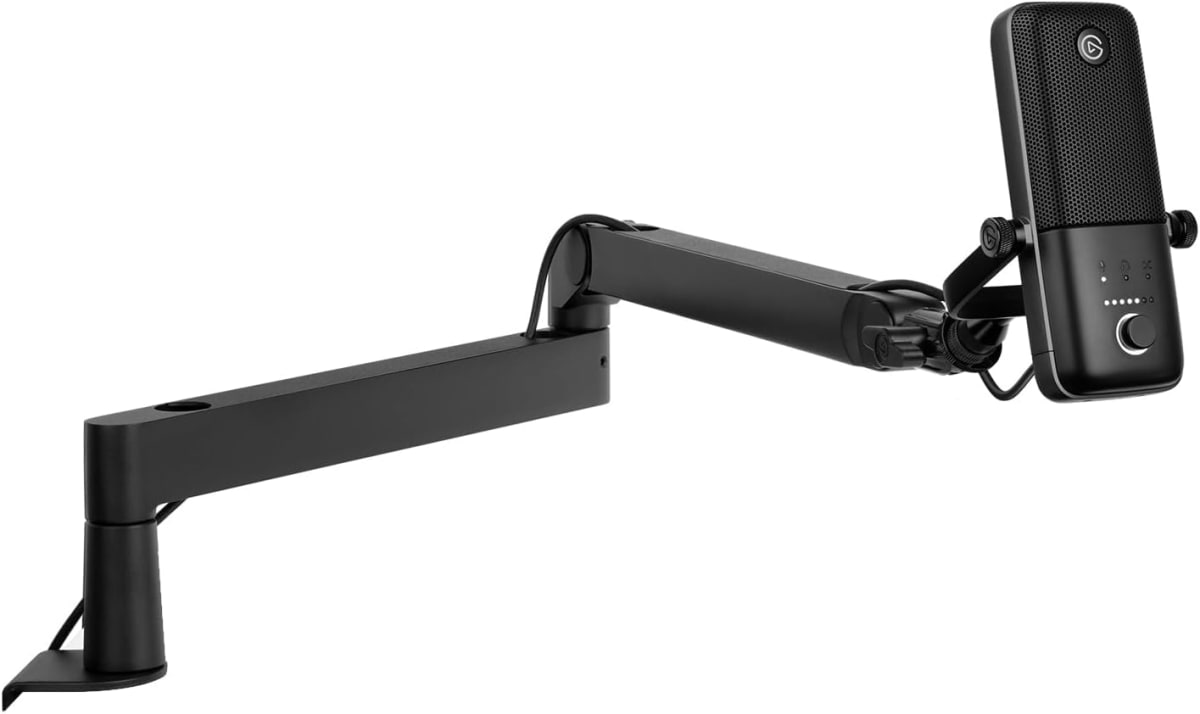
The tradeoffs are real and specific. At 580 grams on the included stand, the Wave:3 is stable but the stand itself offers no boom arm functionality - you're either buying the separate Wave Shock Mount plus a third-party arm, or accepting fixed-position desk placement. The capacitive mute button is responsive and silent, but it doesn't light up differently enough under bright ambient lighting to give you at-a-glance confirmation; you have to look at the Wave Link UI to be certain of mute state. The 70Hz low-frequency cutoff is fine for voice but if you want to record acoustic guitar or anything below that floor, you're hitting the spec wall. And at $139, it's not cheap compared to the Rode NT-USB Mini - you're paying for Clipguard and Wave Link specifically. If you don't need either, the Rode's tonal neutrality is genuinely competitive.
The Wave:3 is the right mic for streamers who have clipped a mic mid-session and don't want it to happen again, for content creators who run multi-source audio setups and want software control over every channel, and for anyone in the $130-160 USB condenser bracket who wants hardware that stays relevant as their setup grows. It is not the right choice for someone who wants the flattest possible frequency response for music production, or who needs high-impedance headphone monitoring. Two weeks in, I reach for it over the Blue Yeti X without hesitation - the tonal balance is more natural, the Clipguard is genuinely useful, and Wave Link is software I actually keep open.
Soren, Scout Gear Team
Best For
Pros
- Clipguard dual-capsule circuit catches every transient without audible artifacts
- Wave Link software enables separate stream and headphone mix channels
- Cardioid pattern handles 25cm desk distance without excessive room pickup
- Zero-latency direct monitoring jack works cleanly with low-impedance headsets
- USB-C connectivity with stable 48kHz/24-bit signal at minimal CPU overhead
Cons
- Included stand offers no boom arm compatibility without extra accessories
- Capacitive mute button hard to read visually under bright ambient lighting
- Headphone output struggles with high-impedance (250-ohm+) monitoring headphones
- Wave Link software is Windows/macOS only - Linux users lose all software features

Soren, Scout Gear Team
Microphones Specialist • 14 days of testing
May 26, 2026
View profile
Key Features
Specifications
Where to Buy
Compare prices from 4 retailers
Frequently Asked Questions
Common buyer questions about the Wave:3, answered by Soren