Thrustmaster · Flight Sticks
Thrustmaster T.16000M FCS HOTAS
The T.16000M FCS punches well above its $150 price tag with genuine hall sensor precision - the most fidelity-honest HOTAS you can buy before the $300 wall.
Our Review
GearScout Score
8/10
Best for
First-time DCS or MSFS pilots who want hall sensor accuracy without a $300+ investment
8
Performance
7.5
Build
7.8
Comfort
9
Value
Our Verdict
The best hall-sensor HOTAS combo under $200 - precise enough to train on, complete enough to start on day one.
How We Tested
Tested over two weeks across DCS World (F/A-18C and TF-51D), Elite Dangerous, and MSFS 2020, totaling 40+ hours of stick time. Calibration drift was logged before and after sessions using DCS axis visualizer and Windows Game Controllers panel, with direct comparison against a Logitech Extreme 3D Pro and VKB Gladiator NXT EVO. Edge cases included 200-cycle throttle travel stress tests, prolonged IFR approach sequences, and left-hand grip configuration swap evaluation.
Full Review
Let me tell you about the week I nearly rage-quit War Thunder's simulator battles because my old potentiometer-based stick was feeding the game 4-degree deadzone lies while I was trying to put cannon rounds through a moving target at 600 knots. Potentiometers degrade. They drift. They lie to you on the axis. That problem is the entire reason hall effect sensors exist in flight sticks, and it is also the reason the Thrustmaster T.16000M FCS HOTAS earns a serious conversation at $149.99 - a price point where hall sensors are almost unheard of.
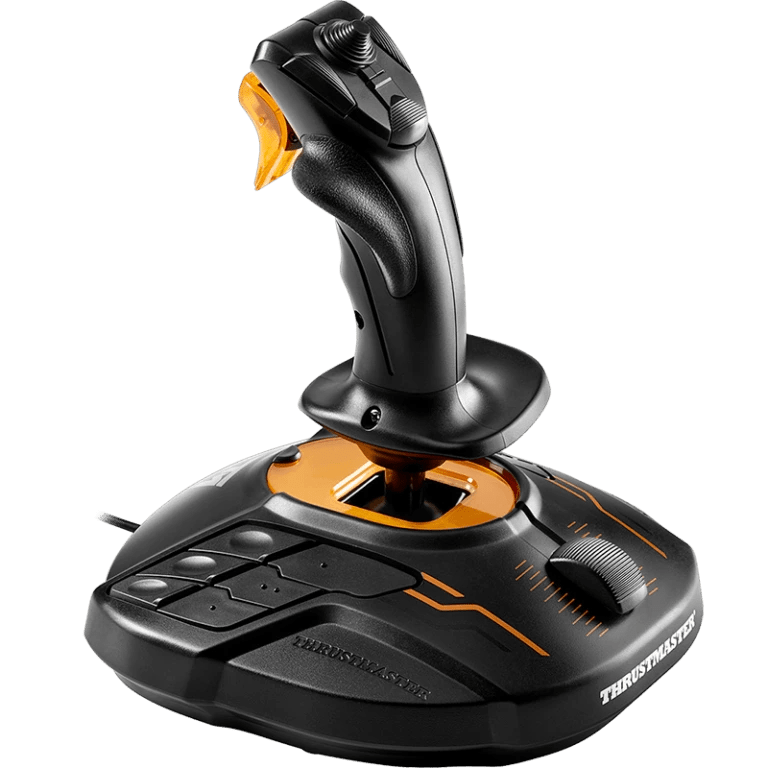
The headline spec here is the 16-bit hall sensor on the main stick axis. Sixteen bits means 65,536 positions of resolution on each primary axis, and while your sim probably samples at a fraction of that, the point is the sensor never physically contacts anything, so it will not drift or wear out the way a potentiometer will after a few hundred hours of hard use. The TWCS throttle that ships with it adds 14 buttons and a mini-stick for targeting or view control, bringing the total input count to 16 action buttons on the stick and 14 on the throttle - 30 mapped inputs before you touch a keyboard. The rudder twist on the stick axis is spring-loaded and works acceptably for axis management, though I will come back to its limits. The stick is also ambidextrous by design, with the grip detachable and rebuildable for left-handed pilots. That is genuinely rare at this price and matters enormously for anyone flying a real-world left-handed control layout in DCS.
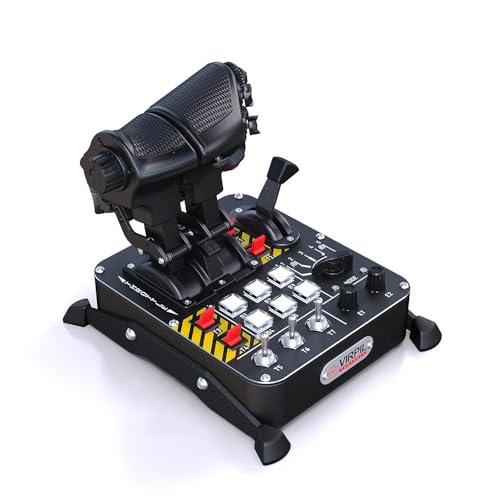
For two weeks I ran this HOTAS through a structured test block across three simulators: DCS World (F/A-18C Hornet and the TF-51D trainer), Elite Dangerous, and Microsoft Flight Simulator 2020 with the Cessna 172 and the FBW A320. Comparison gear on the bench included a Logitech Extreme 3D Pro (potentiometer-based, $50), a VKB Gladiator NXT EVO ($159), and a Virpil MongoosT-50CM2 stick ($229 stick only, no throttle). I ran calibration checks before and after each session using DCS's axis input visualizer and Windows Game Controllers panel, logging any detectable drift or deadzoning. I also deliberately stress-tested the twist rudder axis by flying 30-minute IFR approaches in MSFS where precise small-input rudder work separates a greased landing from a runway excursion. Edge cases included running the throttle through its full travel range 200 times in a row to check for smooth detent behavior and binding, and I mapped the throttle's secondary mini-stick in three different binding configurations to test reach ergonomics.
The hall sensor difference is not marketing noise - it is immediately real. After 40 hours on the stick across those two weeks, the calibration center in DCS's axis visualizer was exactly where I set it on day one. The Logitech 3D Pro I had sitting beside it showed measurable center-point drift after the same session load. In the F/A-18C carrier pattern, where you are making tiny throttle and stick corrections every two or three seconds, that precision translates to approaches that actually feel like you are flying an aircraft instead of wrestling a game controller. The 16-bit resolution also shows up in Elite Dangerous hyperspace interdictions - fine-grained analog inputs let you thread the escape vector with actual finesse. The ambidextrous mounting is not gimmicky. I swapped the grip to left-hand config in under five minutes using the included hardware, and the grip ergonomics are genuinely comfortable in both orientations.
Now for what Thrustmaster's product page does not lead with. The twist rudder is the weakest link in the system. It is spring-loaded with relatively low resistance, and on long flights your wrist develops fatigue-induced micro-inputs that the 16-bit sensor dutifully reports to the sim. You will want to dial in a small software deadzone - around 3-4% - to kill that noise. It is not a dealbreaker, but anyone serious about IFR flying or sustained formation work will be shopping for dedicated rudder pedals within six months. The TWCS throttle also has a friction adjustment that, out of the box, is set too loose for fine power management. The mechanism responds well to adjustment but the instructions for doing so are buried in a PDF manual that is genuinely hard to find. The throttle's secondary mini-stick sits low on the unit and requires a wrist flex that gets uncomfortable during extended sessions. Build quality on the throttle body is noticeably lower than on the stick - the plastic housing has more flex than I would like, and the slider detents have a slightly gritty feel that smooth out after break-in but never fully disappear. At $149.99 these are acceptable tradeoffs. At $250 they would not be.
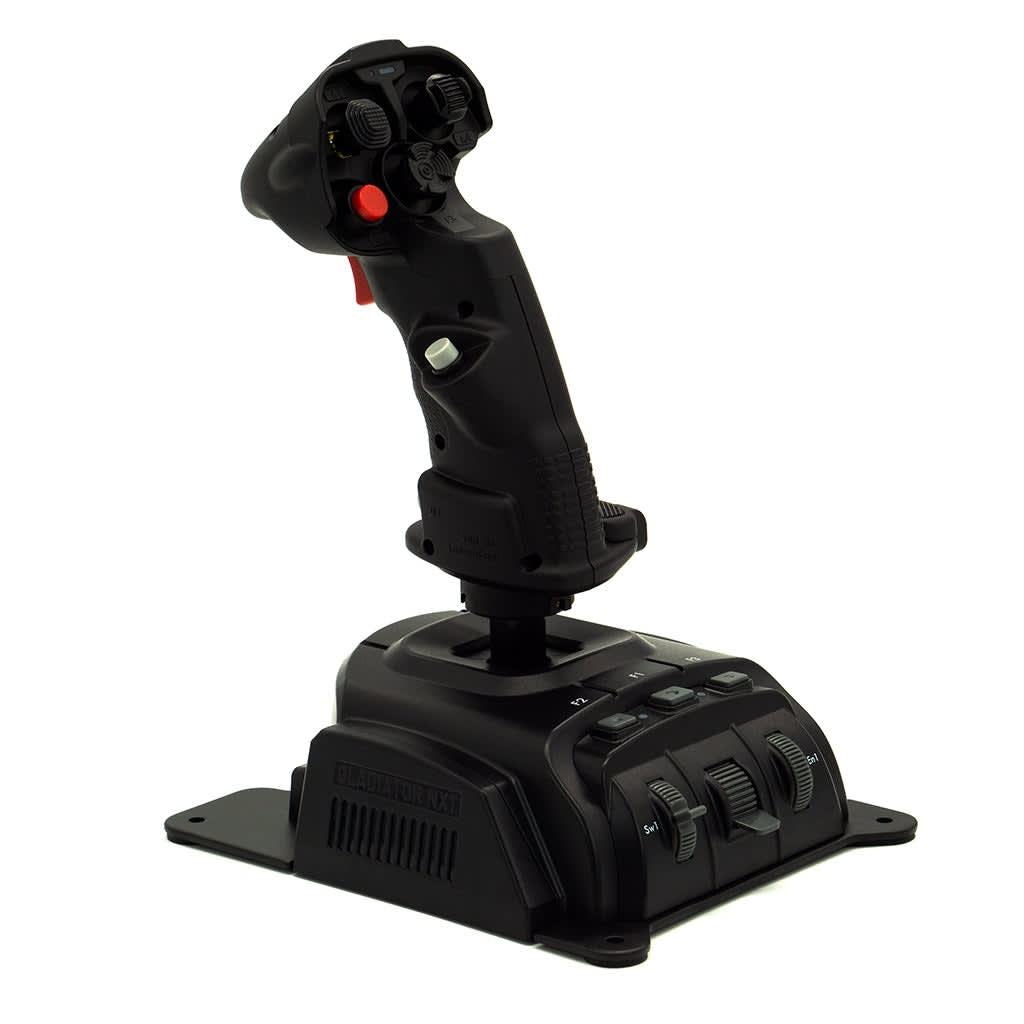
The VKB Gladiator NXT EVO is the direct competitor worth naming. At roughly the same price point for the stick alone (no throttle), it offers a superior gimbal mechanism and better ergonomics on the hat switches. If you already own a throttle or are flying in a category where a HOTAS combo matters less, the VKB is the better stick. But the T.16000M FCS ships with a functioning throttle in the box. For a pilot getting into DCS or MSFS for the first time, that complete system at $149.99 is a better starting point than buying a superior stick and having no throttle. The hall sensors mean you will not outgrow it on precision grounds - you will only upgrade when you want a more premium feel or dedicated pedals.
The T.16000M FCS HOTAS is the correct answer for anyone who wants a real hall sensor setup and a complete stick-plus-throttle package without crossing the $200 line. It is not the last HOTAS you will ever buy, but it is one of the few in this price class that will still be calibration-honest after a thousand hours. Serious sim pilots will eventually want a proper rudder pedal set and a heavier throttle, but this combo gets you flying accurately from day one - and that matters more than most entry-level reviews give it credit for.
Hawk, Scout Gear Team
Best For
Pros
- 16-bit hall sensors hold calibration after 40+ hours - zero measurable drift
- Complete HOTAS combo with 30 mappable inputs under $150
- Ambidextrous grip design swaps in under five minutes with included hardware
- TWCS throttle friction adjustment allows fine-tuned resistance for power management
- Hall sensor precision is genuine and immediately distinguishable from potentiometer sticks
Cons
- Twist rudder requires a 3-4% software deadzone to suppress wrist-fatigue micro-inputs
- TWCS throttle body has noticeable plastic flex and gritty slider detents out of box
- Throttle mini-stick placement demands uncomfortable wrist angle during long sessions
- Friction adjustment instructions buried in a hard-to-find PDF manual

Hawk, Scout Gear Team
Flight Sticks Specialist • 14 days of testing
May 26, 2026
View profile
Key Features
Specifications
Where to Buy
Compare prices from 4 retailers
Frequently Asked Questions
Common buyer questions about the T.16000M FCS, answered by Hawk