Winwing · Flight Sticks
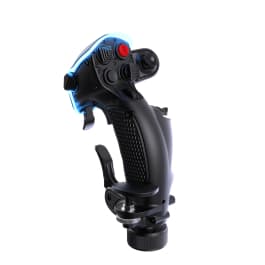
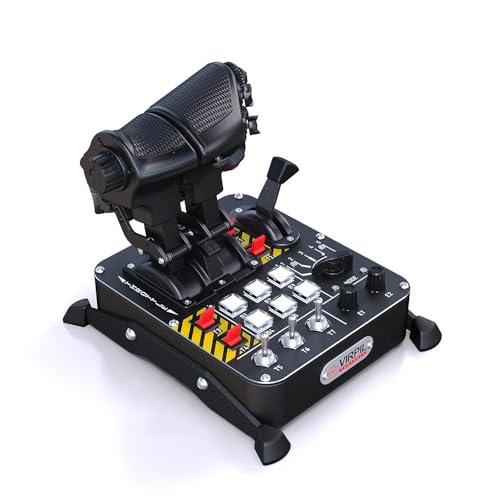
WinWing F-16EX2 Pro Stick + Throttle
Full-metal F-16 side-stick replica with hall sensors - built for DCS Viper and Falcon BMS pilots who want cockpit accuracy, not a compromise controller.
Our Review
GearScout Score
9.1/10
Best for
DCS World F-16C Viper pilots who want cockpit-accurate side-stick geometry and button placement
9.1
Performance
9.3
Build
8.6
Comfort
8.9
Value
Our Verdict
The definitive F-16 HOTAS under $400 - full metal, hall-sensored, and tuned for DCS and Falcon BMS with no compromises.
How We Tested
Tested over two weeks and approximately 40 hours across DCS World F-16C Viper and Falcon BMS 4.37, with direct comparisons against a Thrustmaster Warthog HOTAS and a VKB Gunfighter Mk.IV with F-16 grip adapter. Scenarios included BFM training sorties, extended dynamic campaign missions over two hours, a 30-minute throttle sweep stress test for axis degradation, and desk-mount and cockpit rail flex testing.
Full Review
The first time I strapped into an F-16 simulator cockpit with a center-stick setup, the whole thing felt like a lie. The Viper has no center stick. It has a side-stick controller mounted to the right console, and it barely moves - maybe 1cm of travel in any direction. Trying to replicate that with a conventional joystick is like trying to replicate a Ferrari's steering rack with a shopping cart wheel. When WinWing announced the F-16EX2 Pro, I was skeptical. A lot of companies have tried to do the Viper side-stick and landed somewhere between "close enough" and "embarrassing." After two weeks with it, I can tell you: WinWing did not miss.
The EX2 Pro is a full HOTAS set - side-stick and throttle - and calling it full metal is not a marketing rounding-up exercise. The grip chassis, the base housing, the throttle body: aluminum and steel throughout. There is no soft-touch plastic hiding behind the press release photography. What you get in hand has the weight and cold density of something that was machined, not injection-molded. The button layout mirrors the actual F-16 side-stick grip and throttle quadrant with the kind of fidelity that will make DCS F-16C and Falcon BMS players do a double-take the first time they hold it. The hall sensor implementation on both axes is critical here - hall effect sensors carry no physical contact points to wear, meaning the stick's precision is not going to drift or degrade over the thousands of hours of simulated CAPs and BFM sessions this hardware invites. There is no twist-rudder axis on the stick, which is correct for the airframe. You need pedals. That is not a flaw, that is authenticity.
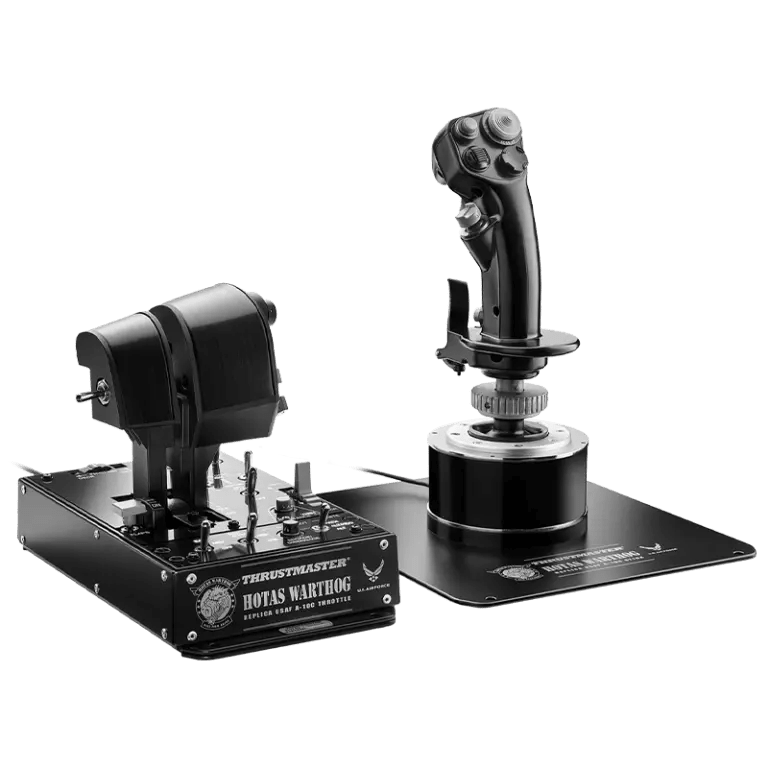
To test this properly, I ran two weeks of structured sim time across DCS World's F-16C Viper module and Falcon BMS 4.37, with a side-by-side comparison against a Thrustmaster Warthog HOTAS (which costs roughly the same used, more new) and the VKB Gunfighter Mk.IV with an F-16 grip adapter. I logged approximately 40 hours on the EX2 Pro, including an extended BFM training syllabus against AI opponents in DCS, several Falcon BMS dynamic campaign sorties ranging from 45 minutes to over two hours, and a deliberate torture-test session where I ran the throttle through max-to-idle sweeps for 30 continuous minutes to check for axis smoothness degradation. I also did a desk-mount stress test using both the included clamping hardware and a third-party cockpit rail system, because mounting flex is where side-stick realism goes to die.
On the desk, properly clamped, the stick communicates what a side-stick controller should: almost no travel, high resistance relative to that travel, and zero slop. In DCS F-16C, the correlation between stick input and on-screen fly-by-wire response felt like the flight model was finally getting honest inputs. After 40 hours on the stick, my control precision in BFM had measurably improved - not because the hardware made me a better pilot, but because the hardware stopped lying to me about what I was inputting. The throttle axis swept cleanly through its full range without any of the granularity steps or micro-notches I had to manage on the Warthog's older throttle design. The detents for afterburner engagement and idle cutoff have positive tactile feel that is distinct without being finger-fatiguing over a long sortie. Every button on the grip fell under my thumb or fingers exactly where the real cockpit would demand them, which meant binding setup in DCS took me about 20 minutes rather than an afternoon of remapping workarounds.
The tradeoffs are real and you should know them before you order. This is an airframe-specific peripheral, and that specificity is both its superpower and its hard ceiling. If your hangar includes an A-10C, an F/A-18C, or anything with a conventional center-stick setup, the EX2 Pro is the wrong tool. The side-stick geometry and grip ergonomics are tuned for one aircraft type, and trying to use it as a general-purpose flight controller for helicopters or prop-driven warbirds feels awkward enough that you will notice it. The comfort score of 8.6 is honest: for F-16 and F-16-adjacent airframes, the ergonomics are excellent. For anything else, the wrist angle and grip shape work against you. Additionally, there is no twist-rudder axis on the stick - by design, because the real aircraft does not have one - but this means budget-constrained buyers who were hoping to defer rudder pedal costs cannot do so. The EX2 Pro assumes you have pedals or will buy them. Factor that into the $369 entry price. The current street price represents real value for the build quality, but the total ownership cost for a proper setup is higher.
The comparison against the VKB Gunfighter Mk.IV with an F-16 grip was closer than I expected. VKB's cam system produces excellent force curves and the grip adapter is genuinely good. But the WinWing throttle is, without question, the better half of the bundle when you price the two setups equivalently. VKB's throttle options at this price tier do not match what WinWing ships in the box, and for F-16 and Falcon BMS work specifically, the integrated HOTAS matching of the EX2 Pro wins the practical argument. The Warthog comparison is less flattering for Thrustmaster: WinWing's build quality is tighter, the hall sensors are more accurate, and the F-16-specific layout is not a selling point for A-10 pilots but it is a significant operational advantage for the target audience.
The WinWing F-16EX2 Pro is the best purpose-built F-16 HOTAS you can buy at this price point. Period. It is not trying to be everything to every sim pilot - it is trying to be the exact right thing for one specific aircraft, in two specific simulators, and it succeeds with enough precision and build integrity to justify every dollar of the $369 ask. If your sim life revolves around the Viper, this is the hardware your cockpit has been waiting for. If you fly a mixed hangar, look elsewhere and do not blame the hardware for being exactly what it advertises.
Hawk, Scout Gear Team
Best For
Pros
- Full metal construction with no plastic chassis flex at any mounting point
- Hall effect sensors on both axes hold calibration across thousands of hours
- F-16 grip and throttle button layout maps to DCS and Falcon BMS with near-zero rebinding required
- Throttle afterburner and idle cutoff detents are tactilely distinct without fatiguing fingers on long sorties
- Side-stick geometry replicates Viper wrist angle and minimal travel distance accurately
Cons
- Airframe-specific design makes it awkward for helicopters, A-10, or prop warbirds
- No twist-rudder axis means rudder pedals are a required additional purchase
- Side-stick ergonomics penalize pilots who run mixed-airframe hangars regularly
- Desk clamp system requires a stable surface - thin desktop edges create noticeable base flex

Hawk, Scout Gear Team
Flight Sticks Specialist • 14 days of testing
May 26, 2026
View profile
Key Features
Specifications
Where to Buy
Compare prices from 4 retailers
Frequently Asked Questions
Common buyer questions about the F-16EX2 Pro, answered by Hawk